
Where Earth Becomes Map: Journeying Through Ohio’s Ancient Woodland Wonders
Forget paper and ink. Imagine maps etched into the very earth, charting celestial movements, defining sacred spaces, and delineating complex societies over two millennia ago. This isn’t a fantasy; it’s the profound reality waiting to be discovered in the monumental earthworks of the Woodland Period in Ohio. For the discerning traveler seeking not just sights but genuine insight into human ingenuity and ancient wisdom, these sites offer an unparalleled journey into a world where the land itself was the ultimate canvas for understanding existence.
Ohio, often called the "Moundbuilder State," holds a concentration of these incredible sites, primarily from the Adena (1000 BCE – 100 CE) and Hopewell (200 BCE – 500 CE) cultures. These aren’t just piles of dirt; they are precise, geometrically complex, and astronomically aligned constructions that served as ceremonial centers, observatories, and territorial markers. They are, in essence, the ultimate Native American maps of the Woodland period – not drawn on parchment, but sculpted into the landscape itself, telling stories of cosmic order, social structure, and a profound connection to the natural world.
Our journey begins not with a casual glance, but with a deliberate immersion into the very fabric of these ancient cartographies.
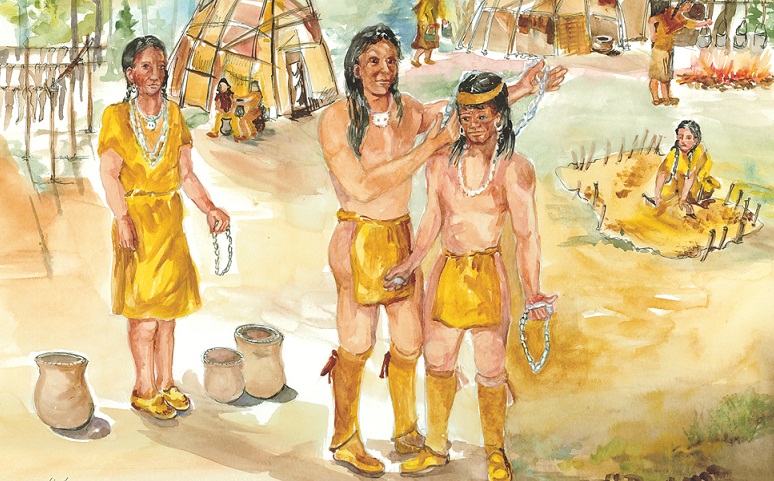
Hopewell Culture National Historical Park: The Sacred Geometries of Connection
Our first deep dive takes us to the Hopewell Culture National Historical Park, a collection of meticulously preserved earthwork complexes near Chillicothe. This park isn’t a single destination but rather a constellation of sites, each offering a unique perspective on the Hopewell people’s sophisticated understanding of their world.
Mound City Group: The most accessible and often the starting point, Mound City offers a compelling introduction. Surrounded by a low, rectangular earthen wall, this site contains 23 burial mounds, many of which yielded exquisite artifacts that speak to a vast trade network and a rich spiritual life. As you walk the interpretive trails, you’re not just observing mounds; you’re traversing a map of the spiritual realm. The precise layout of the mounds within the enclosure, the symmetry and deliberate placement, suggest a conceptual mapping of their cosmology. It’s a sacred landscape, a place where the living interacted with the revered ancestors, and where ritual and ceremony were etched into the very ground. The visitor center here provides excellent context, helping to decode the meaning behind these earth-based "maps."
Seip Earthworks: A short drive away, Seip Earthworks showcases the Hopewell’s mastery of monumental geometry on an even grander scale. Here, a vast circular enclosure, nearly a quarter-mile in diameter, once connected to an equally impressive square. While much of the original form has been impacted by agriculture, the reconstructed portions and the sheer scale still evoke a powerful sense of awe. This wasn’t a casual construction; it required immense labor, precise surveying skills, and a unified vision. The circular and square forms, often found together in Hopewell sites, are believed to represent distinct cosmological principles – perhaps the sun and moon, or earth and sky. Walking the perimeter of what remains, you feel the expanse of their conceptual map, an outdoor cathedral where the landscape itself was the altar. It’s a map that oriented communities not just to their immediate surroundings, but to the grand cycles of the cosmos.
Newark Earthworks: Charting the Cosmos on a Colossal Scale
Perhaps the most astounding example of Woodland Period mapping, and a true marvel of ancient engineering, is the Newark Earthworks, managed by the Ohio History Connection. This site is so vast that parts of it are now home to a golf course and residential areas, yet its most significant features – the Octagon Earthworks and the Great Circle Earthworks – remain largely intact and incredibly powerful.
The Octagon Earthworks: This is where the concept of "earth as map" reaches its zenith. The Octagon, encompassing 50 acres, is connected to a perfect circle by a narrow passageway. What makes it breathtakingly unique is its astonishing astronomical alignment. On a roughly 18.6-year cycle, the moon rises precisely within the entryway of the Octagon at its northernmost maximum stand. This is not a coincidence; it’s a deliberate, precise, and highly sophisticated astronomical observatory, etched into the landscape on a scale that rivals Stonehenge.
Imagine the knowledge required to observe and track lunar cycles for generations, then to design and construct an earthwork of this magnitude and precision to perfectly frame a celestial event. The Octagon isn’t just a map of the cosmos; it’s a working model of the cosmos, a physical manifestation of their understanding of time, cycles, and the universe. Walking within the Octagon, especially if you visit during a significant lunar event (which requires some planning!), is an experience that transcends mere tourism. It’s a direct connection to the minds that mapped the heavens using only their intellect, observation, and immense collective effort. It’s a map of time itself, marking the passage of celestial bodies and perhaps dictating agricultural cycles, ceremonial calendars, and societal rhythms.
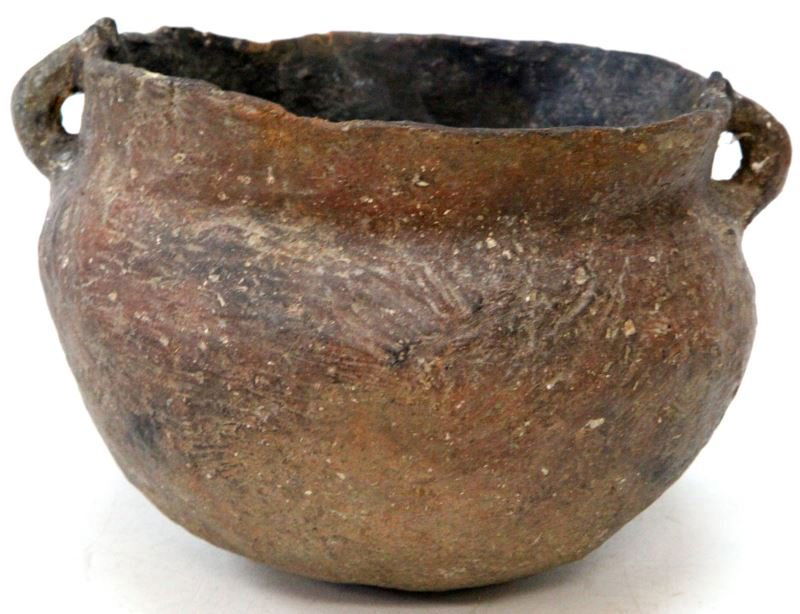
The Great Circle Earthworks (Moundbuilders Country Club): Adjacent to the Octagon, the Great Circle is a perfect circle measuring 1,200 feet in diameter and enclosing 20 acres. While less overtly astronomical than the Octagon, its sheer perfection and monumental scale speak volumes about the Hopewell’s engineering capabilities and their symbolic worldview. It likely served as a ceremonial enclosure, a sacred space defined by its pure geometric form, another powerful element in their extensive landscape-based mapping system. Even with a golf course threading through it, the power of its form is undeniable.
Fort Ancient Earthworks: A Map of Community and Power
Venturing slightly south, we encounter Fort Ancient Earthworks and Nature Preserve, an Ohio History Connection site that offers a different, yet equally compelling, perspective on Woodland Period "maps." While its exact cultural affiliation (Adena, Hopewell, or a blend) is still debated, its monumental scale and unique form firmly place it within this tradition of landscape architecture.
Fort Ancient is not a single mound but a vast hilltop enclosure stretching over three-and-a-half miles, encompassing 100 acres. Its massive earthen walls, some reaching 23 feet high, snake along the contours of a plateau overlooking the Little Miami River. The term "fort" is a bit misleading; while it has defensive qualities, its primary function was likely ceremonial and social. This immense enclosure served as a boundary, a place where communities gathered for rituals, trade, and social interaction.
As a "map," Fort Ancient delineates a vast sacred space, a territorial marker that organized communities and defined a shared cultural landscape. It’s a map of social organization, a place that brought people together from across the region. Walking the extensive trails along its walls, you gain a sense of the sheer scale of the community that envisioned and built it, and the importance of this mapped space in their lives. It’s a testament to communal effort and a shared vision of how to order their world, both physically and spiritually.
The Traveler’s Perspective: Walking Ancient Maps

Visiting these sites is more than a historical excursion; it’s an exercise in imagination and humility. Standing within the Octagon at Newark, or walking the sacred grounds of Mound City, you can’t help but feel a profound connection to the people who moved mountains (or at least, hills of earth) to express their understanding of the universe.
This isn’t just about mounds of dirt. It’s about:
- Ingenuity: The sophisticated surveying, engineering, and astronomical knowledge demonstrated by these cultures, often without the "advanced" tools we associate with such feats.
- Cosmology: Gaining a glimpse into a worldview where the earth, sky, and human community were intricately linked, where every feature of the landscape could hold profound meaning.
- Endurance: The sheer scale of human effort required to construct these monuments, enduring for millennia.
- Mystery: Despite extensive research, much remains unknown, fostering a sense of wonder and encouraging personal reflection.
Practicalities for Your Ancient Map Expedition
- Location: All these sites are located in central and southern Ohio. Chillicothe (Hopewell Culture NHP) and Newark (Newark Earthworks) make excellent bases. Fort Ancient is south of Dayton.
- Accessibility: All sites have well-maintained trails and interpretive signage. Hopewell Culture NHP and Newark Earthworks have excellent visitor centers.
- Time to Visit: Spring and fall offer the most comfortable weather for walking, with fewer bugs and less extreme heat or cold. Winter can be starkly beautiful but might involve snow. Summer can be hot and humid.
- What to Bring: Comfortable walking shoes, water, sun protection, insect repellent (especially in warmer months), a camera, and an open mind ready to absorb deep history. Allow ample time at each site – rushing diminishes the experience.
- Planning: Given the multiple locations, consider a multi-day trip to truly appreciate the scope and diversity of these earthworks. Check the National Park Service and Ohio History Connection websites for hours, events, and specific directions.
Why This Journey Matters
In a world increasingly mapped by satellites and digital screens, these ancient earthworks offer a visceral, ground-level understanding of what it means to map. They remind us that mapping isn’t just about drawing lines on a page; it’s about understanding, interpreting, and connecting with the world around us – the land, the sky, and the community.
These Woodland Period "maps" are not just historical relics; they are living testaments to the brilliance of Native American cultures. They challenge our often-simplistic narratives of pre-Columbian societies and invite us to consider a form of knowledge and connection to the earth that we might have long forgotten. To walk these ancient pathways is to step onto a map of time, culture, and cosmic alignment, forever changing your perception of history and human potential. Go, walk these ancient maps, and let the earth speak its story.

