Unearthing Lost Landscapes: A Cartographic Journey Through Post-Revolutionary America at the Gilcrease Museum
Forget the static, government-issued maps you saw in history books. To truly grasp the seismic land shifts and cultural resilience of Native American nations after the American Revolutionary War, you need to look beyond the conqueror’s cartography. You need to visit the Gilcrease Museum in Tulsa, Oklahoma – a place that doesn’t just house artifacts, but curates a profound, often heartbreaking, narrative of survival and sovereignty through the very maps and documents that shaped a continent. This isn’t just a museum visit; it’s an essential pilgrimage for anyone seeking an unfiltered understanding of America’s foundational conflicts.
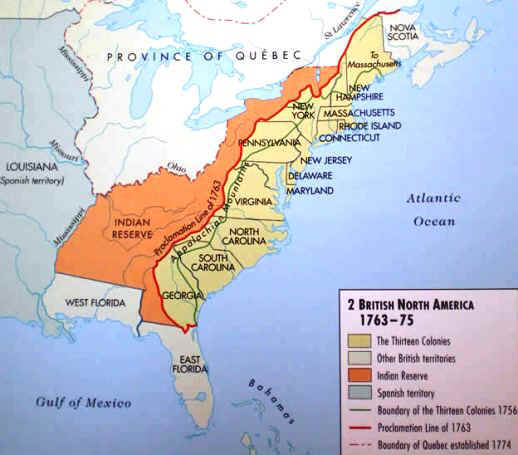
The post-Revolutionary War era (roughly 1783 onwards) was not a period of peace and clear borders for Native American tribes. Instead, it was a maelstrom of escalating land hunger from the newly formed United States, a scramble for resources, and a brutal redefinition of sovereignty. While American settlers pushed westward, armed with land grants and Manifest Destiny, Native nations found themselves caught in a geopolitical vise. The Gilcrease Museum acts as a unique portal to this tumultuous period, presenting an unparalleled collection of maps, surveys, treaties, and related documents that reveal the Native American perspective on these land changes, often in stark contrast to official U.S. records.
What makes the Gilcrease experience so potent is its dedication to presenting all sides of the cartographic story. You’ll encounter not only the detailed, grid-based surveys of U.S. land agents, meticulously charting new townships over ancient hunting grounds, but also, crucially, the maps, petitions, and diplomatic correspondence produced by or on behalf of Native nations themselves. These Indigenous-centric maps, whether drawn by Native cartographers, recorded by European allies, or commissioned during treaty negotiations, offer a fundamentally different worldview. They prioritize natural features, ancestral territories, sacred sites, and seasonal migration routes over artificial lines, reflecting a deep, symbiotic relationship with the land that the U.S. expansionist agenda sought to obliterate.
Walking through the Gilcrease exhibits dedicated to this period, you’re confronted with a tangible representation of loss and resistance. One might see a U.S. map from the early 1800s, neatly carving up vast swathes of the Ohio Valley into rectangular plots, oblivious to the Shawnee, Miami, Delaware, and Wyandot communities that had thrived there for millennia. Then, juxtaposed, there might be a diplomatic map from the same period, perhaps drafted during negotiations for a treaty like Fort Greenville (1795), illustrating the precise, detailed boundaries claimed by the Western Confederacy, highlighting their ancestral lands, crucial waterways, and vital hunting reserves. The contrast is chillingly clear: one represents an abstract claim of ownership, the other, a lived reality.
The museum excels at showcasing how these maps were not merely geographical tools but instruments of power, diplomacy, and resistance. Consider the maps related to the Southeastern "Five Civilized Tribes" – the Cherokee, Choctaw, Chickasaw, Creek, and Seminole. Prior to forced removal, these nations held extensive, sophisticated land claims, often mirroring European-style statehood with written constitutions and established borders. The Gilcrease holds maps detailing these vast, complex territories, illustrating their towns, farms, and infrastructure. These aren’t crude sketches; they are precise delineations of sovereign nations, often used in heated negotiations with U.S. commissioners. Seeing these maps, alongside actual treaty documents where signatures of Native leaders sit beside those of U.S. officials, underscores the betrayal inherent in policies like the Indian Removal Act. The maps show what was, before it was violently taken.
Beyond the formal surveys and diplomatic charts, the Gilcrease also provides glimpses into more intimate forms of Native mapping. While fewer "traditional" Native maps from this specific period survive in large numbers (due to perishable materials and different cultural priorities), the museum carefully curates what exists and, more importantly, provides context through oral histories, artistic representations, and the interpretations of contemporary Native scholars. These contextual elements help visitors understand that Native cartography wasn’t always about drawing lines on paper; it was embedded in storytelling, ceremony, and an encyclopedic knowledge of the landscape passed down through generations. The museum’s interpretative panels often explain how features like significant rock formations, ancient trails, or sacred groves served as vital reference points in a mental map, equally as precise as any European survey.
The Gilcrease’s commitment to this nuanced portrayal extends to its broader collection, which includes portraits of influential Native leaders from the post-Revolutionary era – figures like Tecumseh, Little Turtle, and Pushmataha. These individuals, whose faces gaze out from the canvases, were not just warriors or politicians; they were strategists who understood the land intimately, whose decisions were guided by the maps of their ancestors and the shifting realities imposed by U.S. expansion. Their stories, intertwined with the maps on display, elevate the experience from a purely academic exercise to a deeply human one. You see the faces behind the land claims, the people whose lives were irrevocably altered by the lines drawn on paper.
A visit to the Gilcrease isn’t about passive viewing; it’s an active engagement with history. The exhibits are thoughtfully arranged, often providing interactive elements or detailed narratives that guide you through the complexities of land cessions, forced migrations, and treaty violations. You’ll find yourself poring over faded ink on parchment, tracing the paths of rivers that once defined entire nations, and witnessing the gradual shrinking of Native territories depicted through successive, increasingly restrictive maps. It’s a powerful, sometimes uncomfortable, journey that forces a re-evaluation of common historical narratives.
The museum itself is a beautifully designed space, blending historical reverence with modern accessibility. Its expansive grounds and stunning views over Tulsa provide a moment of contemporary beauty, a stark contrast to the difficult histories explored within its walls. The staff are knowledgeable and passionate, often offering deeper insights beyond the exhibit text. This level of dedication ensures that visitors, whether seasoned historians or curious travelers, leave with a more profound appreciation for the intricate, often tragic, role of cartography in the shaping of the American West.
In an age where historical narratives are often simplified, the Gilcrease Museum stands as a vital institution. It compels us to confront the uncomfortable truths of post-Revolutionary America by laying bare the documentary evidence of land dispossession from multiple perspectives. It underscores that for Native American nations, maps were not just tools for navigation or property demarcation; they were declarations of sovereignty, records of ancestral ties, and poignant testaments to their enduring connection to the land.
For the intrepid traveler seeking more than just picturesque landscapes, for the curious mind yearning for depth and truth, the Gilcrease Museum offers an unparalleled opportunity. It’s a place where the lines on ancient maps speak volumes, where the silent voices of history find their expression, and where the enduring spirit of Native American nations continues to resonate. Don’t just read about American history; experience it, in all its complex and challenging glory, through the eyes of those who mapped a different vision of a continent. Your understanding of America will never be the same.