Tracing Ancient Whispers: Rocky Mountain National Park and the Arapaho Spiritual Landscape
Rocky Mountain National Park (RMNP) is a titan of natural beauty, a rugged expanse of peaks, alpine tundra, and pristine lakes that draws millions with its promise of wild grandeur. Yet, to truly understand the spirit of this land, one must look beyond the postcard views and delve into its profound, millennia-old human history, particularly the deep spiritual connection of the Arapaho people. For the Arapaho, this was not merely a scenic backdrop, but a living, breathing entity, a sacred homeland whose every feature was a marker on an ancestral map of spiritual journeys. This review invites you to experience RMNP not just as a destination, but as a gateway to understanding these ancient, powerful pathways.
The Arapaho, or Hinono’eiteen as they call themselves, were masterful navigators of the High Plains and the Rocky Mountains. Their ancestral territories stretched across what is now Colorado, Wyoming, Kansas, and Nebraska, with the Rockies serving as a vital spiritual and resource hub. Unlike static paper maps, the Arapaho’s spiritual maps were etched into the very landscape – a dynamic, oral tradition passed down through generations, guiding them to places of power, sustenance, and vision. To journey through RMNP today with this awareness is to walk in the footsteps of those who found profound meaning in every vista, every stream, every high-altitude breath.
The Land as a Living Sacred Text
Imagine a world where mountains were not just geological formations but grand cathedrals, where rivers were not merely watercourses but conduits of spiritual energy, and where every plant and animal held lessons from the Creator. This was the Arapaho worldview, and RMNP embodies it. The park’s diverse ecosystems, from the ponderosa pine forests of the lower valleys to the windswept alpine tundra above the tree line, each played a role in these spiritual journeys.
Neniisótoyóú’u: The Ascent to Vision
Dominating the RMNP skyline is Longs Peak, or Neniisótoyóú’u, "The Two Guides" or "The Twin Peaks," as the Arapaho know it. This magnificent 14,259-foot mountain was not merely a challenging climb but a sacred ascent, a direct pathway to the Sky World. For young Arapaho men, and sometimes women, undertaking a vision quest, the journey to the high reaches of Neniisótoyóú’u was paramount. Days of fasting, prayer, and exposure to the elements at these altitudes were designed to induce visions, to receive guidance from the spirits, and to find their unique spiritual purpose.
To stand at the base of Longs Peak today, even without embarking on the arduous climb, is to feel a palpable sense of awe and reverence. The sheer scale of the mountain, its ancient granite face scarred by glaciers and time, whispers of the profound experiences sought here. Visitors can hike to Chasm Lake, a stunning alpine cirque beneath the East Face, and contemplate the immense spiritual significance of such a place. Here, the map was not about finding a destination, but about finding oneself through the landscape’s transformative power.

Kawuneeche Valley: Sustenance and Sacred Crossing
On the western side of the park, the Kawuneeche Valley, fed by the headwaters of the Colorado River, offered a different but equally vital spiritual landscape. This broad, verdant valley was a critical seasonal hunting ground, rich in elk, deer, and other game. But for the Arapaho, hunting was never merely a pragmatic act; it was a spiritual endeavor, undertaken with prayers, rituals, and deep respect for the animals who offered their lives for the people’s sustenance.
The valley’s meandering river, its marshy meadows, and the surrounding forested slopes provided not only food but also medicinal plants and materials for tools and shelter. Every resource gathered was accompanied by gratitude and ceremony, acknowledging the sacred reciprocal relationship between humans and the natural world. The "map" here involved understanding animal migration patterns, the cycles of plant growth, and the most respectful ways to interact with the land to ensure its continued bounty. A drive or hike through the Kawuneeche Valley, particularly near the Colorado River Trailhead, allows visitors to connect with this aspect of the Arapaho journey – a journey of respectful coexistence and profound gratitude.
Alpine Tundra: The Edge of the World, The Heart of the Spirit

Above the tree line, the alpine tundra of RMNP presents a stark, ethereal beauty. This high-altitude realm, with its resilient wildflowers, dramatic rock formations, and sweeping panoramic views, was another crucial waypoint on Arapaho spiritual maps. It was a place of solitude, exposure, and intense connection to the elements – the sun, wind, and sky. Here, amidst the stunted krummholz trees and ancient lichens, one could feel closest to the Creator.
Trail Ridge Road, America’s highest continuous paved road, offers unparalleled access to this unique ecosystem. Pulling over at overlooks like Lava Cliffs or Forest Canyon, one can gaze across miles of untouched wilderness, imagine the vastness of the High Plains to the east, and feel the powerful winds that once carried the prayers of the Arapaho skyward. These high places were not just scenic overlooks but natural altars, places where the veil between the physical and spiritual worlds felt thinnest. The map here was one of cosmic alignment, connecting the individual to the vastness of the universe.
The Absence of Markings, The Presence of Memory
Unlike some ancestral lands rich with petroglyphs or ancient structures, RMNP has fewer overtly "marked" sites attributable to the Arapaho within its current boundaries. This is not because their presence was less significant, but because their spiritual maps were largely oral, dynamic, and embedded in the natural features themselves. The "markings" were the mountains, the rivers, the valleys, the unique rock formations – each imbued with story, ceremony, and purpose.
The Arapaho taught their children to "read" the land: the direction of the wind, the shape of a cloud, the tracks of an animal, the sound of a stream – all were signs, all were part of the spiritual map that guided their lives. This understanding encourages a different kind of engagement for the modern visitor: not searching for a physical inscription, but opening oneself to the inherent spiritual resonance of the landscape itself.
Experiencing the Spiritual Journey Today: A Call for Respectful Engagement
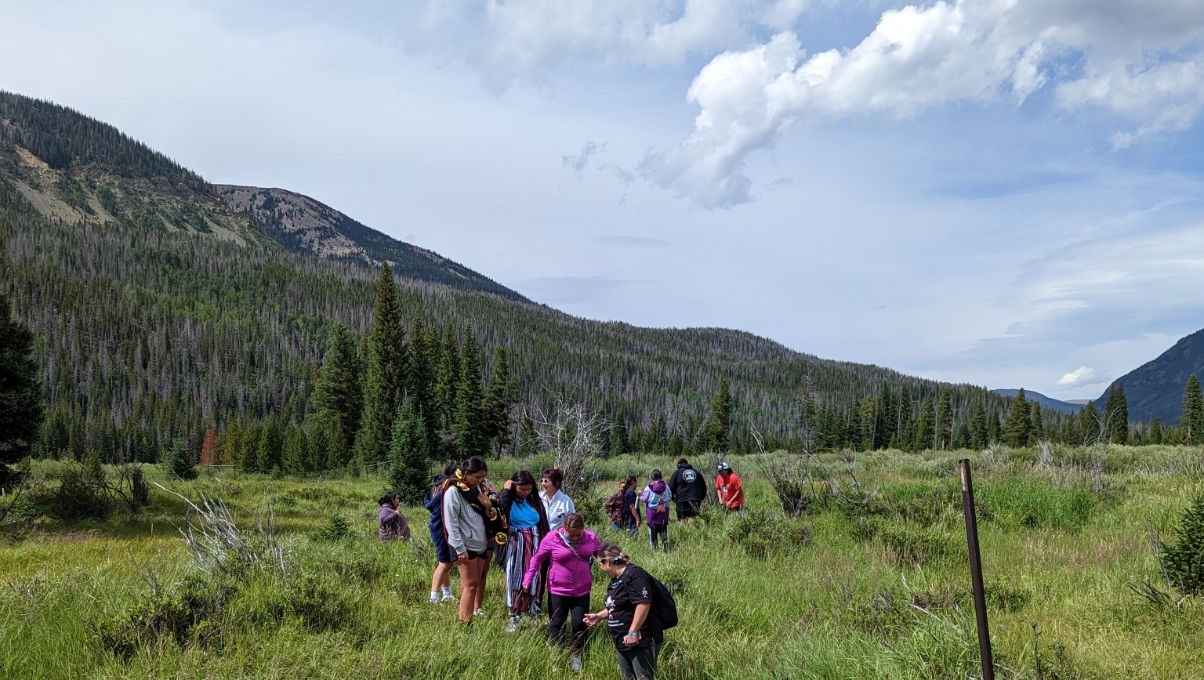
For the modern traveler seeking a deeper connection with RMNP, understanding its Arapaho heritage transforms a scenic trip into a profound journey. Here’s how to engage respectfully:
- Educate Yourself: Before visiting, learn about the Arapaho people, their history, culture, and their relationship with this land. Resources from the National Park Service and tribal websites are excellent starting points.
- Practice Mindfulness: Instead of rushing from one viewpoint to the next, take time to sit quietly. Observe the details, listen to the sounds, feel the wind. Imagine the generations who found meaning in these same moments.
- Respect the Land: Stay on marked trails, pack out everything you pack in, and leave no trace. This land is sacred, and treating it with care honors its past and preserves it for the future.
- Acknowledge Indigenous Presence: Remember that the Arapaho are not just a historical people; they are living communities with an ongoing connection to this land. Acknowledge their enduring presence and their rights.
- Avoid Appropriation: While it’s natural to feel inspired, avoid trying to replicate or appropriate specific Indigenous spiritual practices. Your journey is one of learning and respect, not imitation.
- Visit the Estes Park Museum or NPS Visitor Centers: These sites often have exhibits detailing the Indigenous history of the area, providing valuable context.
Beyond the Scenery: A Profound Invitation
Rocky Mountain National Park is undeniably beautiful, a testament to the power and majesty of nature. But to truly "review" this location in the context of Arapaho ancestral maps of spiritual journeys is to acknowledge that its beauty is not merely aesthetic. It is imbued with centuries of human experience, of sacred purpose, of profound connection between people and place.
This is a place where the air itself feels ancient, where the mountains stand as silent witnesses to countless prayers and visions. It is a place that invites us to slow down, to listen, and to consider the deeper narratives held within its valleys, peaks, and waters. By approaching RMNP with an open heart and a respectful mind, we can begin to trace those invisible, ancestral maps of spiritual journeys, finding not just stunning views, but a resonant echo of the profound human spirit that has always called this sacred land home. Your visit here can be more than a vacation; it can be a pilgrimage of understanding, a journey into the soul of a landscape and the enduring spirit of its first peoples.

