Tracing Ancient Horizons: A Traveler’s Guide to America’s Pre-Contact Population Centers Through Indigenous ‘Maps’
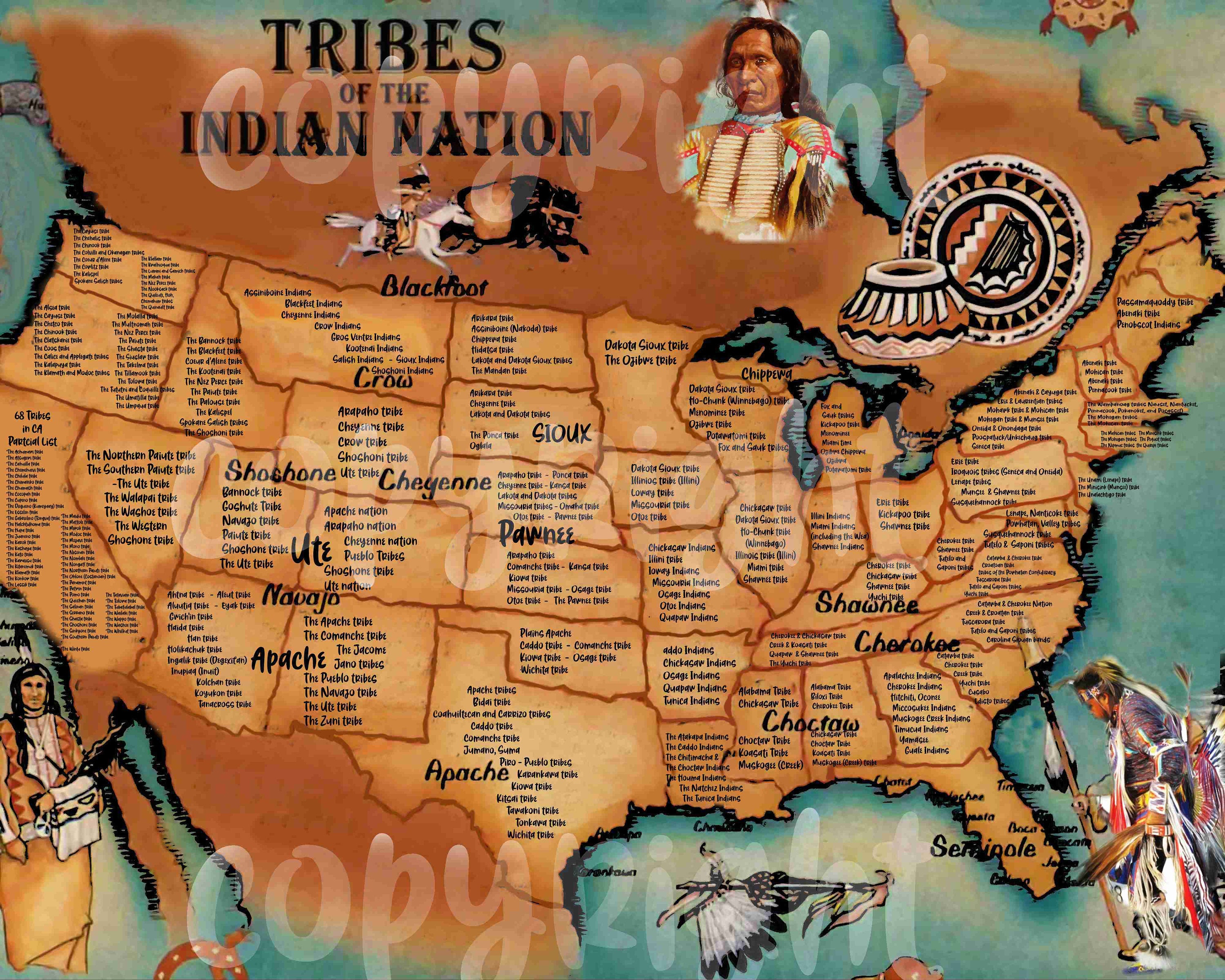
Forget everything you think you know about pre-Columbian North America. The continent was not an empty wilderness awaiting European discovery, but a vibrant tapestry of sophisticated societies, intricate trade networks, and thriving population centers. Long before the first European maps sketched tentative coastlines, indigenous peoples possessed profound "maps" of their own – not always on parchment, but etched into oral histories, embodied in ceremonial landscapes, encoded in astronomical alignments, and reflected in the very structure of their cities. These indigenous "maps" guide us today, revealing a rich, complex past that challenges simplistic narratives and invites us to journey through the continent’s hidden histories.
This article isn’t about reviewing a literal map, but about reviewing the places that these ancient "maps" point to – the monumental cities and towns that flourished across North America. We’ll explore what it feels like to stand in these spaces, to trace the outlines of forgotten metropolises, and to connect with the profound ingenuity of the continent’s first architects and city planners. Prepare to re-imagine the landscape and embark on a transformative journey to the heart of ancient America.
>

Cahokia Mounds State Historic Site, Illinois: America’s First Metropolis
Location: Collinsville, Illinois, just across the Mississippi River from modern-day St. Louis.
Indigenous ‘Map’ Insight: The sheer scale and deliberate layout of Cahokia itself is a map – a blueprint of a complex society, a trade hub, and a spiritual center that influenced much of the Eastern Woodlands.
Imagine a city larger than London was at the same time (circa 1100 CE), with a population estimated between 10,000 and 20,000, and potentially many more in its surrounding settlements. This was Cahokia, the largest pre-Columbian city north of Mexico, and the heart of the Mississippian culture. Visiting Cahokia Mounds is not just stepping onto an archaeological site; it’s walking into the ghost of a bustling metropolis, a testament to the organizational genius and spiritual depth of its inhabitants.

The centerpiece of Cahokia is Monks Mound, a colossal earthen platform mound that dwarfs anything else of its kind in North America. Standing atop its summit, after ascending 156 steps, is a breathtaking experience. The view stretches for miles, offering a panoramic vista that immediately conveys the strategic importance of the site. From here, you can envision the vast central plaza, a ceremonial and social gathering space, which was likely the size of 45 football fields. You can mentally trace the outlines of the other 120 (originally) smaller mounds – conical, ridgetop, and platform – that once dotted the landscape, each serving a specific purpose: residences for elites, burial sites, or astronomical observatories.
The "maps" of Cahokia are multi-layered. Firstly, the city’s precise alignment with cardinal directions and celestial events speaks volumes. Woodhenge, a series of large timber circles used to track solstices and equinoxes, demonstrates sophisticated astronomical knowledge, akin to a calendar embedded in the landscape. Secondly, the archaeological evidence of diverse goods – copper from Lake Superior, shells from the Gulf Coast, chert from Oklahoma – paints a picture of a vast trade network. Cahokia was not isolated; it was a node in a massive indigenous economic and cultural system, its influence radiating outward across thousands of miles.
Traveler’s Experience: The visitor center is excellent, offering immersive exhibits, dioramas, and artifacts that bring the ancient city to life. Ranger-led tours provide invaluable context, but simply walking the trails, particularly around Monks Mound and the reconstructed Woodhenge, allows for a deep sense of connection to this powerful place. The scale is humbling. It challenges the colonial narrative of a "primitive" continent, forcing visitors to confront the reality of highly organized, agriculturally advanced, and culturally rich societies that thrived here for centuries. It’s a place that demands quiet contemplation and respect for the monumental human effort involved in its construction.
>
Chaco Culture National Historical Park, New Mexico: The Ancestral Puebloan Nexus
Location: Northwestern New Mexico, in a remote, high-desert canyon.
Indigenous ‘Map’ Insight: The intricate network of "Chacoan Roads," the precise astronomical alignments of the great houses, and the deliberate architectural layouts are powerful indigenous maps, demonstrating a profound understanding of landscape, cosmology, and social organization.
Deep within the stark, majestic landscape of the San Juan Basin lies Chaco Canyon, the heart of the Ancestral Puebloan world. From approximately 850 to 1250 CE, Chaco was a major center of culture, trade, and ceremony, a sophisticated urban hub for a civilization that stretched across the Four Corners region. Visiting Chaco is like stepping onto another planet, or perhaps, into a meticulously crafted ancient diagram of the cosmos.
The "Great Houses" of Chaco, such as Pueblo Bonito, Chetro Ketl, and Hungo Pavi, are architectural marvels. These multi-story, multi-room structures, built with precise masonry techniques, contained hundreds of rooms and dozens of kivas (circular ceremonial chambers). Pueblo Bonito alone, the largest, contained over 600 rooms and was once the largest building in North America. Standing within its D-shaped walls, feeling the cool stone, and gazing up at the towering remnants, you’re enveloped by a sense of immense history and human endeavor. The sheer scale and precision of the stonework, without the use of metal tools or the wheel, are awe-inspiring.
The "maps" here are arguably the most explicit. The famous "Chacoan Roads," a network of meticulously engineered, wide, straight pathways, some extending for over 100 miles, radiated out from the canyon. These weren’t mere trails; they were monumental expressions of power, trade, and spiritual connection, linking Chaco to over 150 outlying communities, or "Chacoan outliers." They are a literal map of influence and interaction. Furthermore, the alignment of the Great Houses with celestial events – solstices, equinoxes, and lunar standstills – demonstrates an advanced understanding of astronomy and its integration into daily and ceremonial life. Sun Dagger, a petroglyph site on Fajada Butte, where precisely timed shafts of light mark significant astronomical events, is a particularly poignant example of this cosmic mapping.

Traveler’s Experience: Chaco is remote, requiring a drive down unpaved roads, which only adds to its mystique. The lack of light pollution makes it an International Dark Sky Park, offering unparalleled stargazing opportunities – a chance to see the same constellations that guided and inspired the Chacoans. Walking through the kivas, climbing the ancient stairs, and exploring the vast courtyards, you can almost hear the echoes of ceremonies and daily life. The feeling is one of profound silence and deep reverence. It forces you to reconsider what constitutes a "city" and how societies can thrive in challenging environments through ingenuity and shared purpose. Chaco isn’t just a collection of ruins; it’s a living testament to a complex civilization whose legacy continues to resonate.
>
Beyond the Great Centers: Diverse Expressions of Indigenous Urbanism
While Cahokia and Chaco stand as monumental examples, they are by no means the only pre-contact population centers. The indigenous "maps" – whether archaeological, oral, or environmental – reveal a continent dotted with diverse forms of sophisticated settlement.
The Cliff Dwellings of Mesa Verde, Colorado: Ancestral Puebloan Ingenuity
Location: Southwestern Colorado.
Indigenous ‘Map’ Insight: The strategic placement of dwellings within natural alcoves, often high on cliff faces, speaks to defensive strategies, resource management, and a deep understanding of the local geology and climate.
Mesa Verde, another Ancestral Puebloan site, offers a different perspective on indigenous population centers. Here, the "cities" are literally carved into the cliffs. Sites like Cliff Palace and Balcony House are breathtaking examples of architectural adaptation and community living. These multi-story complexes, often accessed by ropes and handholds, housed hundreds of people. The "map" here is one of resilience and careful planning in a challenging environment, utilizing natural shelter for protection from the elements and potential adversaries. The intricate network of rooms, kivas, and storage areas within these alcoves represents a highly organized community, where every inch of space was utilized efficiently. Visiting these sites requires climbing ladders and navigating narrow passages, offering a visceral connection to the ingenuity of their builders.
Moundville Archaeological Park, Alabama: A Mississippian Outlier
Location: West-central Alabama.
Indigenous ‘Map’ Insight: The ceremonial layout and the hierarchical arrangement of mounds reflect a distinct social and political structure, mirroring but also distinct from Cahokia, demonstrating regional variations in the Mississippian "map."
Moundville, located on the Black Warrior River, was another significant Mississippian population center, active from about 1000 to 1450 CE. While smaller than Cahokia, it was a major ceremonial and political hub, with 29 platform mounds arranged around a central plaza. The site’s layout clearly indicates a stratified society, with larger mounds reserved for elite residences and ceremonial functions. The artifacts discovered here – intricate effigy vessels, copper plates, and shell gorgets – attest to a rich artistic tradition and a complex belief system. Moundville’s "map" shows us a powerful regional chiefdom, a distinct cultural expression within the broader Mississippian world, connected by trade but maintaining its own unique identity.
Pacific Northwest Coast: Permanent Villages and Resource Abundance
Location: Stretching from Southern Alaska down to Northern California.
Indigenous ‘Map’ Insight: The placement of permanent villages along salmon-rich rivers and sheltered coastlines, combined with intricate knowledge of forest resources, is an environmental "map" of sustainable living and resource management.
The indigenous peoples of the Pacific Northwest, like the Haida, Tlingit, Kwakwakaʼwakw, and Coast Salish, developed a distinct form of "urbanism." While not characterized by monumental earthen architecture, their large, permanent villages – often featuring massive cedar longhouses adorned with intricate carvings – were population centers supported by incredible resource abundance, particularly salmon. The "maps" here are less about grand architectural alignments and more about an unparalleled understanding of their environment. Their villages were strategically located for fishing, hunting, and harvesting cedar, reflecting a deep ecological knowledge that allowed for settled life without agriculture. The sophisticated social structures, ceremonial potlatches, and extensive trade networks (even with groups as far inland as the Plateau) demonstrate a complex, thriving society. While many original villages are no longer standing, archaeological sites and cultural centers (like those at Olympic National Park or Haida Gwaii) allow us to envision these vibrant coastal communities.
The Northeast: Palisaded Villages and Agricultural Prowess
Location: Northeastern United States and Eastern Canada.
Indigenous ‘Map’ Insight: The construction of palisaded villages, often on defensive hilltops and surrounded by extensive cornfields, illustrates a "map" of agricultural settlement, community defense, and inter-tribal relations.
In the Northeast, particularly among the Iroquois and Huron, pre-contact population centers often took the form of large, palisaded villages. These settlements, sometimes housing thousands of people in communal longhouses, were centers of intensive agriculture (the "Three Sisters" – corn, beans, and squash). The "maps" of these communities were defined by their defensive structures, their proximity to fertile land and water sources, and the communal organization evident in the longhouse architecture. While few original sites remain intact due to European settlement and subsequent development, archaeological digs and reconstructed villages (like Sainte-Marie among the Hurons in Ontario, though a post-contact reconstruction, gives a sense of scale) offer glimpses into these vibrant agricultural societies.
>
The Power of Indigenous ‘Maps’: A Call to Re-Vision History
What these diverse sites and the indigenous "maps" that guide us to them collectively reveal is a continent teeming with diverse forms of ingenuity, social organization, and cultural richness. These "maps" are not merely historical curiosities; they are living testaments to civilizations that flourished for millennia, adapted to varied environments, and left an indelible mark on the land.
The concept of "Native American maps of pre-contact population centers" isn’t about finding a single parchment scroll. It’s about recognizing the sophisticated systems of knowledge embedded in the landscape itself:
- Oral Traditions: Stories, migration routes, and origin myths that locate sacred and significant places.
- Architectural Layouts: The deliberate planning of cities, ceremonial plazas, and defensive structures.
- Astronomical Alignments: The integration of celestial observation into architecture and ceremony, literally mapping the cosmos onto the earth.
- Trade Routes & Resource Management: The pathways of exchange and the careful stewardship of natural resources, forming economic and ecological "maps."
- Petroglyphs and Geoglyphs: Markings on the land that could serve as directional guides, territorial markers, or ceremonial indicators.
Traveling to these sites is more than just sightseeing; it’s an act of re-education and reverence. It’s an opportunity to challenge the often-taught narrative of a "new world" discovered by Europeans, and instead, embrace the profound truth of an ancient world that was already rich, complex, and deeply interconnected.
By exploring these places, we honor the legacy of their builders and gain a deeper understanding of the true history of this continent. We witness the resilience, adaptability, and boundless creativity of indigenous peoples, whose contributions shaped the landscape and continue to inform contemporary understanding. These ancient population centers, revealed by their own indigenous "maps," are not just ruins; they are vibrant echoes of a past that demands our attention, respect, and continued exploration.
So, pack your bags, open your mind, and prepare to embark on a journey that will forever change your perception of America’s past. The ancient "maps" await.

