Navigating the Hydrological Divide: A Deep Dive into Glen Canyon, Lake Powell, and Indigenous Water Futures
This isn’t your typical postcard review. We’re in Page, Arizona, standing on the precipice of Glen Canyon Dam, gazing at the impossible blue expanse of Lake Powell. The sheer scale is breathtaking: concrete leviathan, emerald water, rust-red cliffs carved by ancient forces. Most visitors see a marvel of engineering, a recreational paradise, or a stark symbol of the American West’s dwindling water supply. But beneath the surface, literally and figuratively, lies a profound narrative – one of Indigenous sovereignty, historical injustice, and the critical role of maps in the ongoing battle for water rights.
This "location review" isn’t just about the physical space; it’s about the layered history and the urgent future it represents, particularly through the lens of Native American maps and their implications for water.
The Landscape of Contention: Glen Canyon and the Colorado River

The Colorado River is the lifeblood of the American Southwest, a serpentine artery sustaining over 40 million people across seven states and Mexico. Its flow, however, is a tightly regulated, over-allocated commodity. Glen Canyon Dam, completed in 1963, stands as a monumental testament to human ambition and control over nature. It created Lake Powell, the second-largest reservoir in the U.S., submerging a vast canyon system revered by several Native American tribes for its cultural and spiritual significance.
Visiting here offers a visceral understanding of water as power. The dam’s presence, the sheer volume of water it impounds, and the hydroelectric power it generates are undeniable. From the visitor center, you can feel the hum of the turbines, see the intricate network of power lines spiderwebbing across the desert. But this power, this control, came at a cost disproportionately borne by Indigenous communities whose ancestral lands and water sources were, and continue to be, marginalized in the grand schemes of Western water development.
Maps as Weapons, Maps as Claims: Unseen Boundaries and Unheard Voices
The historical narrative of Western water development, epitomized by projects like Glen Canyon Dam, largely ignored, or actively suppressed, the pre-existing water rights of Native American tribes. When the Colorado River Compact was signed in 1922, divvying up the river’s flow between the Upper and Lower Basins, not a single tribal representative was at the table. This systemic exclusion laid the groundwork for decades of water insecurity for dozens of tribes whose lands were traversed by or adjacent to the Colorado and its tributaries.

This is where maps become crucial – not just the official, government-sanctioned maps of dams and diversion canals, but the often-unseen maps held by Indigenous communities.
Imagine standing on a Navajo Nation overlook near Page, looking out over the vast, arid landscape. The official maps show reservation boundaries, federal land, state parks. But an Indigenous map, whether drawn on paper or etched in oral tradition, tells a different story. It marks ancient springs, seasonal water holes, traditional farming plots, ceremonial sites linked by waterways, and historical migration routes – all reliant on specific, often localized, water sources. These are maps of prior appropriation in the truest sense, reflecting millennia of stewardship and use.
The legal concept of "reserved rights," stemming from the 1908 Winters Doctrine, dictates that when a reservation is created, sufficient water to fulfill its purpose is implicitly reserved for the tribe. However, quantifying and adjudicating these rights has been an agonizingly slow and expensive process. This is where modern Indigenous mapping projects come into play. Tribes are now meticulously mapping their ancestral lands, documenting historical water use, and identifying critical water infrastructure needs. These aren’t just academic exercises; they are legal tools, powerful visual arguments presented in courtrooms to assert and protect their treaty-based water rights.
The Navajo Nation’s Struggle: A Case Study in the Shadow of the Dam

The Navajo Nation, the largest reservation in the U.S., sprawls across parts of Arizona, New Mexico, and Utah. Much of it is arid, yet the Colorado River forms its northern border, and the Little Colorado River flows through its heart. Despite this proximity to vast water resources, many Navajo homes lack running water. The damming of the Colorado and the subsequent diversions have meant that water, theoretically reserved for the Navajo, often remains inaccessible.
A visit to the Navajo Nation, perhaps to the tribal parks like Antelope Canyon (though it’s about erosion, it highlights the power of water) or simply driving through the sprawling landscape, brings this reality into sharp focus. You see the vastness, the scattered homes, the lack of visible infrastructure. The irony is stark: the life-giving Colorado River flows nearby, yet many communities within the Nation rely on hauling water, often from distant, unregulated sources.
Indigenous maps are not just about historical claims; they are about future planning. The Navajo Nation, for example, is engaged in complex negotiations to finally quantify its water rights in the Colorado River basin. Their maps detail not just ancient uses, but also future needs: for agriculture, for economic development, for basic sanitation and health. These maps become blueprints for infrastructure projects – pipelines, wells, treatment plants – that would bring clean, reliable water to communities that have been denied it for too long.
From Abstract Maps to Tangible Impact: What You See and What You Learn
Standing at Glen Canyon, you don’t see these maps directly. What you see are the consequences of their absence in historical decision-making, and the potential of their presence in future negotiations.
- The Dam as a Symbol: It represents a colonial approach to resource management, where Indigenous rights were secondary to settler development.
- The Vastness of the Landscape: It underscores the sheer scale of the challenge and the resilience required to survive and thrive in this environment.
- The Water Itself: The blue of Lake Powell, contrasting with the dry desert, highlights the preciousness of water and the injustice of its inequitable distribution.
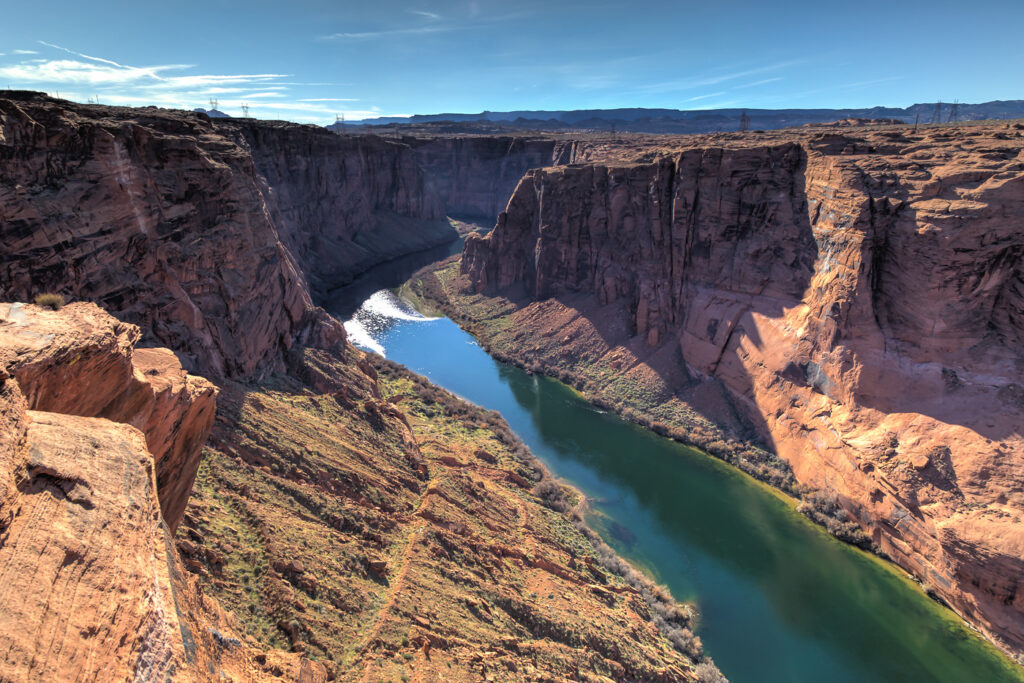
As a traveler, this location challenges you to look beyond the surface beauty. It compels you to ask: Who benefits from this water? Who doesn’t? How did these decisions get made? And crucially, how are Indigenous communities leveraging their unique knowledge and modern tools to reclaim what is rightfully theirs?
Travel with Purpose: Beyond the Postcard View
If you’re planning a trip to the Glen Canyon/Lake Powell area, consider extending your journey beyond the immediate tourist attractions. Engage with local Indigenous communities where possible (respecting cultural protocols, of course). Seek out tribal museums or cultural centers that tell the story from an Indigenous perspective. Support Indigenous-owned businesses.
This review isn’t just about a place; it’s about an ongoing struggle for justice that is deeply intertwined with the land and its resources. Glen Canyon Dam and Lake Powell are not merely engineering marvels or recreational hotspots; they are monuments to a complex history that continues to shape the present and future of Indigenous peoples. By understanding the critical role of Native American maps in articulating and defending water rights, travelers can gain a profound appreciation for the layers of meaning embedded in this powerful landscape.
Your visit to Glen Canyon can be more than just a scenic stop; it can be an education in environmental justice, sovereignty, and the enduring power of Indigenous voices in shaping the destiny of the American West. It’s a review of a place that demands you look closer, listen harder, and understand the true cost of water.

