
Unveiling the Métis Nation: A Journey Through Maps of Identity and Settlement in Canada
To understand Canada’s rich and complex Indigenous landscape, one must delve beyond the conventional narratives and explore the unique story of the Métis Nation. A map depicting Métis settlements is not merely a collection of geographical points; it is a profound historical document, a testament to a distinct identity forged in the heart of North America, marked by resilience, movement, and a persistent struggle for recognition. For travelers seeking deeper historical context or educators aiming to enrich their understanding of Indigenous Canada, exploring these maps offers a vital lens into a people whose story is woven inextricably into the nation’s fabric.
The Métis are one of Canada’s three recognized Aboriginal peoples, distinct from First Nations and Inuit. Their origins lie in the 17th and 18th centuries, primarily from the unions between European fur traders (often French, but also Scottish and English) and Indigenous women, predominantly Cree, Anishinaabeg (Ojibwe), Saulteaux, and Dene. From these unions emerged a new, vibrant culture with its own language (Michif, a unique blend of French nouns and Cree verbs), traditions, and a deep connection to the land—particularly the vast prairies and parklands of what is now Western Canada. A Métis settlements map, therefore, begins not with fixed boundaries, but with the fluid, evolving networks of the fur trade and the buffalo hunt, charting the genesis of a nation on the move.
The Red River: Cradle of a Nation

Any exploration of Métis settlements must begin at the Red River, in what is now Manitoba. Here, in the early 19th century, a permanent Métis community blossomed, becoming the undisputed heartland of the Métis Nation. The Red River Settlement was unique: a bustling, self-sufficient colony built on a distinctive agricultural system of narrow, elongated "river lots" stretching back from the Red and Assiniboine Rivers. These lots, designed to provide access to water and fertile land for farming while maintaining community cohesion along the riverbanks, created a visible, mapped pattern of settlement that endures in some areas today.
The Red River Settlement was more than just a collection of farms; it was a vibrant cultural and economic hub, a crossroads of Indigenous and European lifeways. The Métis here developed their own governing structures, their own laws, and a strong sense of collective identity. It was here that Louis Riel, a pivotal figure in Métis history, led the Métis Provisional Government in 1869-70, negotiating Manitoba’s entry into Confederation and asserting Métis rights. A map of this era would not just show land parcels; it would implicitly chart the emergence of a political consciousness, the lines of a nascent nation demanding its place.
Westward Expansion and the Echoes of Dispersal
Following the events of 1869-70, and subsequent pressures on their land and way of life at Red River (including the decline of the buffalo herds, which were central to their economy), many Métis began a significant westward migration. This period marks a crucial phase in understanding Métis settlement patterns, characterized by both the formation of new communities and the tragic process of dispersal.

New settlements sprang up across the prairies, often mirroring the river lot system of Red River, such as Batoche and St. Laurent in present-day Saskatchewan. These communities became new centers of Métis life, culture, and governance, adapting to the changing landscape. However, the push westward also led to increased conflict with the encroaching Canadian state and settlers. The North-West Resistance of 1885, again led by Riel, was a desperate attempt to protect Métis lands and rights. Its suppression resulted in further dispossession and a scattering of Métis communities, making the "mapping" of their presence increasingly challenging.
For decades after 1885, many Métis became "the road allowance people"—forming communities on public lands, such as road allowances, or in marginal areas, often without formal title. This period of dispossession meant that many Métis settlements were not officially surveyed or recognized, existing instead as informal, resilient communities of families struggling to maintain their culture and identity in the face of systemic neglect and discrimination. A map from this era would show large, seemingly empty spaces, yet within those spaces lay countless invisible Métis communities, their homes and lives unacknowledged by official cartography. This "unmapped" existence is a critical part of the Métis story, highlighting the disconnect between official land records and the lived reality of Indigenous peoples.
Identity Forged in Movement and Resilience
The Métis identity is inherently tied to this history of movement, adaptation, and resilience. Unlike some First Nations, whose traditional territories and reserve lands can be clearly delineated on a map, the Métis Nation Homeland is a vast, interconnected territory stretching across the prairies, parklands, and parts of Ontario, British Columbia, and the Northwest Territories. A Métis Nation Homeland map, therefore, is not about fixed boundaries but about areas of historical occupation, shared culture, family networks, and harvesting territories. It represents a continuum of presence, rather than static, isolated pockets.
The very concept of "settlement" for the Métis has a unique nuance. It encompasses not just permanent dwellings but also seasonal camps for hunting and gathering, wintering sites, and the routes connecting them. Their connection to the land is less about exclusive ownership of a single parcel and more about a holistic relationship with a broader territory, sustained through generations of mobility and resourcefulness. This makes mapping a dynamic, multi-layered exercise, requiring an understanding of historical land use patterns, oral histories, and the ongoing self-identification of Métis communities.
Modern Métis Settlements and the Path to Recognition
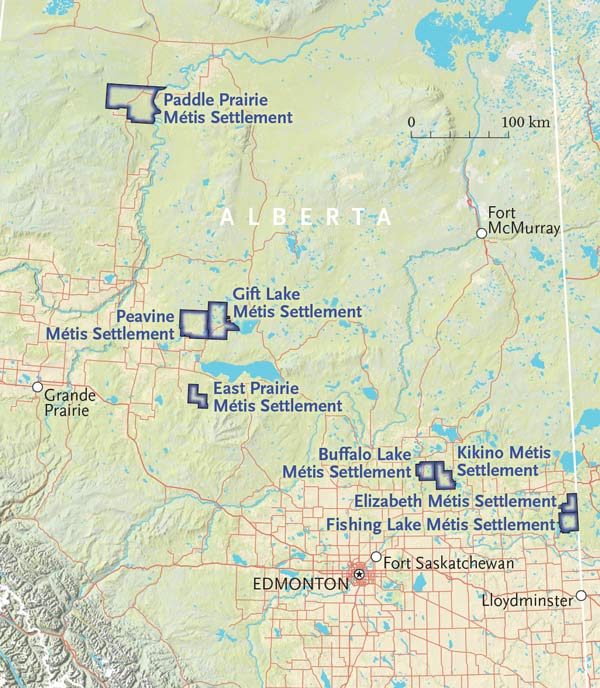
In the modern era, the Métis Nation has made significant strides in asserting its rights and achieving recognition. One of the most significant examples of formal Métis land bases are the eight Métis Settlements in Alberta. Established in 1938 through provincial legislation, these settlements represent the only constitutionally protected Métis land base in Canada. They are a powerful illustration of Métis self-governance, with their own councils, land codes, and the ability to manage their resources. A map of Alberta’s Métis Settlements clearly delineates these distinct land blocks, offering a rare example of formal, recognized Métis territory.
Beyond Alberta, Métis Nation organizations across the Homeland (including the Métis Nation of Ontario, Manitoba Metis Federation, Métis Nation – Saskatchewan, and the Métis Nation of Alberta) are actively involved in mapping their historical and contemporary presence. This includes identifying traditional harvesting areas, ancestral burial grounds, historic trails, and the locations of contemporary Métis communities. These modern maps are not just static representations; they are tools for self-determination, supporting land claims, asserting harvesting rights, and educating the public about the Métis Nation’s enduring connection to the land.
Interpreting the Map for Travelers and Educators
For those exploring Canada, a Métis settlements map is an invitation to engage with a deeper, more nuanced history.
- Look Beyond the Obvious: Understand that many historical Métis settlements might not appear on standard historical maps. Seek out specialized Métis history maps or resources from Métis Nation organizations.
- Recognize the River Lot Pattern: Where possible, observe the distinctive river lot patterns in older communities, particularly in Manitoba and Saskatchewan, as a tangible link to Métis agricultural heritage.
- Visit Historic Sites: Sites like Batoche National Historic Site in Saskatchewan offer direct physical connections to Métis history and the North-West Resistance, providing a powerful sense of place.
- Engage with Culture: Seek out Métis cultural centers, museums, and events. These living expressions of identity provide context that static maps cannot. Understanding the Michif language, the fiddle music, and the sash are all part of "mapping" Métis culture.
- Acknowledge the Homeland: Recognize that the Métis Nation Homeland is vast. A map illustrating this homeland emphasizes the extensive reach of Métis influence and historical presence, challenging the notion of isolated communities.
- Understand Resilience: The map tells a story of a people who have adapted, persevered, and continue to thrive despite immense challenges. It’s a map of resilience and enduring identity.
In conclusion, a map of Métis settlements in Canada is far more than a geographical diagram. It is a dynamic narrative of a distinct Indigenous people—their origins in the fur trade, their nation-building at Red River, their dispersal across the prairies, their struggle for land and rights, and their ongoing journey toward self-determination. It is a tool for understanding how history, identity, and territory are inextricably linked, inviting us to look beyond the surface and appreciate the enduring spirit of the Métis Nation, a vital and unique thread in the rich tapestry of Canada. For any traveler or educator, delving into these maps provides not just historical facts, but a profound connection to the living history and vibrant identity of the Métis people.

