
The Living Map: Navigating Native American State Relations, History, and Identity
Forget the simplistic lines on a grade-school map that once depicted Native American tribes as static, vanished entities. To truly understand the landscape of North America, one must grasp a far more complex and dynamic reality: the intricate web of "state relations" that define the contemporary existence of Indigenous nations. This isn’t merely about geography; it’s about sovereignty, identity, history, and the ongoing negotiation of power between distinct governmental entities. For the curious traveler and the earnest student of history, comprehending this living map is essential to engaging respectfully and knowledgeably with the vibrant Indigenous cultures that continue to thrive across the continent.
The Original Nations: Pre-Contact Sovereignty and Diplomacy
Before European contact, North America was a continent of hundreds of diverse, self-governing nations. From the sophisticated agricultural societies of the Mississippi Valley to the nomadic hunters of the Great Plains, the maritime communities of the Pacific Northwest, and the intricate confederacies of the Northeast, each Indigenous group possessed its own unique political systems, laws, economies, and diplomatic protocols. These were not mere "tribes" in the colloquial sense, but sovereign states, engaging in trade, forming alliances, waging war, and establishing treaties with neighboring nations. Their borders, while often fluid and defined by resource use rather than rigid lines, were understood and respected.
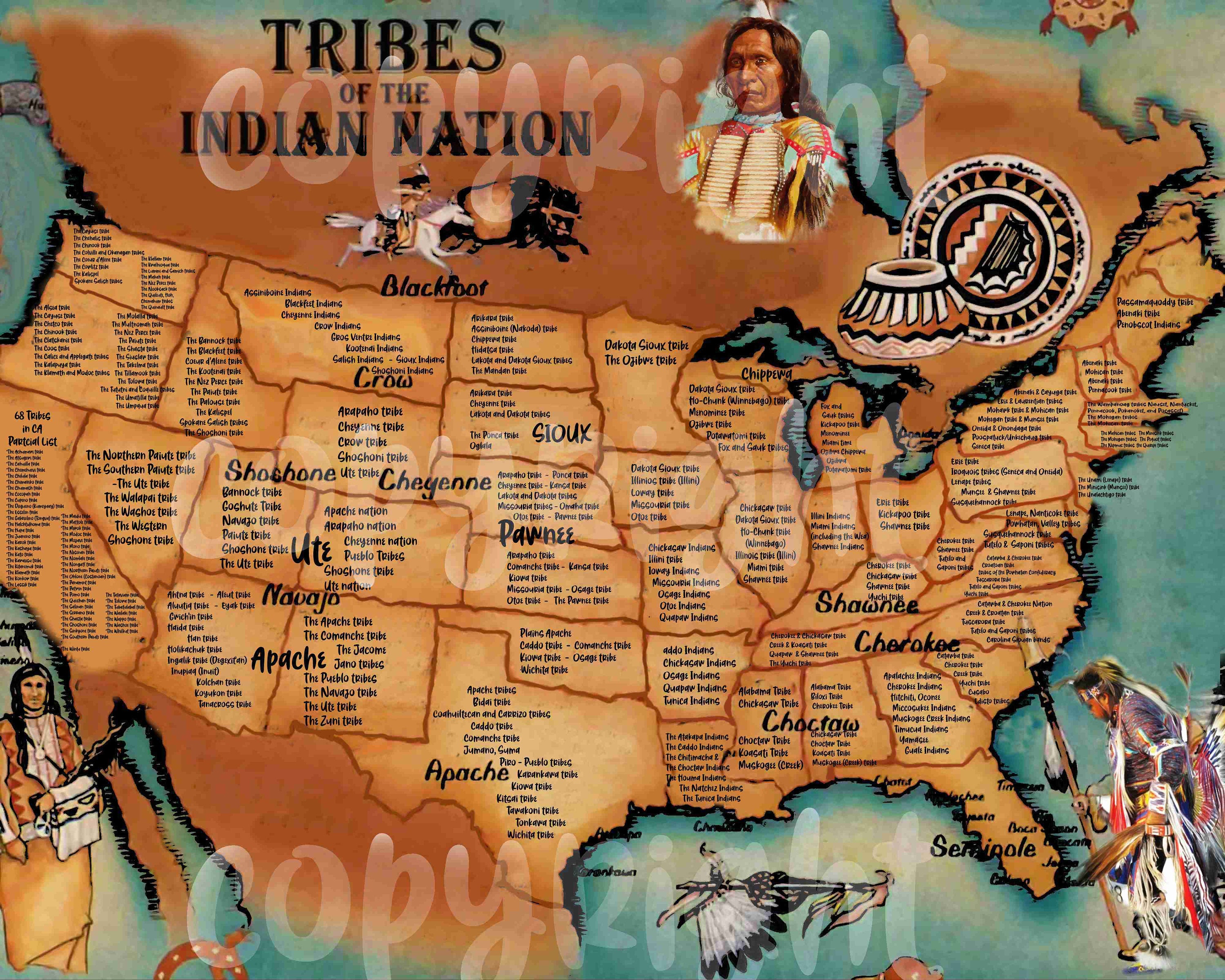
Early European explorers and colonists initially recognized this reality, often entering into nation-to-nation agreements with Indigenous leaders. Treaties, though frequently violated later, were first made because European powers understood they were dealing with legitimate governments possessing inherent authority over their lands and peoples. This foundational understanding—that Native American nations were and are sovereign entities—is the bedrock upon which all subsequent "state relations" have been built, or tragically, undermined.
The Shifting Sands: Treaties, Removal, and Legal Redefinition
The formation of the United States brought a new, often contradictory, approach. The U.S. Constitution, in Article I, Section 8, grants Congress the power to "regulate Commerce… with the Indian Tribes," implicitly acknowledging their distinct governmental status. Furthermore, Article VI declares treaties to be the "supreme Law of the Land," a principle that applies to the hundreds of treaties signed between the U.S. and Native American nations. These treaties, often involving land cessions in exchange for promises of protection, resources, and recognition of remaining territories, were intended to establish permanent nation-to-nation relationships.
However, as the young United States expanded westward, the concept of Indigenous sovereignty came under increasing pressure. The infamous "Marshall Trilogy" of Supreme Court cases in the 1820s and 30s—Johnson v. M’Intosh (1823), Cherokee Nation v. Georgia (1831), and Worcester v. Georgia (1832)—profoundly shaped the legal definition of Native American statehood. While Worcester v. Georgia famously affirmed the Cherokee Nation as a "distinct political community, having territorial boundaries, within which their authority is exclusive," Cherokee Nation v. Georgia introduced the concept of "domestic dependent nations." This classification, while affirming some level of sovereignty, positioned tribes as subject to the "paternalistic" power of the federal government, rather than fully independent foreign states.

This legal redefinition paved the way for policies like the Indian Removal Act of 1830, which forcibly displaced numerous Southeastern tribes (including the Cherokee, Choctaw, Chickasaw, Creek, and Seminole) from their ancestral lands to Indian Territory (present-day Oklahoma) during the devastating "Trail of Tears." Despite Supreme Court rulings, these acts demonstrated the U.S. government’s willingness to disregard treaty obligations and inherent sovereignty in pursuit of land and resources.
The Era of Assimilation: Attempts at Erasure and the Seeds of Self-Determination
The latter half of the 19th century and the early 20th century were marked by aggressive assimilation policies aimed at dismantling tribal governments, cultures, and land bases. The Dawes Act (General Allotment Act) of 1887 broke up communal tribal lands into individual allotments, selling off "surplus" land to non-Native settlers. This policy decimated tribal land holdings and undermined traditional governance structures tied to communal ownership. Concurrently, government-run boarding schools sought to "kill the Indian to save the man," forcing Indigenous children to abandon their languages, religions, and cultural practices. These were direct assaults on Indigenous identity and the very fabric of tribal nationhood.
Despite these catastrophic attempts at cultural and political erasure, Indigenous communities persevered. The Indian Reorganization Act (IRA) of 1934 marked a significant shift, ending the allotment policy and encouraging tribes to adopt written constitutions and elect tribal councils, often modeled on Western political structures. While controversial among some tribes for imposing foreign governance models, the IRA nonetheless provided a framework for revitalizing tribal governments and laying the groundwork for future self-determination.

The post-World War II era saw another misguided policy: "Termination." From the 1950s to the 1960s, the U.S. government sought to terminate its relationship with numerous tribes, ending federal recognition and services, and subjecting tribal lands to state jurisdiction and taxation. This policy proved disastrous, leading to widespread poverty and the loss of essential services for terminated tribes, and further highlighting the precariousness of their "dependent" status.
Modern Native American State Relations: A Tapestry of Sovereignty
Today, the "map" of Native American state relations is incredibly intricate, reflecting centuries of legal battles, political struggles, and enduring resilience.
1. Federally Recognized Tribes:
The cornerstone of modern Native American state relations are the 574 federally recognized tribes (as of late 2023) within the contiguous U.S. and Alaska. Federal recognition means these tribes are considered sovereign nations with a government-to-government relationship with the United States. This status carries significant implications:
- Inherent Sovereignty: Federally recognized tribes possess inherent powers of self-governance, including the ability to form their own governments, enact laws, establish police forces and court systems, determine membership, and manage their lands and resources.
- Trust Relationship: The federal government has a unique "trust responsibility" to these tribes, meaning it is obligated to protect tribal lands, assets, resources, and treaty rights, and to provide certain services.
- Federal Funding & Programs: Federally recognized tribes are eligible for various federal programs and funding streams for healthcare, education, housing, and infrastructure.
- Economic Development: This status enables tribes to pursue economic ventures, most notably gaming (casinos), which are regulated through tribal-state compacts.

2. State-Recognized Tribes:
Beyond federal recognition, some states formally acknowledge tribes that do not have federal status. State recognition varies widely in its scope and benefits. While it may provide access to state funding, cultural preservation grants, and a degree of political recognition within the state, it does not confer the same level of inherent sovereignty or federal trust relationship as federal recognition. These tribes often continue to pursue federal recognition, a long and arduous process requiring extensive historical and genealogical documentation.
3. Unrecognized Tribes:
Numerous Indigenous communities exist without either federal or state recognition. These groups often face significant challenges in protecting their lands, cultural heritage, and in accessing services. Their struggle for recognition is a testament to the ongoing legacy of colonialism and the arbitrary nature of external validation of Indigenous identity.
4. Inter-Tribal Relations:
Native American nations also maintain relationships with each other. These can involve traditional alliances, inter-tribal compacts for resource management, cultural exchanges, and political advocacy through organizations like the National Congress of American Indians (NCAI).
5. Tribal-State Relations:
The relationship between tribal governments and state governments is a constantly evolving area, often fraught with jurisdictional complexities. Issues such as taxation, law enforcement jurisdiction on tribal lands, water rights, environmental regulation, and gaming compacts are negotiated on a case-by-case basis. These interactions often highlight the tension between tribal sovereignty and state authority, particularly when tribal lands are "checkerboarded" with non-Native private land within reservation boundaries.
6. Tribal-Federal Relations:
This is the primary government-to-government relationship. It involves ongoing negotiations over treaty rights, land claims, natural resource management, and the implementation of self-governance policies that allow tribes greater control over federal programs and funds intended for their communities.
Identity, Land, and Self-Governance: The Inseparable Link
For Native American nations, sovereignty is not merely a legal or political concept; it is deeply intertwined with identity, culture, and connection to the land. The ability to self-govern allows tribes to:
- Preserve and Revitalize Culture: Support language immersion programs, traditional arts, ceremonies, and historical narratives.
- Protect Sacred Sites: Exercise control over ancestral lands and cultural resources.
- Determine Membership: Define who belongs to their nation, maintaining cultural continuity.
- Pursue Economic Development: Create opportunities that benefit their communities, reduce dependency, and reinforce self-sufficiency.
- Heal Historical Trauma: Through self-determination, tribes can address the intergenerational impacts of colonialism, forced assimilation, and broken promises.
The land, often held in trust by the federal government for the tribes, is not just property; it is the foundation of their spiritual, cultural, and economic well-being. The fight for land rights and resource management is therefore a fight for identity and survival itself.
For the Traveler and Educator: Engaging with Sovereignty
Understanding this "living map" of Native American state relations is crucial for anyone wishing to engage meaningfully with Indigenous cultures.
- Respect Tribal Sovereignty: Recognize that when you visit a reservation, you are entering another nation. Be aware of and respect tribal laws, customs, and regulations.
- Educate Yourself: Learn about the specific Indigenous nations whose ancestral lands you are on or visiting. Many tribes have their own websites, cultural centers, and museums.
- Support Tribal Economies: Purchase goods and services from tribally owned businesses.
- Challenge Stereotypes: Recognize the diversity among Indigenous nations and avoid perpetuating outdated or harmful stereotypes.
- Listen to Indigenous Voices: Seek out and amplify the perspectives of Native American people regarding their history, present, and future.
By approaching Native American communities with this informed perspective, travelers and educators can move beyond a superficial appreciation of "Indian culture" to a deeper understanding of Indigenous nationhood, resilience, and the ongoing struggle for self-determination. The map of Native American state relations is not a relic of the past; it is a dynamic, evolving testament to the enduring sovereignty and vibrant identity of Indigenous peoples across North America. To truly see the continent is to see this map in its full, complex, and living form.

