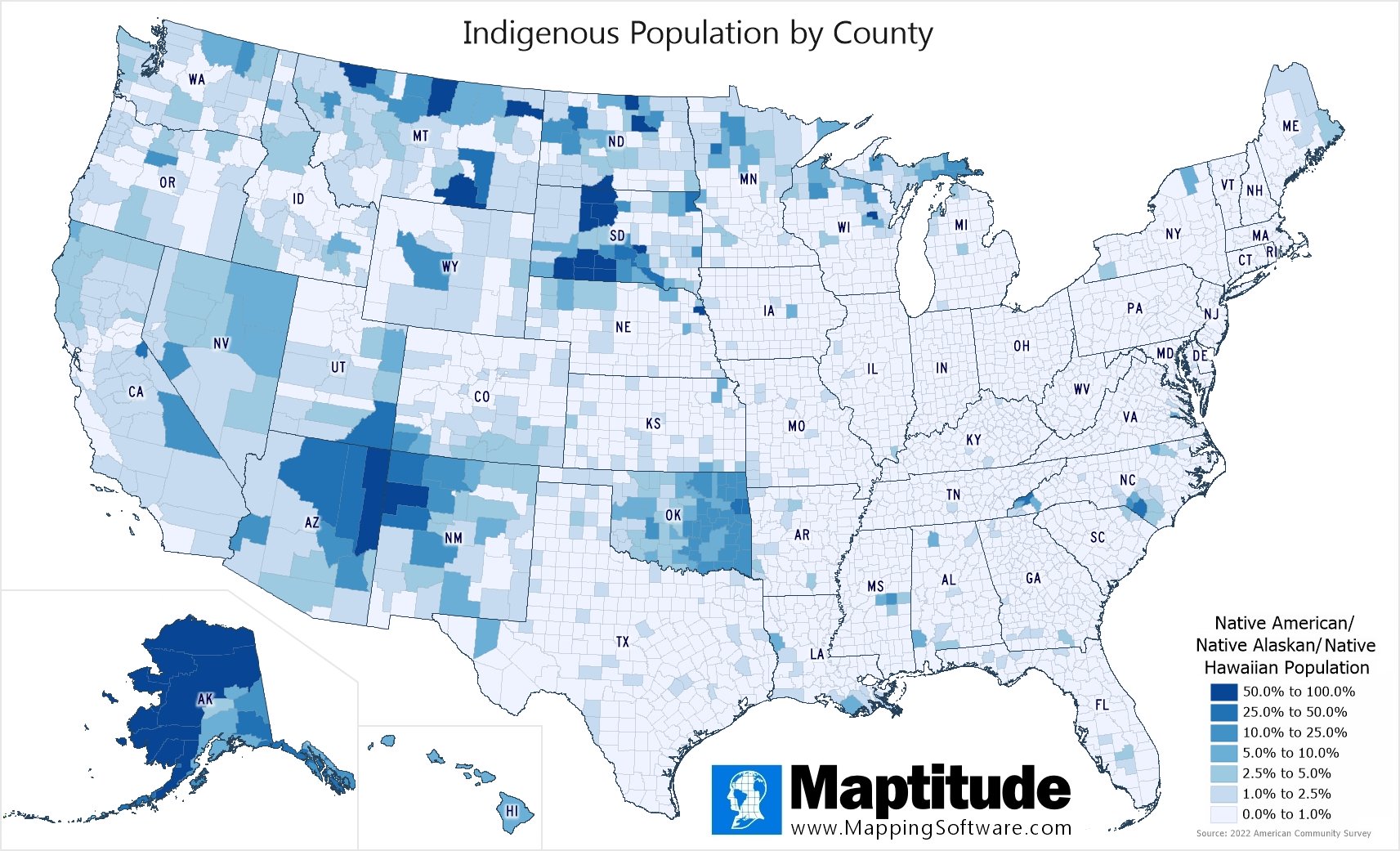
The Living Map: Unveiling Native American Nations in 1800
More than just lines on parchment, a map of Native American populations in 1800 is a profound historical document, a vibrant snapshot of a continent teeming with diverse cultures, sovereign nations, and complex societies on the precipice of monumental change. For the history enthusiast, the mindful traveler, or anyone seeking a deeper understanding of North America’s true heritage, this map offers an indispensable window into a world often misrepresented or overlooked. It’s a testament to identity, resilience, and the enduring connection between people and their ancestral lands.
Beyond the Blank Slate: A Continent of Nations
When we imagine North America in 1800, popular history often presents a vast, untamed wilderness awaiting European settlement. The "Map of Native American Populations 1800," however, shatters this myth, revealing a continent that was anything but empty. Instead, it was a dynamic mosaic of hundreds of distinct Indigenous nations, each with its own language, political system, spiritual beliefs, economic practices, and intricate social structures.

This map showcases a truly continental distribution:
- The Northeast and Great Lakes: Here, powerful confederacies like the Haudenosaunee (Iroquois) – comprising the Mohawk, Oneida, Onondaga, Cayuga, Seneca, and later Tuscarora – still held significant influence despite centuries of colonial pressure. Other prominent groups included the Lenape (Delaware), Wampanoag, Ojibwe, Ottawa, Potawatomi, and Huron-Wendat, who managed vast territories through hunting, fishing, and sophisticated agriculture. Their presence, though diminished from pre-contact numbers due to disease and conflict, remained a formidable force.
- The Southeast: This region was home to the "Five Civilized Tribes" – the Cherokee, Choctaw, Chickasaw, Creek, and Seminole – who had already adopted many aspects of European farming and governance while fiercely maintaining their cultural identities. Other nations like the Timucua, Catawba, and Natchez had also shaped this fertile landscape for millennia. Their societies were often hierarchical, with established towns, complex kinship systems, and extensive trade networks.
- The Plains: While the iconic image of the mounted Plains warrior often conjures a later era, by 1800, tribes like the Lakota (Sioux), Cheyenne, Arapaho, Comanche, and Pawnee were increasingly adapting to the horse, revolutionizing hunting practices and warfare. Their territories stretched across the vast grasslands, their lives intimately tied to the buffalo. However, many Plains nations also practiced agriculture along river valleys, showcasing a diverse economic base.
- The Southwest: This arid yet vibrant region was the domain of the Pueblo peoples (like the Hopi, Zuni, and Taos), whose ancient, multi-story villages and sophisticated irrigation systems reflected centuries of agricultural mastery. Alongside them were the nomadic Diné (Navajo) and Apache, skilled hunter-gatherers and raiders, whose territories spanned vast mesas and canyons.
- The Pacific Northwest: A land of immense natural abundance, this region supported a dense population of nations like the Coast Salish, Haida, Tlingit, Chinook, and Kwakwakaʼwakw. Their cultures were characterized by monumental cedar architecture, intricate art (totem poles, masks), complex social hierarchies, and economies based on salmon fishing and cedar harvesting.
- California and the Great Basin: Hundreds of distinct groups, often organized into smaller bands, inhabited these diverse ecological zones. Tribes like the Miwok, Yokuts, Shoshone, and Paiute adapted to everything from coastal redwood forests to arid deserts, demonstrating incredible resourcefulness and localized cultural development.
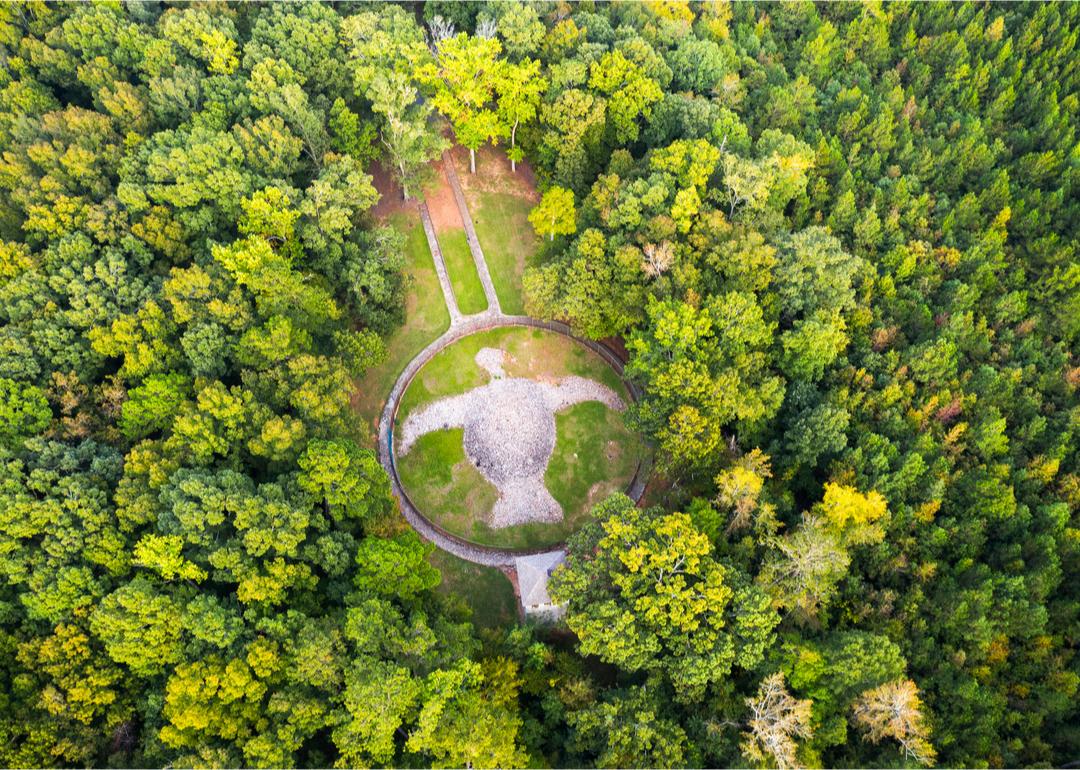
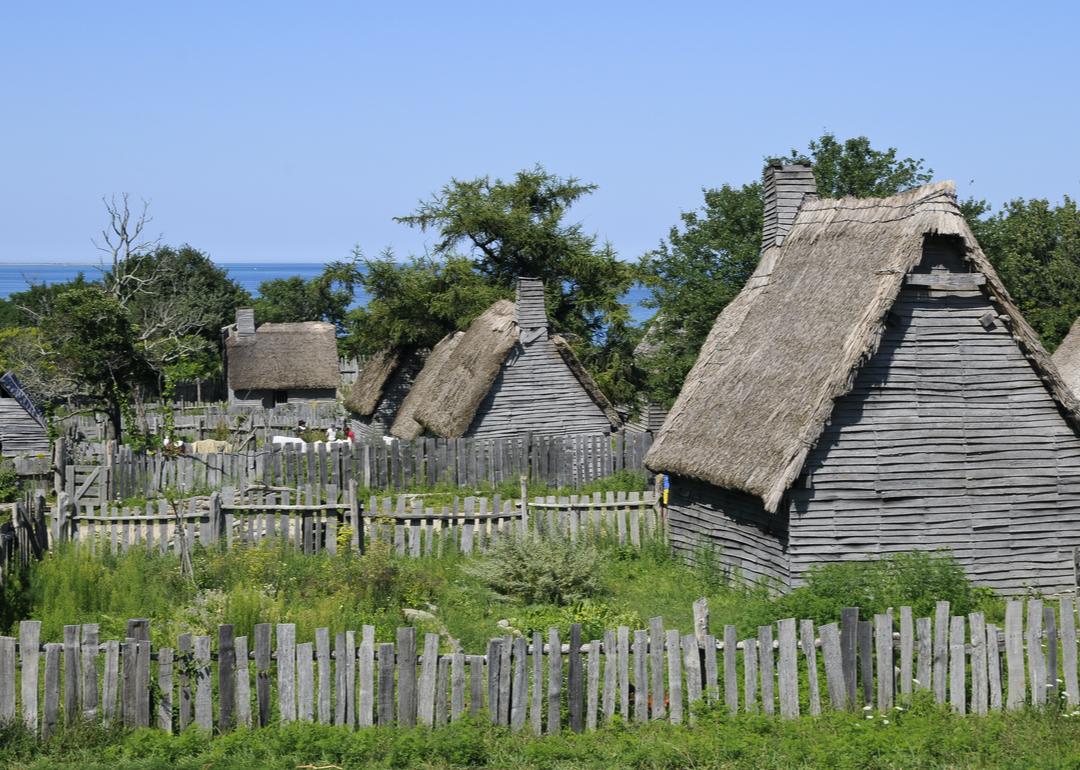
This geographic distribution reveals that "boundaries" in 1800 were often fluid, reflecting spheres of influence, seasonal migration routes, hunting grounds, and shared resource territories rather than rigid lines. Tribes often had alliances and conflicts with neighbors, creating a complex geopolitical landscape that challenges simplistic notions of "empty land."
1800: The Eve of Transformation
The year 1800 is not an arbitrary date; it stands as a critical juncture in the history of Native North America. The American Revolution had concluded, and the fledgling United States was beginning to assert its identity and expand its territorial ambitions. While European colonial powers had been present for centuries, introducing disease, trade goods, and conflict, the post-Revolutionary era ushered in a new, intensified phase of pressure.
- The New Republic’s Vision: The U.S. government, under presidents like Thomas Jefferson, grappled with what it called the "Indian Problem." Policies vacillated between attempts at "civilization" (encouraging Native peoples to adopt Euro-American farming, religion, and governance) and, increasingly, a desire for land acquisition.
- Land Hunger and Treaties: The burgeoning American population, coupled with an ideology of westward expansion, fueled an insatiable demand for land. This era saw the proliferation of treaties – agreements between sovereign nations. However, these treaties were often negotiated under duress, misunderstood due to cultural differences, or outright violated by the U.S. government as settlers encroached on Native territories. The map in 1800 represents the lands still held by Native nations, often after generations of ceding territory.
- The Louisiana Purchase (1803): Though just three years after our map’s snapshot, the impending Louisiana Purchase loomed large. This massive acquisition of territory from France would dramatically accelerate westward expansion, bringing American settlers into direct contact – and often conflict – with the numerous Native nations already inhabiting those vast lands, effectively setting the stage for decades of forced removal and displacement.
- Disease and Demographics: By 1800, centuries of exposure to European diseases (smallpox, measles, influenza) had already decimated Native populations. The map, therefore, reflects a population base significantly smaller than pre-contact numbers, yet still robust and culturally vibrant.
Identity and Sovereignty: More Than Just "Populations"
The term "populations" on a map can be deceptively generic. For Indigenous peoples, their identity in 1800 was inextricably linked to their land, their language, and their self-governance. These were not merely groups of people; they were sovereign nations.
- Self-Determination: Each nation had its own political structures, from the confederated councils of the Haudenosaunee to the band-level leadership of many Western groups. They made their own laws, conducted diplomacy, and defended their territories. The map is a visual representation of this inherent sovereignty, showing distinct national entities occupying their ancestral domains.
- Cultural Resilience: Despite immense pressures – disease, warfare, forced assimilation attempts – Native cultures in 1800 were vibrant and dynamic. Languages were spoken, ceremonies were performed, traditional knowledge systems thrived. The map underscores the sheer diversity of these living cultures, each a unique expression of human adaptation and creativity.
- Spiritual Connection to Land: For Indigenous peoples, land was not merely property to be bought and sold; it was a sacred entity, the source of identity, sustenance, and spiritual well-being. Ancestors were buried there, creation stories were rooted there, and ceremonies were performed there. The territories shown on the map represent generations of profound, reciprocal relationships between people and place. To lose the land was to lose a fundamental part of self.
- Linguistic Diversity: The map implicitly represents an incredible linguistic tapestry. North America in 1800 was one of the most linguistically diverse places on Earth, with hundreds of mutually unintelligible languages belonging to dozens of distinct language families (e.g., Algonquian, Iroquoian, Siouan, Athabaskan, Uto-Aztecan). Each language carried a unique worldview, knowledge system, and cultural heritage, a vital component of tribal identity.
The Imminent Storm: What the Map Doesn’t Show (But Foreshadows)
While the "Map of Native American Populations 1800" presents a world still largely under Indigenous control, it stands as a poignant precursor to the dramatic and often tragic events of the 19th century. It hints at the vulnerability of these nations in the face of an expanding, land-hungry United States.
The decades following 1800 would witness:
- The Indian Removal Act (1830) and Forced Removals: The "Trail of Tears" and similar forced marches would forcibly displace millions of Native people from their ancestral lands in the Southeast and Midwest to Indian Territory (present-day Oklahoma), profoundly reshaping the demographic map.
- Westward Expansion and Manifest Destiny: The ideology that it was America’s divine right to expand across the continent would lead to relentless pressure, warfare, and further treaty violations.
- The Reservation System: By the latter half of the century, most Native nations would be confined to ever-shrinking reservations, often on marginal lands, severing their traditional ties to vast territories.
- Cultural Suppression: Policies aimed at "civilizing" Native Americans included the establishment of boarding schools designed to strip children of their language, culture, and identity.
The map of 1800 thus serves as a powerful "before" picture, illustrating what was lost, but crucially, also what existed and persisted despite immense challenges.
Contemporary Relevance: Why Study This Map Today?
Understanding the "Map of Native American Populations 1800" is not merely an academic exercise; it has profound contemporary relevance for several reasons:
- Understanding Modern Tribal Nations: This map provides essential context for the existence and sovereignty of today’s 574 federally recognized Native American tribes and numerous state-recognized and unrecognized nations. Their historical claims to land, their struggles for self-determination, and their cultural revitalization efforts are rooted in the world depicted on this map.
- Debunking Myths: It challenges the pervasive myth of North America as an "empty wilderness" prior to European settlement. It reveals a continent vibrant with human societies, complex histories, and deep connections to the land.
- Acknowledging Historical Injustice: By seeing the extent of Native territories in 1800, we can better grasp the scale of land loss and the devastating impact of colonial policies and forced removals. This understanding is crucial for reconciliation and moving forward.
- Promoting Respect and Education: For travelers, understanding this map means approaching historical sites, national parks, and especially tribal lands with a heightened sense of awareness and respect. It encourages learning about the Indigenous history of any place you visit, seeking out Native voices, and supporting tribal enterprises.
- Celebrating Resilience: Ultimately, the map is a testament to the incredible resilience and adaptability of Indigenous peoples. Despite centuries of concerted efforts to erase their cultures and identities, Native nations have survived, revived their languages, reclaimed their histories, and continue to thrive.
Conclusion: A Call to See and Understand
The "Map of Native American Populations 1800" is far more than a cartographic curiosity. It is a living document, a silent witness to a vibrant past, and a powerful lens through which to understand the present. It compels us to see North America not just as a land of states and cities, but as a deeply layered landscape, shaped by millennia of Indigenous presence and profound human stories. For the traveler and the student of history alike, engaging with this map is an essential step toward a more complete, truthful, and respectful understanding of this continent’s enduring heritage. It’s an invitation to look beyond the familiar, to learn, and to honor the nations whose identities remain inextricably linked to the land they have always called home.

