
Mapping Minds: Unveiling the Sophisticated Mathematical Systems of Native North America
Forget the simplistic images of hunter-gatherers devoid of abstract thought. To truly understand the rich tapestry of Native North American cultures is to embark on a journey across a conceptual map, charting intricate mathematical systems that underpinned their societies, built their cities, navigated their worlds, and articulated their deepest spiritual beliefs. This isn’t just about counting; it’s about sophisticated geometry, profound astronomical observation, complex calendrics, ingenious engineering, and an embedded logic that defined their very identity. For the discerning traveler and history enthusiast, exploring this intellectual landscape offers a profound re-education and a deeper appreciation for the ingenuity that thrived across this continent long before European arrival.
Our "map" isn’t drawn with modern coordinates, but with the distribution of distinct intellectual traditions, each adapting mathematical principles to their unique environments and worldviews. From the desert Southwest to the dense forests of the Northeast, from the vast plains to the Pacific coast, mathematical thought was not an isolated academic pursuit but an integral, often spiritual, component of daily life.
The Southwest: Celestial Architects and Intricate Weavers
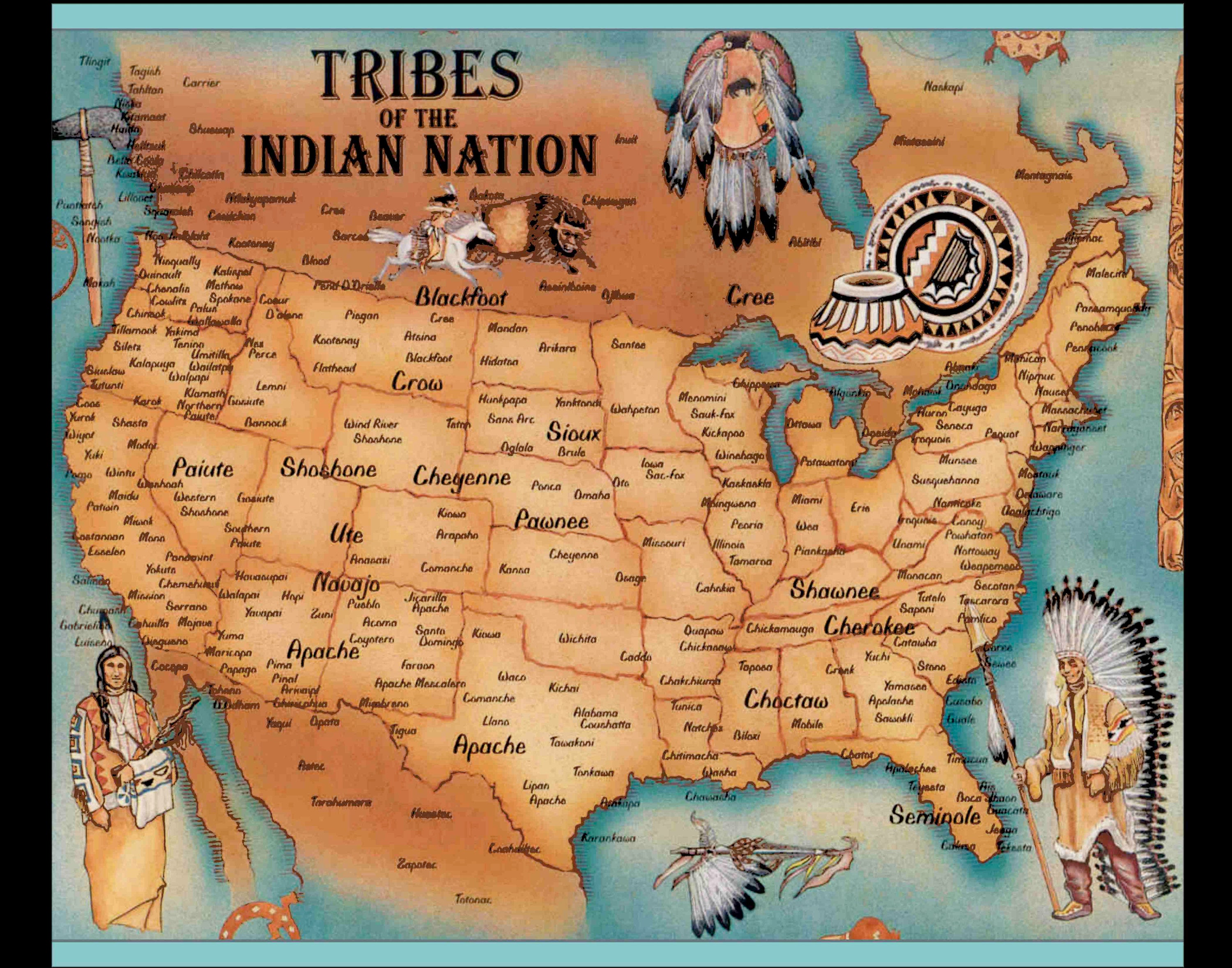
Our journey begins in the arid Southwest, a region teeming with architectural and astronomical brilliance. The Ancestral Puebloans (Anasazi), particularly those of Chaco Canyon in present-day New Mexico, stand as a testament to advanced mathematical engineering. Their "Great Houses," such as Pueblo Bonito, are not random collections of rooms but meticulously planned structures aligned with celestial events. Solstices and equinoxes were marked by precise architectural orientations, windows, and rock carvings that captured light and shadow in specific patterns. This required not only acute observation but also a sophisticated understanding of geometry, angles, and measurement, applied over vast distances to coordinate multiple sites. The famed Chacoan roads, radiating for miles into the landscape, were remarkably straight, often traversing difficult terrain, suggesting advanced surveying techniques and a grasp of linear geometry on a grand scale. Their kivas, subterranean ceremonial chambers, frequently exhibit perfect circularity and radial symmetry, demonstrating a mastery of geometric principles crucial for their cosmological understanding.
Further west, the Navajo (Diné) people offer another powerful example through their weaving and sand painting. Navajo rugs are not merely decorative; their intricate patterns, symmetries, and repetitions embody complex mathematical concepts. Weavers intuitively work with ratios, proportions, and geometric transformations, creating designs that can be seen as visual algorithms. The symmetry in a "Storm Pattern" rug, for instance, reflects both bilateral and rotational symmetry, demonstrating an inherent understanding of these principles. Similarly, sacred sand paintings, meticulously crafted for healing ceremonies, are often symmetrical and exhibit fractal-like patterns, reflecting the interconnectedness of the cosmos and the human spirit. These artistic expressions are a living mathematics, passed down through generations, deeply embedded in their cultural identity and spiritual practices.
Mesoamerican Echoes and Mississippian Metropolises
While technically outside the present-day United States, the mathematical systems of Mesoamerican civilizations like the Maya and Aztec cast a long shadow, influencing cultures to the north and demonstrating the pinnacle of pre-Columbian mathematical achievement. The Maya, with their sophisticated vigesimal (base-20) number system that included the concept of zero, developed incredibly accurate calendars (the Long Count) and astronomical tables. Their understanding of planetary cycles, eclipses, and the movement of the sun and moon was unparalleled, encoded in complex hieroglyphic texts and monumental architecture.

This advanced thinking permeated northward, most notably influencing the Mississippian cultures that flourished across the American Midwest and Southeast, culminating in centers like Cahokia near modern-day St. Louis. Cahokia was a vast urban complex, home to tens of thousands, featuring enormous earthen mounds, plazas, and planned settlements. Its central mound, Monks Mound, is a colossal feat of engineering, requiring precise calculations of volume, labor, and stability. More strikingly, Cahokia included "Woodhenges" – circles of massive timber posts precisely aligned to mark solstices and equinoxes, functioning as sophisticated astronomical observatories and calendars. The layout of the city itself, with its cardinal orientations and distinct social divisions, reflects a powerful application of spatial geometry and numerical organization, demonstrating a complex understanding of urban planning and social hierarchy.
The Great Plains: Counting the Seasons and Shaping the Sky
On the vast expanses of the Great Plains, mathematical systems were intimately tied to survival, spiritual connection, and the recording of history. The Lakota, Cheyenne, and other Plains tribes developed unique calendrical systems known as "Winter Counts." These were pictorial histories, often painted on hides, where each symbol represented a significant event of a particular year, typically spanning from one winter to the next. While seemingly narrative, Winter Counts are a sophisticated form of data recording and mnemonic mathematics. They track the passage of time, population changes, key battles, resource availability, and social dynamics, allowing for the retrieval and interpretation of historical data over generations. This system required consistent indexing, sequencing, and the ability to condense complex information into concise visual representations.
The iconic tipi of the Plains tribes is itself a marvel of applied geometry and engineering. Its conical design is remarkably stable against strong winds, efficient in its use of materials, and easily erected and dismantled. The precise angles of the poles, the circular base, and the vent flaps all demonstrate an intuitive understanding of structural mechanics and spatial reasoning. Furthermore, the Lakota, for example, incorporated sacred geometry into their worldview, seeing the circle as a fundamental, perfect shape representing the hoop of life, the sun, the moon, and the unity of the universe – a profound philosophical application of mathematical form.

The Northeast: Wampum, Confederacy, and Navigation
In the dense forests and along the waterways of the Northeast, mathematical thinking manifested in systems of communication, governance, and trade. The Iroquois Confederacy (Haudenosaunee), a powerful alliance of nations, developed a sophisticated political structure based on principles of representation, checks and balances, and a form of "nested" hierarchy – a complex organizational model that required logical reasoning and numerical apportionment of power among its constituent tribes.
Perhaps one of the most visible forms of mathematical encoding in this region is wampum. Made from shell beads meticulously crafted and strung into belts, wampum was far more than mere currency. It served as a mnemonic device, a record of treaties, historical events, and social agreements. The patterns, colors, and arrangements of the beads conveyed complex information, acting as a form of proto-data storage and visual communication. Reading a wampum belt required an understanding of its coded structure, its sequences, and the symbolic "grammar" embedded within its mathematical arrangement. This system allowed for the reliable transmission of crucial information across generations and between nations, embodying a sophisticated blend of art, history, and mathematics.
Practical geometry and spatial reasoning were also vital for navigation and trade. The extensive network of trails and waterways across the Northeast required an understanding of distances, directions, and the ability to mentally map complex routes, often relying on celestial observations and landmarks.
The Pacific Northwest: Fractal Art and Resource Management
Along the rugged Pacific Northwest coast, where abundant resources fueled vibrant cultures, mathematical principles were evident in their distinctive art and their sophisticated understanding of ecology. The art of the Haida, Kwakiutl, Tlingit, and other nations, expressed in totem poles, masks, and woven blankets, is characterized by its complex ovoid shapes, formline designs, and a remarkable use of symmetry and transformation. These artistic traditions often incorporate fractal-like patterns and recursive designs, where smaller elements echo the form of larger ones, creating a visually dynamic and mathematically intricate aesthetic. This wasn’t merely decorative; it was a visual language, conveying narratives, lineages, and spiritual beliefs through precise geometric arrangement.

Beyond art, the peoples of the Pacific Northwest practiced highly sophisticated resource management, particularly concerning salmon runs and cedar forests. Their knowledge of fish migration patterns, population dynamics, and sustainable harvesting techniques demonstrates an intuitive, observational form of ecological mathematics. They understood cycles, growth rates, and carrying capacities, applying this knowledge to ensure the long-term viability of their food sources – a practical application of what we might today call systems thinking and predictive modeling.
Common Threads: Identity, Spirituality, and Practicality
Across all these diverse regions, several common threads emerge regarding Native American mathematical systems. Firstly, mathematics was rarely an abstract, disembodied concept. It was deeply integrated into daily life, essential for survival, resource management, architecture, and governance. Secondly, these systems were often intertwined with spiritual beliefs and cosmological understanding. The alignment of a structure, the pattern of a weave, or the sequence of a calendar often reflected a profound connection to the natural world and the divine. Thirdly, the transmission of this knowledge was predominantly oral and experiential, passed down through apprenticeship, ritual, and storytelling, rather than through formal written treatises in the European sense. This does not make it less rigorous; it simply highlights a different epistemology.
Finally, these mathematical systems were integral to Native American identity. They reflected a deep understanding of their environment, their place within the cosmos, and their social structures. They were tools for self-expression, for remembering history, and for shaping their future.
The Enduring Legacy and the Call to Explore
The arrival of European colonizers brought immense disruption, disease, and the systematic suppression of indigenous knowledge systems. Many mathematical traditions were fragmented, lost, or forced underground. Yet, the resilience of Native peoples ensured that much survived, often embedded in ceremonies, art, language, and the very landscape itself.
Today, as we seek a more inclusive and accurate understanding of history, recognizing the profound mathematical contributions of Native North America is crucial. For the modern traveler, this "map of minds" transforms archaeological sites like Chaco Canyon and Cahokia from mere ruins into vibrant testaments of intellectual prowess. It elevates a Navajo rug from a craft item to a mathematical text, and a wampum belt from an artifact to a sophisticated data repository.
To truly appreciate the richness of this continent’s heritage, we must move beyond superficial narratives and engage with the intellectual depth of its original inhabitants. Visit museums, explore tribal cultural centers, read the works of Native scholars, and stand in awe at the sites where these mathematical systems were brought to life. In doing so, you won’t just learn about history; you’ll gain a profound new perspective on human ingenuity, the interconnectedness of knowledge, and the enduring power of identity forged in the crucible of sophisticated thought. This journey of discovery is a powerful step towards understanding and respecting the true intellectual legacy of Native North America.

