
Mapping Native American Dwellings: A Journey Through Ingenuity and Identity
A comprehensive map of Native American housing types would not merely delineate structures; it would chart a profound cultural landscape, revealing millennia of ingenuity, adaptation, and deep spiritual connection to the land. Far from a monolithic "tipi" stereotype, Indigenous dwellings across North America represent an astonishing diversity, each type a testament to unique environmental challenges, available resources, social structures, and cultural identities. Such a map serves as an indispensable educational tool, illustrating that housing was never just shelter, but a living embodiment of a people’s history and worldview.
The fundamental drivers shaping Native American housing types were remarkably consistent: climate, geography, resource availability, and lifestyle (nomadic, semi-nomadic, or sedentary). These factors, combined with sophisticated knowledge of local ecosystems and community needs, led to an architectural tapestry as varied as the continent itself.
Northeast Woodlands: Longhouses and Wigwams
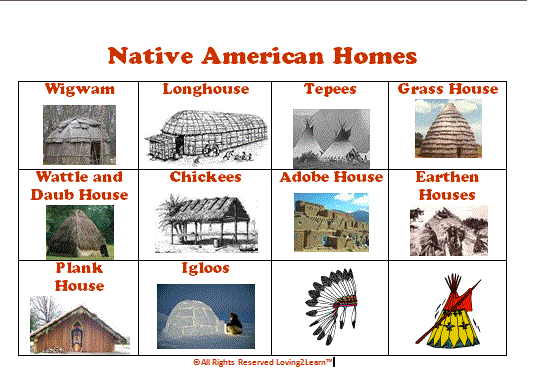
Moving eastward, the dense forests of the Northeast Woodlands dictated the primary building material: wood. Here, two prominent housing types emerged, reflecting different social organizations. The Longhouse, characteristic of the Iroquois Confederacy (Haudenosaunee), Huron, and other Iroquoian-speaking nations, was a monumental structure. These elongated, barrel-vaulted dwellings, constructed from a framework of saplings or poles covered with elm bark shingles, could stretch over 100 feet, housing multiple extended families, often matrilineal. Each family maintained its own hearth, but the longhouse functioned as a communal space, symbolizing the unity and political structure of the confederacy. Its enduring design facilitated a sedentary agricultural lifestyle centered around corn, beans, and squash. The longhouse was not merely a home; it was the heart of the community, a physical manifestation of clan identity and social cohesion.
In contrast, the Wigwam (or Wetu in Algonquian languages) was prevalent among Algonquian-speaking peoples such as the Wampanoag, Narragansett, and Ojibwe. These dome-shaped or conical structures, typically smaller than longhouses, were made from bent saplings covered with bark, reed mats, or animal hides. Wigwams were more easily constructed and disassembled, suiting a lifestyle that often combined hunting, fishing, gathering, and seasonal agriculture. They housed single-family units, reflecting a different social organization compared to the communal longhouse. Both longhouses and wigwams were expertly designed for insulation against harsh winters and ventilation during humid summers, demonstrating a deep understanding of thermal dynamics.
Southeast Woodlands: Wattle-and-Daub and Elevated Homes
Further south, the warmer, wetter climate of the Southeast Woodlands, inhabited by nations like the Cherokee, Creek, Choctaw, and Seminole, influenced distinct architectural choices. Wattle-and-daub construction was common, where a framework of woven branches or cane (wattle) was plastered with a mixture of clay, mud, and straw (daub). These rectangular or circular homes often featured thatched roofs and sometimes raised floors to mitigate dampness and protect against pests. Many Southeastern tribes built seasonal dwellings: sturdier, enclosed "winter houses" and open-sided, airy "summer houses" or pavilions, demonstrating a sophisticated adaptation to climatic variations.

The Mississippian cultures, predecessors to many modern Southeastern tribes, built massive earthen mounds for ceremonial and residential purposes, often topping them with important structures. While the individual houses themselves might have been wattle-and-daub, their placement atop mounds in planned settlements spoke to a complex social hierarchy and religious cosmology.
The Great Plains: Tipis and Earthlodges
The vast, treeless expanse of the Great Plains, home to iconic tribes like the Lakota, Cheyenne, Crow, and Blackfeet, presented unique challenges and opportunities. The iconic Tipi (or Teepee) is perhaps the most recognized Native American dwelling, and for good reason. Its ingenious design perfectly accommodated the nomadic, buffalo-hunting lifestyle. Constructed from a framework of lodgepoles covered with expertly tanned buffalo hides, tipis were remarkably efficient: warm in winter, cool in summer, and incredibly stable against strong winds. Crucially, they were portable, easily disassembled and transported by horses (after their introduction) or dogs. The tipi’s circular form and orientation often carried deep spiritual significance, representing the cosmos and the cycle of life. Smoke flaps at the top allowed for ventilation and fire control.
However, not all Plains tribes were nomadic. Along the fertile river valleys, sedentary agricultural tribes like the Mandan, Hidatsa, Arikara, and Pawnee built robust, semi-subterranean Earthlodges. These large, circular structures featured a sturdy timber frame covered with layers of willow branches, grass, and thick earth, providing excellent insulation. Earthlodges could house multiple families and their horses, acting as communal centers. Their permanence reflected a life centered around farming corn, beans, and squash, supplemented by seasonal buffalo hunts. The contrast between the portable tipi and the fixed earthlodge powerfully illustrates the diverse adaptations within a single geographical region.

The Southwest: Pueblos, Hogans, and Wickiups
The arid, often dramatic landscapes of the American Southwest fostered some of the most enduring and architecturally complex dwellings. The Pueblo (meaning "village" in Spanish) structures of the Ancestral Puebloans, and their descendants like the Hopi, Zuni, and Taos Pueblo, are iconic. Built into cliffsides or freestanding in multi-story, apartment-like complexes, these homes were constructed from stone, adobe bricks (sun-dried mud), or a combination of both. Their thick walls provided natural insulation against extreme desert temperatures. Pueblos were communal living spaces, often organized around central courtyards and featuring kivas – subterranean ceremonial chambers central to spiritual life. Their defensive placement and integrated design speak to a long history of community and resourcefulness in a challenging environment.
The Navajo (Diné), the largest Native American nation, traditionally lived in Hogans. These distinctive dwellings, typically dome-shaped or conical, were built from logs and earth, with an essential eastward orientation for the morning sun and spiritual significance. Hogans are sacred spaces, central to Navajo ceremony and daily life, reflecting a deep spiritual connection to the land and cosmos. Their construction and internal arrangement are guided by specific cultural protocols.
The Apache, known for their mobility, utilized simpler, more temporary structures called Wickiups. These brush shelters, built from a framework of poles covered with brush, grass, or hides, were easily erected and abandoned as bands moved across their vast territories in pursuit of game or seasonal resources.
California and the Great Basin: Diverse, Resource-Specific Shelters
The incredible environmental diversity of California, from coastlines to deserts, mountains to valleys, led to a wide array of housing types, often simpler and highly localized due to abundant, accessible resources and generally milder climates. Tribes like the Pomo, Chumash, and Miwok constructed dome-shaped or conical houses from redwood bark, tule reeds, or brush, depending on local availability. Many were semi-subterranean or partially excavated to provide insulation. In the Great Basin, where resources were scarcer, tribes like the Paiute and Shoshone utilized very basic brush shelters or caves, reflecting a highly nomadic foraging lifestyle.

Northwest Coast: Cedar Plank Houses
Along the temperate, resource-rich Northwest Coast, tribes such as the Haida, Tlingit, Kwakwaka’wakw (Kwakiutl), and Nootka developed magnificent Plank Houses. These large, rectangular dwellings, constructed from massive cedar planks split from ancient trees, were often highly decorated with carved and painted totemic designs. Cedar’s natural resistance to rot and its abundance made it the ideal material. Plank houses were built to last, reflecting the sedentary, complex societies of the region, rich in salmon, shellfish, and forest resources. They housed extended families and served as sites for elaborate ceremonies like potlatches, showcasing wealth and social status through their scale and intricate carvings. The presence of monumental totem poles often marked the entrance or stood before these impressive homes.
Arctic and Subarctic: Igloos, Tupiks, and Chums
Finally, in the extreme environments of the Arctic and Subarctic, housing ingenuity reached another peak. The Igloo, famously built by the Inuit and Yup’ik, is a temporary winter hunting shelter constructed from blocks of compacted snow. Its domed shape and snow’s insulating properties provide remarkable warmth in sub-zero temperatures. While iconic, igloos were not permanent homes but rather specialized shelters.
For more permanent or semi-permanent dwellings, Arctic peoples utilized Tupiks – skin tents made from caribou or seal hides stretched over a framework of bones or driftwood. These were portable and adapted to the nomadic hunting lifestyle. In the Subarctic, tribes like the Dene (Athabascan speakers) constructed cone-shaped lodges covered with bark or animal hides, similar in form to tipis but culturally distinct.
Housing as Identity and History
A map of these diverse housing types is more than an architectural catalog; it’s a profound statement on Native American identity, history, and ecological wisdom. Each dwelling type encapsulates a people’s relationship with their environment, their social organization, and their spiritual beliefs. The orientation of a Hogan, the communal space of a Longhouse, the portability of a Tipi, or the defensive posture of a Pueblo all speak volumes about the values and priorities of the cultures that created them.
These structures were not static. They evolved over time, adapted to new technologies (like the horse or metal tools), and responded to changing environmental conditions. They were living, breathing entities, often viewed as extensions of the human body or the sacred landscape.
However, the history of Native American housing is also marked by colonial impact. Forced removal from ancestral lands, the destruction of traditional building materials, and the imposition of Euro-American housing styles were deliberate strategies of assimilation, severing people from their cultural heritage and their deep connection to place. Despite these immense challenges, the knowledge and spirit embedded in traditional housing persist, inspiring contemporary Native American architects and artists who seek to re-integrate these ancestral forms and principles into modern contexts.
To truly understand Native American cultures, one must look beyond the simplified narratives and appreciate the incredible ingenuity expressed in their built environments. The "Map of Native American Housing Types" is a gateway to this understanding, inviting us to explore a rich, diverse, and enduring architectural heritage that is deeply intertwined with the very fabric of identity and history. It challenges us to see these structures not as relics of the past, but as vibrant expressions of living cultures, whose wisdom continues to offer profound lessons in sustainable living and harmonious coexistence with the natural world.

