
The Woven Landscape: A Map of Native American Basketry as a Tapestry of History and Identity
Imagine a map not defined by political borders or geographical contours, but by the intricate patterns, natural materials, and ancestral hands that have shaped a profound art form for millennia. This is the "Map of Native American Basket Weaving" – a vibrant, living document that charts the incredible diversity, historical resilience, and enduring identity of Indigenous cultures across North America. It is a journey through time, ecology, and human ingenuity, perfect for anyone seeking a deeper understanding of this continent’s original inhabitants.
This isn’t a single, static cartographic image, but rather a conceptual framework. It represents the geographic distribution of distinct basketry traditions, each intrinsically linked to the specific environments, cultural practices, and historical trajectories of hundreds of Native American tribes. To understand this map is to understand how the land provides, how knowledge is passed down, and how art becomes a powerful statement of cultural survival and selfhood.
The Land as the Loom: Geography and Materials

At its core, the map of Native American basket weaving is dictated by ecology. The raw materials—willow, sumac, yucca, cedar bark, spruce root, sweetgrass, river cane, bear grass, sedge, ash splint—are all products of specific bioregions. This fundamental connection to the land means that different areas of the continent developed distinct styles based on what was available and how those materials could be prepared and manipulated.
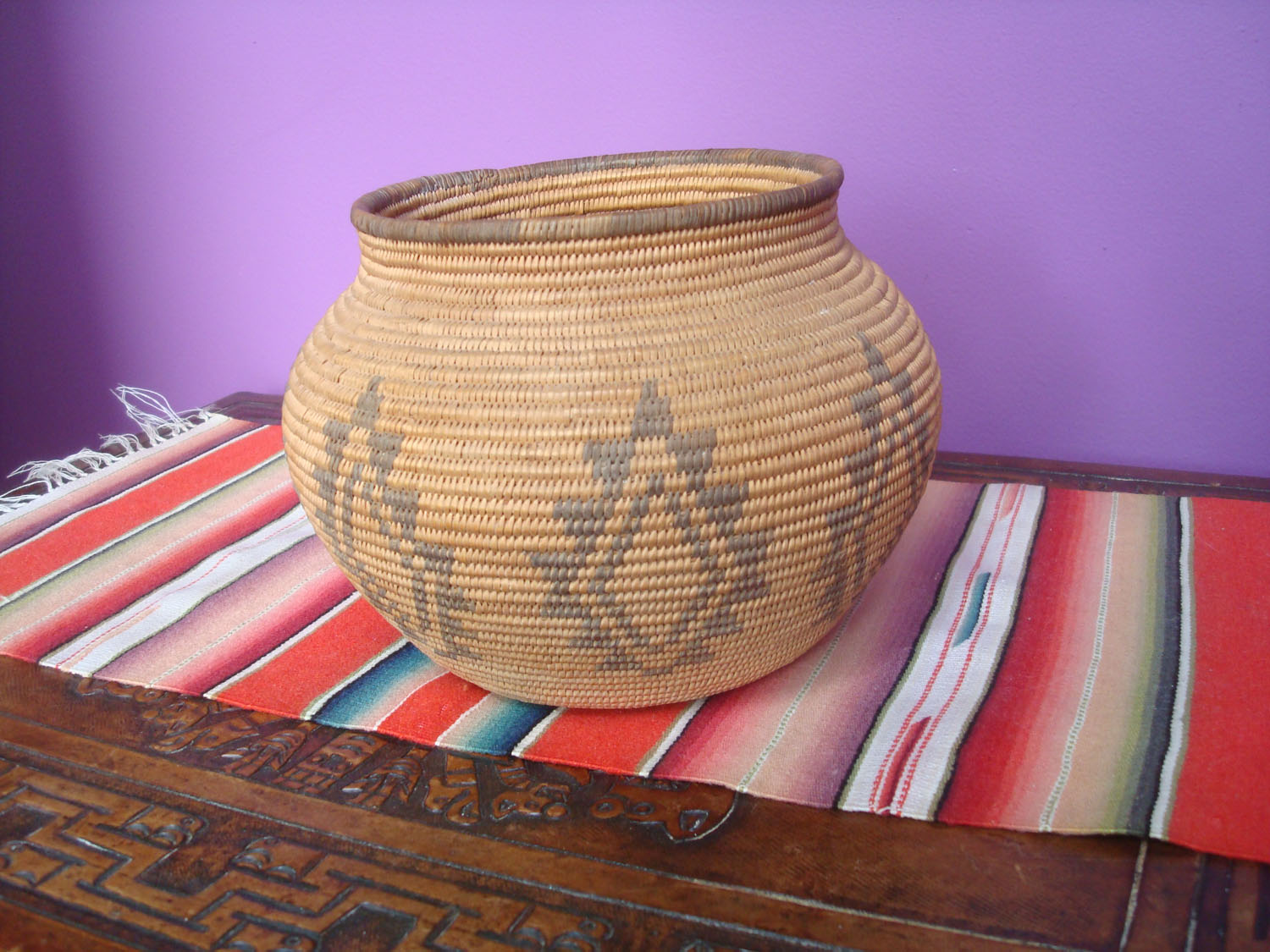
The Southwest: Here, the arid landscape yields sturdy yet pliable fibers like yucca, sumac, and devil’s claw. Tribes such as the Navajo, Hopi, Apache, and Tohono O’odham became masters of coiling techniques, creating baskets that were not only utilitarian—for storing food, carrying water, or winnowing grain—but also deeply ceremonial. Navajo wedding baskets, with their distinctive red and black patterns and the unclosed "spirit line," are profound examples of cultural and spiritual significance. Apache burden baskets, often adorned with tin cones or deer hide fringes, speak to the practicalities of a mobile lifestyle. The Pima and Tohono O’odham are renowned for their intricate coiled baskets, often featuring geometric designs or figurative elements like human figures or animals, reflecting their desert environment.
California: This region boasts an unparalleled diversity of basketry, often considered among the finest in the world. With access to abundant willow, sedge, bracken fern, and various grasses, California tribes like the Pomo, Miwok, Yokuts, and Cahuilla developed extraordinarily fine coiling and twining techniques. Pomo baskets, in particular, are celebrated for their exquisite craftsmanship, often so tightly woven they could hold water, and sometimes adorned with precious abalone shell and iridescent bird feathers. These baskets served a myriad of functions, from cooking vessels (using hot stones), storage, and seed gathering, to being highly prized ceremonial objects and gifts. The sheer density of distinct styles and tribal groups in California makes this area a microcosm of the entire basketry map.
The Pacific Northwest: Along the misty coastlines and dense forests, cedar bark and spruce root became the dominant materials. Tribes like the Haida, Tlingit, Kwakwakaʼwakw, and various Salish groups excelled in twining techniques. Their baskets and mats were vital for daily life, used for gathering berries, cooking, fishing, and storage. The Tlingit "false embroidery" technique, where strands of contrasting material are woven over the surface, created striking geometric patterns. Cedar bark was also woven into clothing, hats, and even large storage boxes, demonstrating an incredible versatility and deep respect for this sacred tree. These baskets often featured bold designs reflecting the powerful spiritual connection to the animals and natural forces of their environment.

The Great Basin: In the vast, high-desert expanse, tribes like the Paiute, Shoshone, and Ute utilized willow, sumac, and cattail. Their basketry, primarily twined and coiled, was often characterized by its practicality and robust construction, designed for gathering the abundant seeds and roots that sustained them. Large conical burden baskets, watertight cooking baskets, and finely woven winnowing trays are hallmarks of this region, reflecting a deep understanding of their harsh yet bountiful environment. While often less ornate than those from other regions, their strength and perfect functionality speak volumes about the weavers’ skill.
The Eastern Woodlands and Southeast: Here, different ecological niches fostered different traditions. In the Northeast, tribes like the Wabanaki Confederacy (Penobscot, Passamaquoddy, Maliseet, Micmac) mastered the art of splint basketry, primarily using ash wood. Black ash splints, prepared by pounding the log to separate the growth rings, were then woven into durable and often beautifully dyed baskets for storage, harvesting, and market. In the Southeast, river cane was the primary material for tribes like the Chitimacha, Cherokee, and Choctaw. The Chitimacha, in particular, are renowned for their "double weave" technique, creating a basket within a basket, making them incredibly strong and visually complex, often featuring intricate geometric patterns that carry deep cultural meaning. Sweetgrass and honeysuckle were also woven into exquisite baskets, particularly by the Gullah Geechee people, whose weaving traditions have strong roots in West African techniques.
A Historical Tapestry: Weaving Through Time
The map of Native American basket weaving is not just geographical; it is profoundly historical. Archaeological evidence confirms that basketry predates pottery in many regions, with fragments dating back thousands of years. Baskets were integral to pre-contact Indigenous life, serving as containers for cooking, storage, gathering, trapping, fishing, and ceremonial use. They were currency in trade networks that spanned continents, carrying not just goods but also cultural ideas and artistic motifs.

The arrival of European colonizers brought immense disruption. Forced removals, land confiscation, disease, and the imposition of foreign economic systems profoundly impacted traditional basketry. Access to traditional gathering sites was lost, and the introduction of manufactured goods reduced the utilitarian need for baskets. For many tribes, traditional weaving techniques teetered on the brink of extinction.
However, the history of Native American basketry is also a testament to incredible resilience and adaptation. Faced with cultural suppression and economic hardship, many weavers found new markets by creating baskets for sale to non-Native audiences. While sometimes leading to a simplification of designs or the use of new materials, this market often provided a crucial source of income and allowed the art form to persist, even if in altered forms. In some cases, weavers deliberately maintained traditional forms and techniques as an act of cultural preservation and resistance. The late 19th and early 20th centuries saw a surge in interest from collectors and museums, which, while sometimes exploitative, also helped to document and preserve many styles that might otherwise have been lost.
The late 20th century and into the 21st have witnessed a powerful resurgence of Native American basketry. This revival is driven by a deep commitment to cultural revitalization, with elders passing knowledge to younger generations, and contemporary artists pushing the boundaries of the art form while honoring tradition. Today’s weavers are not just recreating the past; they are innovating, creating new designs, and using baskets as powerful vehicles for storytelling, political commentary, and personal expression.
Identity Woven In: More Than Just a Craft
Perhaps the most compelling aspect of the Native American basket weaving map is its profound connection to identity. Each basket is a tangible representation of a specific tribal identity, embodying generations of knowledge, skill, and cultural philosophy.
- Cultural Markers: The specific materials, preparation methods, weaving techniques, and design motifs are often unique to a tribe or a group of related tribes. A trained eye can often identify the origin of a basket down to a specific community or even a family. This makes baskets powerful cultural markers, distinguishing one group from another.
- Storytelling and Meaning: Patterns are rarely just decorative; they often carry deep symbolic meaning, reflecting origin stories, spiritual beliefs, observations of the natural world, or historical events. Weavers infuse their work with their worldview, making each basket a narrative in fiber.
- Connection to Land and Sustenance: The act of gathering materials requires an intimate knowledge of the local ecosystem—when to harvest, how to prepare, and how to do so sustainably. This process fosters a profound connection to the land, reinforcing traditional land stewardship practices and a reciprocal relationship with nature.
- Spiritual Significance: Many baskets were, and still are, created for ceremonial purposes, imbued with spiritual power. They might be used in healing rituals, coming-of-age ceremonies, or as offerings. The creation process itself can be a meditative, spiritual act, a form of prayer and connection to ancestors.
- Intergenerational Knowledge: Basket weaving is a knowledge system passed down through generations. It’s a hands-on education in material science, mathematics, geometry, art, history, and language. Learning to weave is learning one’s cultural heritage, strengthening family bonds, and ensuring the continuity of tribal identity.
- Economic Empowerment: For many Native American communities today, basketry continues to be an important source of economic empowerment. Supporting Native weavers directly supports Indigenous families and communities, allowing them to sustain their cultural practices and maintain their connection to their heritage.
The Map’s Enduring Message
The "Map of Native American Basket Weaving" is far more than a simple geographical guide; it is a profound testament to human creativity, adaptability, and the enduring power of culture. It invites us to look beyond the object itself and see the hands that gathered the materials, the minds that conceived the designs, the ancestors who passed down the knowledge, and the spirit that continues to infuse each woven piece.
For the traveler and the student of history alike, this map offers an unparalleled opportunity to connect with Indigenous North America. It encourages visits to tribal cultural centers, museums, and Native art markets to witness this living art form firsthand. It challenges us to appreciate the intricate beauty and profound meaning woven into every strand, recognizing that each basket is not just an artifact, but a vibrant piece of history, a statement of identity, and a celebration of an enduring cultural legacy that continues to thrive and evolve. To understand this map is to understand the soul of a continent, intricately woven into its very fabric.

