
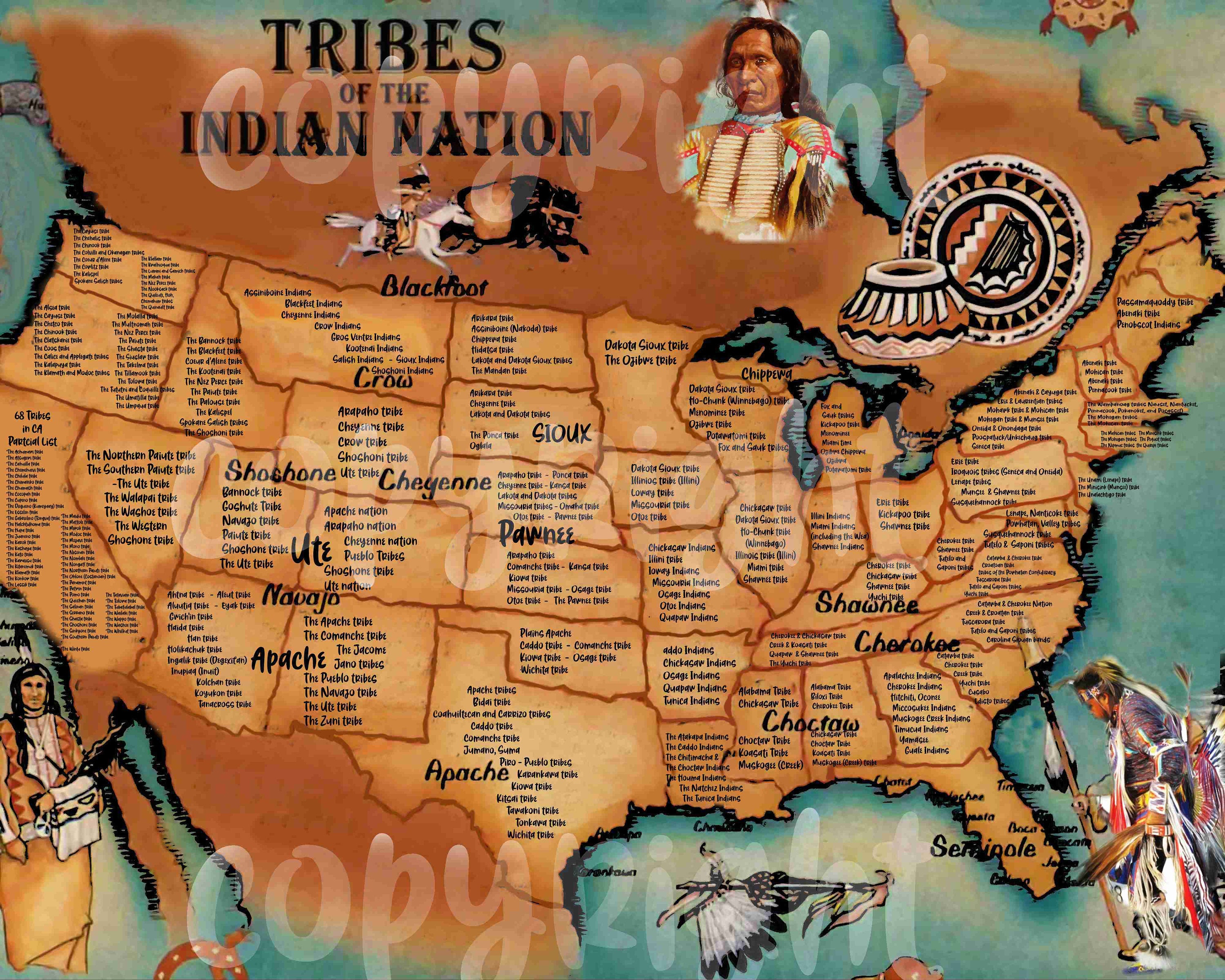
Maps are rarely neutral lines on a page; for Indigenous peoples across Turtle Island, now known as North America, they are vibrant tapestries woven from history, identity, sovereignty, and an enduring spirit of resistance. To truly understand Native American activism, one must look beyond the familiar political boundaries and delve into the layered narratives of Indigenous cartography – both the ancient, invisible maps of traditional territories and the contested, imposed maps of colonial power. This article explores how native tribe maps, both real and conceptual, serve as foundational documents for Native American activism, embodying centuries of struggle for self-determination, cultural preservation, and land rights, offering crucial insights for any traveler or student of history.
The Original Maps: A Tapestry of Sovereign Nations
Before the arrival of European colonizers, North America was not an empty wilderness, but a continent teeming with hundreds of distinct Indigenous nations, each with its own intricate governance systems, economies, languages, and spiritual traditions. Their "maps" were not static lines on parchment but living, dynamic understandings of their ancestral territories. These maps were etched into memory, passed down through oral traditions, song, story, and ceremony. They were defined by natural landmarks – rivers, mountains, forests, deserts – and understood through generations of interaction with the land, its resources, and its spirits.
These pre-contact maps represented sophisticated land management systems, trade routes, alliances, and spiritual geographies. They articulated hunting grounds, fishing territories, sacred sites, and seasonal migration paths. The notion of exclusive, fixed boundaries, as understood by Europeans, was often alien; instead, territories might overlap, be shared for specific purposes, or be recognized through reciprocal agreements. This fluidity, however, did not imply a lack of sovereignty. Each nation held inherent rights to its lands, its resources, and its self-governance. This foundational understanding of pre-colonial sovereignty, rooted in ancestral maps, is the bedrock upon which much of contemporary Native American activism stands. It provides the historical and legal basis for claims to land, water, and self-determination, reminding the world that these lands were never "discovered" but were, and remain, Indigenous homelands.

The Imposition of Colonial Maps: Erasure and Resistance
The arrival of European powers initiated a violent re-mapping of the continent. Driven by doctrines of discovery and manifest destiny, colonizers systematically disregarded existing Indigenous sovereignties, imposing their own cartographic visions. Treaties, often coerced or misunderstood, were the primary instruments of this re-mapping, ceding vast tracts of Indigenous land to colonial governments. Yet, even these flawed documents acknowledged, however fleetingly, the prior existence of Indigenous nations and their land rights. The very act of signing a treaty, from an Indigenous perspective, was often an attempt to codify existing boundaries and relationships, not to surrender inherent sovereignty.
However, these treaties were routinely broken, misinterpreted, or unilaterally violated. The Indian Removal Act of 1830, for example, forcibly dispossessed Eastern Woodlands tribes like the Cherokee, Choctaw, Chickasaw, Creek, and Seminole, relocating them westward on the infamous "Trail of Tears." This was a brutal, state-sanctioned re-mapping, erasing ancestral territories and imposing new, alien geographies.
The reservation system, established in the mid-19th century, further solidified this colonial re-mapping. Indigenous nations, once masters of vast territories, were confined to increasingly smaller, often undesirable parcels of land. These reservations, depicted as isolated dots on settler maps, were designed to contain and control Native populations, severing their ties to traditional hunting grounds and sacred sites. The Dawes Act of 1887 (General Allotment Act) further fragmented these reservations by dividing communal lands into individual allotments, selling off "surplus" land to non-Native settlers, and undermining tribal governance structures. Each of these legislative acts was a deliberate act of cartographic violence, attempting to erase Indigenous presence and replace it with a settler-colonial vision of property and nationhood.

Native American activism, from its earliest forms of armed resistance to legal challenges and political organizing, has consistently sought to counter this colonial re-mapping. The very act of defending a reservation boundary, challenging a broken treaty, or protesting the sale of "surplus" lands was an assertion of an alternative map – one that honored ancestral claims and treaty promises.
The Rise of Modern Activism: Reclaiming the Map, Reasserting Identity
The mid-20th century saw the emergence of a more organized and visible Native American rights movement, largely in response to federal policies of "termination" and "relocation." Termination aimed to dissolve tribal governments, end federal recognition, and assimilate Native Americans into mainstream society, effectively erasing Indigenous political maps. Relocation programs encouraged Native Americans to move from reservations to urban centers, further disrupting community and cultural ties.
This era ignited powerful movements that explicitly challenged the colonial map and reasserted Indigenous identity and sovereignty. The American Indian Movement (AIM), founded in 1968, brought Indigenous grievances to national and international attention through dramatic direct actions. The 1969-1971 occupation of Alcatraz Island, for instance, was a symbolic act of re-mapping. Citing the 1868 Treaty of Fort Laramie, which stated that abandoned federal land should revert to the Lakota, the occupiers claimed the island "by right of discovery." This act challenged the legitimacy of settler property rights and asserted an Indigenous claim to "unceded" territory, even if symbolic.

Similarly, the 1973 Wounded Knee Occupation on the Pine Ridge Reservation, while a stand against internal tribal governance, also served as a powerful assertion of Lakota sovereignty over their treaty lands. These actions, often accompanied by maps showing original treaty boundaries, forced the broader public to confront the history of broken promises and the ongoing injustice of colonial land dispossession. They highlighted the fundamental connection between land, identity, and the right to self-determination. For these activists, the map was not just a tool for navigation; it was a blueprint for justice and a testament to enduring identity.
Contemporary Activism: Land Back, Water Protection, and Cultural Resurgence
In the 21st century, Native American activism continues to be deeply intertwined with the concept of the map, addressing issues ranging from environmental justice to cultural preservation and the "Land Back" movement.
The fight against the Dakota Access Pipeline (DAPL) at Standing Rock in 2016-2017 is a prime example of map-driven activism. The pipeline route threatened the water supply of the Standing Rock Sioux Tribe and traversed sacred ancestral lands, many of which were designated as treaty territory. The "Water Protectors" at Standing Rock used maps to show the pipeline’s proximity to their reservation, the historical boundaries of the Fort Laramie Treaty of 1851, and the location of sacred sites. This activism highlighted how resource extraction projects disproportionately impact Indigenous communities and violate treaty rights, bringing the invisible maps of sacred sites and treaty lands into sharp focus for a global audience. The struggle at Standing Rock was not just about a pipeline; it was about asserting tribal sovereignty over traditional territories and protecting the sacred connection between people and place.
The broader "Land Back" movement, while sometimes interpreted as a literal demand for the return of all lands, primarily emphasizes Indigenous stewardship and governance over traditional territories. It advocates for the recognition of Indigenous legal systems, ecological knowledge, and the restoration of sacred lands and resources. This movement fundamentally challenges the existing political maps and calls for a re-imagining of land ownership and management based on Indigenous values. It’s about decolonizing the map, both physically and conceptually, to prioritize ecological health and Indigenous sovereignty.
Furthermore, cultural revitalization efforts – the resurgence of Indigenous languages, traditional ceremonies, and artistic practices – are also a form of re-mapping. By re-learning and re-practicing traditions tied to specific landscapes, Native communities are re-inscribing their presence onto territories from which they were forcibly removed or erased. Indigenous mapping projects, using GIS and other technologies, are now actively documenting traditional place names, historical sites, and cultural landscapes, creating their own authoritative maps that challenge colonial narratives and assert their inherent connection to the land. These maps are powerful tools for education, advocacy, and cultural continuity.
The Enduring Power of Identity and Place
The deep connection between Native American identity and ancestral lands is not merely historical; it is a living, breathing reality. For many Indigenous peoples, identity is inseparable from their specific tribal homelands, the languages spoken there, the plants and animals found there, and the stories embedded in the landscape. When these lands are threatened by development, pollution, or climate change, it is an attack on identity, culture, and spirit.
This profound relationship with place fuels the unwavering resilience and ongoing activism of Native American communities. Maps, in all their forms, become crucial instruments in this struggle:
- As Historical Documents: Highlighting original territories and broken treaties.
- As Tools for Advocacy: Demonstrating the impact of development on sacred sites and water sources.
- As Cultural Affirmation: Preserving traditional place names and spiritual geographies.
- As Visions for the Future: Guiding efforts for land back, self-governance, and sustainable living.
For the traveler and student of history, understanding these maps means seeing beyond the arbitrary lines of states and counties. It means recognizing the enduring presence of sovereign Indigenous nations, acknowledging the historical injustices of colonization, and appreciating the profound spiritual and cultural ties that bind Native peoples to their ancestral lands. It’s an invitation to learn about the specific tribes whose lands you traverse, to understand their histories, and to respect their ongoing struggles for justice and self-determination.
In conclusion, the map of Native American activism is a complex, multi-layered document. It encompasses the ancient, unwritten maps of traditional territories, the imposed and contested maps of colonial dispossession, and the powerful, reclaimed maps of contemporary Indigenous resistance. From the initial acts of defending homelands against invasion to the modern movements for environmental justice and "Land Back," Native American activism has consistently used and challenged maps to assert identity, claim sovereignty, and ensure the survival of their cultures for future generations. To truly grasp the depth of this struggle and the resilience of Indigenous peoples, one must learn to read these maps – not just as geographical representations, but as living testaments to history, identity, and an unyielding pursuit of justice.

