
Echoes of Stone: Decoding Fremont Culture’s Ancient Maps in Nine Mile Canyon
Forget Google Maps. Long before satellites, GPS, or even paper, the indigenous people of North America charted their world, marked their territories, and recorded their histories not with lines on a parchment, but with hammerstones and pigments on sandstone cliffs. For the mysterious Fremont Culture, whose presence once dominated the arid landscapes of the northern Colorado Plateau, their maps were etched and painted directly onto the very land they traversed. These aren’t cartographic charts in the modern sense, but rather intricate visual narratives, astronomical observatories, territorial markers, and spiritual guidebooks—all embedded within what we now refer to as rock art.
To truly understand these ancient "maps" and the people who created them, there’s no better place to embark on a journey of discovery than Nine Mile Canyon in Utah. Often hailed as "the world’s longest art gallery," this remote, rugged canyon offers an unparalleled opportunity to immerse oneself in the profound legacy of the Fremont people and to begin deciphering the cryptic messages they left behind.
The Fremont Culture: A Brief Glimpse

Emerging around 400 AD, the Fremont Culture occupied parts of Utah, Idaho, Colorado, and Nevada for nearly a thousand years, disappearing by 1300 AD for reasons still debated by archaeologists—likely a combination of climate change, migration, and assimilation. Unlike their Ancestral Puebloan neighbors to the south, the Fremont were a more dispersed, semi-nomadic people, adapting to varied environments. While they cultivated maize, beans, and squash, they also maintained strong ties to hunting and gathering, moving seasonally to exploit different resources. They are distinguished by their unique gray pottery, coiled basketry, and most notably, their distinctive rock art.
Nine Mile Canyon: The Grand Gallery
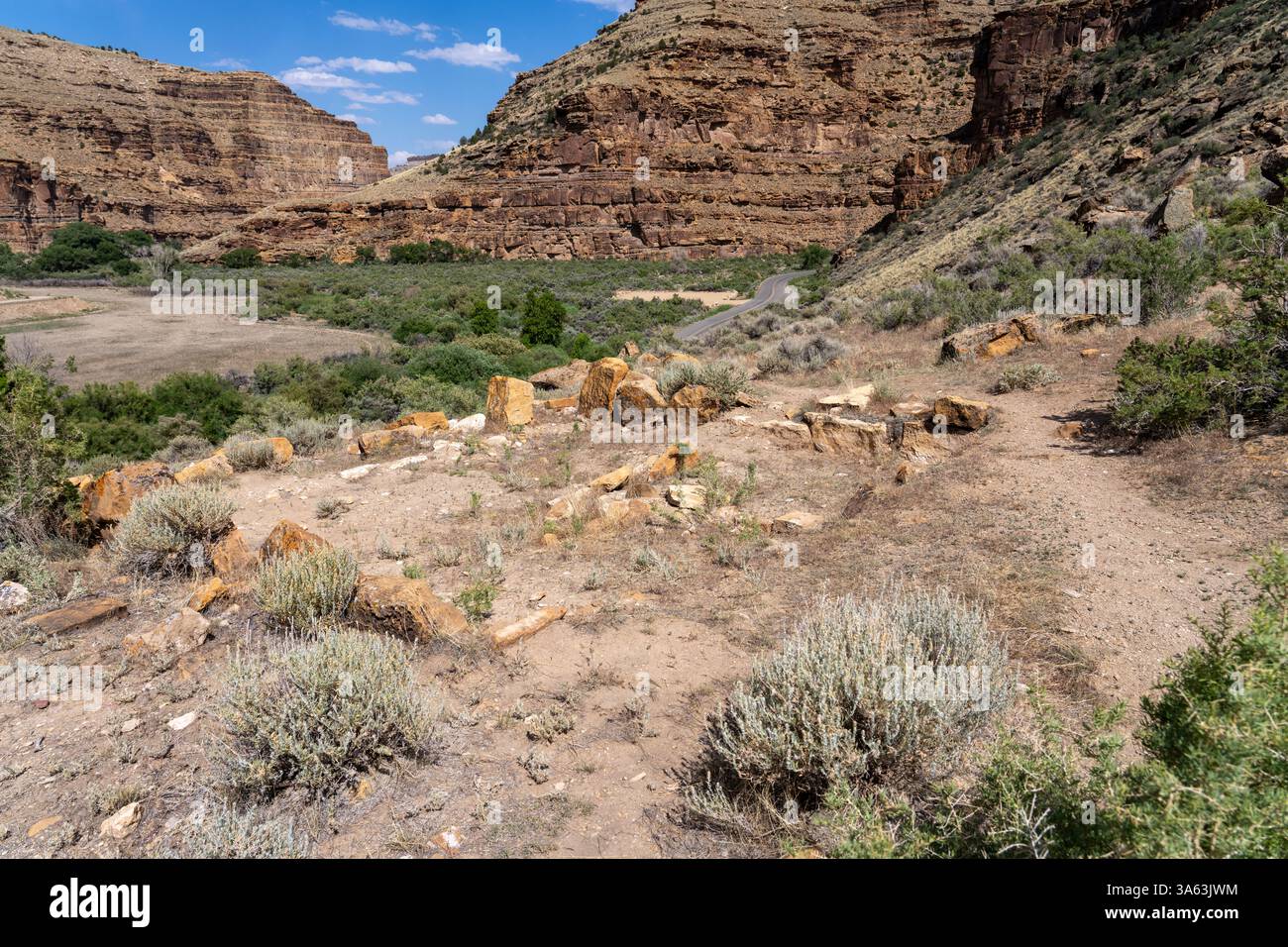
Located roughly two hours southeast of Salt Lake City, near the small towns of Wellington and Price, Nine Mile Canyon is less a single canyon and more a sprawling network of canyons, stretching for over 70 miles. The "Nine Mile" moniker is a misnomer; the main canyon system alone is closer to 40 miles, with countless side canyons. The journey into Nine Mile is itself an adventure, transitioning from paved roads to well-maintained gravel, winding through juniper and pinyon forests, past active ranches, and alongside the meandering Nine Mile Creek. The isolation is immediate and profound, setting the stage for a connection with the past.
The canyon boasts an astonishing concentration of rock art—estimates range from 1,000 to 10,000 individual sites and panels. While other cultures, including the Ute and Ancestral Puebloans, also left their mark, the vast majority of the art in Nine Mile is attributed to the Fremont. It is here, amidst this outdoor museum, that their "maps" come alive.
Decoding the Fremont Maps: More Than Just Pictures
When we speak of Fremont maps, we’re not looking for lines indicating rivers or labeled mountains. Instead, we’re seeking patterns, symbols, and compositions that conveyed vital information about their world.
-
Territorial Markers and Resource Guides:
Many panels, particularly those featuring bighorn sheep, deer, or corn plants, can be interpreted as resource maps. A detailed depiction of a bighorn sheep migration route might serve as a visual guide for hunters, indicating where and when to find game. Panels showing corn plants clearly mark agricultural areas or places where successful harvests occurred. Geometric patterns or unique anthropomorphic figures at canyon entrances or prominent overlooks could act as territorial markers, signaling the presence of a specific Fremont group or indicating safe passage versus restricted zones. The sheer number of bighorn sheep petroglyphs across the canyon suggests not just reverence for the animal, but also a practical guide to hunting grounds, migration patterns, and perhaps even warnings about dangerous terrain where they were present. -
Celestial Navigation and Calendrical Systems:
The Fremont, like many ancient cultures, were keen observers of the sky. Certain petroglyphs align with solstices and equinoxes, functioning as sun daggers or calendrical markers. These astronomical observations were crucial for timing agricultural cycles, hunting seasons, and seasonal migrations. A panel might record the precise position of the sun on the winter solstice, indicating the shortest day of the year and the turning point towards spring—a critical piece of "navigational" information for a people dependent on seasonal resources. These weren’t maps of stars, but maps guided by stars and sun, informing movement and activity on Earth.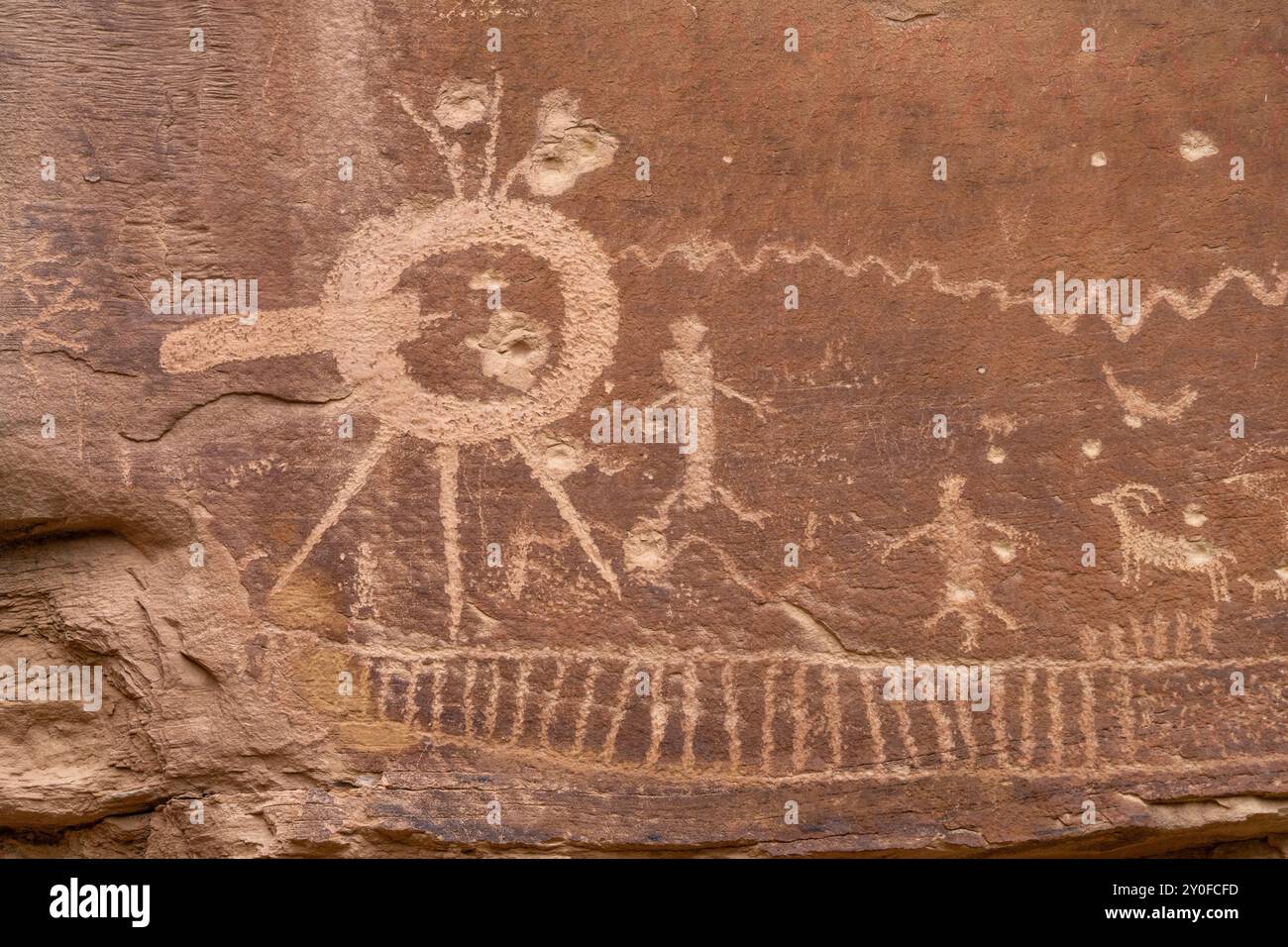
-
Migration Routes and Historical Records:
While not explicit arrows and pathways, the repetition of specific figures or symbols across different panels could signify the movements of a particular clan or family group over time. A unique shield figure or a distinctive style of anthropomorph appearing at various points along the canyon might tell a story of a migration route, a significant journey, or a historical event. These "maps" were living histories, passed down through generations, informing future movements based on ancestral journeys. Imagine a series of panels describing a journey to a new hunting ground, detailing the challenges and successes along the way – a visual narrative map for future generations. -
Spiritual Landscapes and Sacred Sites:
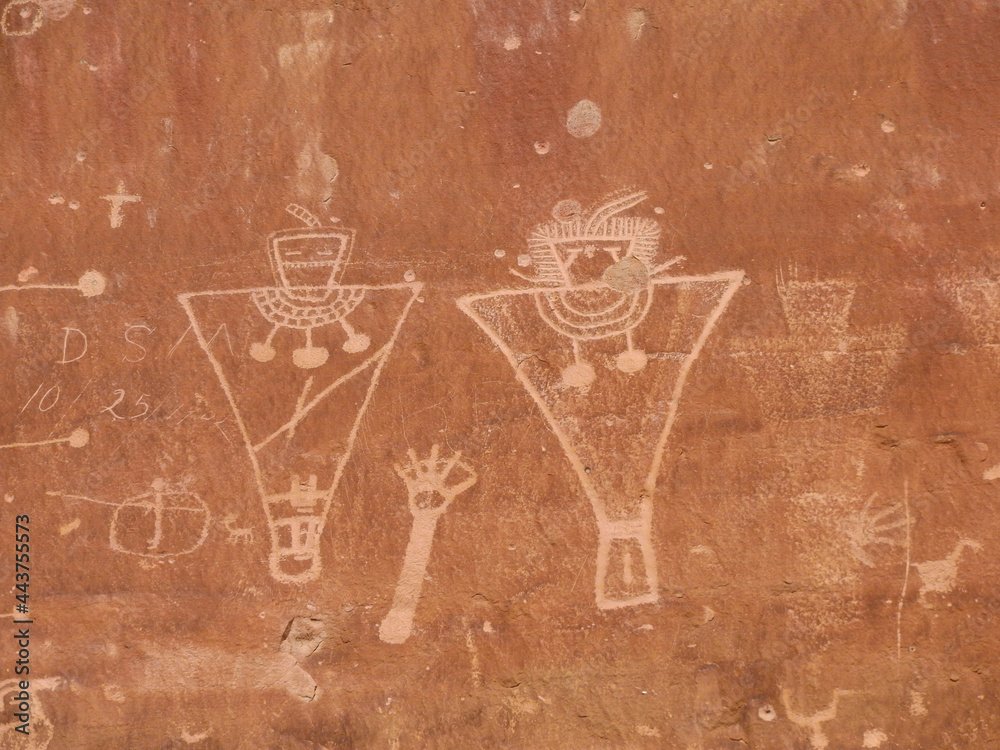
Beyond the practical, Fremont maps also delved into the spiritual realm. Many panels, particularly those featuring large, trapezoidal anthropomorphs with elaborate headdresses or "bug-eyes," are believed to depict shamans or spiritual beings. These sites may have been power spots, locations for rituals, or portals to the spirit world. In this sense, the "map" guides not just physical movement, but spiritual journeys. A specific rock formation adorned with powerful imagery could be a designated sacred space, a place to leave offerings or perform ceremonies, guiding the community’s spiritual life within the physical landscape. The sheer scale and effort involved in creating some of these large panels suggest they were not mere doodles, but significant landmarks with deep meaning.
Key Sites and Iconic Figures
As you drive through Nine Mile Canyon, you’ll encounter numerous pull-offs and interpretive signs, but the true thrill lies in spotting the less obvious panels.
- The Hunter Panel (Main Canyon): One of the most famous and accessible panels, featuring a large, elaborately decorated anthropomorph with two smaller figures, one possibly holding a shield. This panel’s prominence suggests its importance as a territorial marker or a spiritual guidepost.
- Big Buffalo Site: Though less frequent than sheep, buffalo images are also found, potentially marking ancient grazing lands or significant hunting events.
- Daddy Canyon: A side canyon offering a concentration of diverse panels, including some intricate compositions that might tell complex stories of hunting expeditions or seasonal camps.
- The "Sun Dagger" Panels: While not as famous as the one at Fajada Butte, Nine Mile has numerous examples of petroglyphs that interact with light and shadow during solstices, indicating their calendrical function.
The iconic Fremont anthropomorphs, with their distinctive trapezoidal bodies, large eyes, and often elaborate headdresses or earrings, are instantly recognizable. They frequently hold shields or other implements, suggesting their role as warriors, hunters, or spiritual leaders. Animals like bighorn sheep, deer, and snakes are common, often depicted with remarkable realism, pointing to their ecological and economic importance. Geometric patterns, spirals, and handprints complete the diverse visual vocabulary.
The Enduring Mystery and Ethical Exploration
The disappearance of the Fremont people remains one of the enduring archaeological mysteries of the region. Was it prolonged drought, shifting climate patterns that made agriculture unsustainable, pressure from migrating groups like the Ute, or simply a gradual assimilation into other cultures? The rock art offers tantalizing clues but no definitive answers, leaving visitors with a profound sense of awe and wonder.
For the modern traveler, exploring Nine Mile Canyon is a privilege and a responsibility. This is not a manicured park; it’s a living landscape, still home to ranching communities and sacred to indigenous peoples.
Travel Tips for Decoding the Fremont Maps:
- Vehicle: A high-clearance vehicle is recommended, especially after rain, though the main road is generally well-maintained gravel. Four-wheel drive is not usually necessary but can be comforting.
- Supplies: There are no services within the canyon. Bring all your water, food, and ensure a full tank of gas before entering. Pack layers, as temperatures can vary.
- Navigation: While you won’t need Google Maps for the canyon itself, bring a detailed map of the area (e.g., BLM maps or a good guidebook like "Nine Mile Canyon: The Archaeological History of an Ancient American Crossroads") to help locate specific sites. Cell service is non-existent.
- Binoculars & Camera: Essential for viewing distant panels and capturing details.
- Respect: This cannot be stressed enough. Do not touch the rock art. The oils from your skin can cause irreversible damage. Do not climb on or near panels. Stay on established paths. Do not collect artifacts. Practice Leave No Trace principles: pack out everything you pack in. Remember that these sites are sacred.
- Best Time to Visit: Spring and fall offer the most pleasant weather. Summer can be extremely hot, and winter brings snow, making access difficult.
- Time Commitment: Allow a full day, or even two, to truly experience the canyon. Rushing through will diminish the experience.
A Journey into the Past
Visiting Nine Mile Canyon is more than just a scenic drive; it’s a pilgrimage into the heart of an ancient world. It’s an opportunity to connect with a people who, despite lacking our modern tools, possessed an intricate understanding of their environment and a profound capacity for communication. As you stand before these ancient rock panels, squinting to decipher the faded lines and colors, you’re not just looking at art—you’re attempting to read a map, a guide, a history, and a spiritual testament left by the Fremont Culture. It’s a humbling, enriching experience that reminds us of the ingenuity and enduring legacy of those who walked this land millennia before us. So, pack your bags, fill your tank, and prepare to embark on a journey to decode the original maps of the American West.

