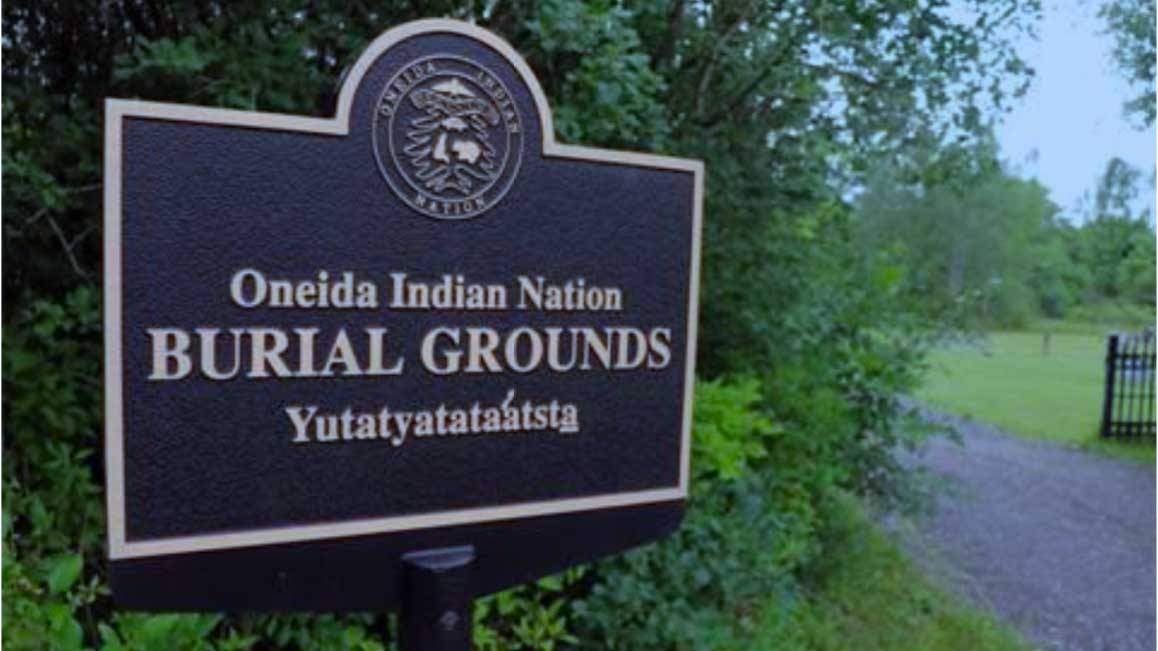
Deep Roots, Living Maps: A Traveler’s Encounter with Oneida Ancestral Territory and the Quest for Repatriation
Travel, at its best, isn’t just about ticking off landmarks or chasing picturesque views. It’s about immersion, understanding, and connecting with the profound narratives etched into the land and its people. For the discerning traveler seeking more than just a surface-level experience, a journey into the ancestral territory of the Oneida Nation, particularly through the lens of their efforts towards repatriation and the critical role of ancestral maps, offers an unparalleled depth of insight. This isn’t a review of a single building or a typical tourist attraction; it’s an exploration of a living landscape, a vibrant culture, and an ongoing fight for justice, where maps serve as both historical documents and powerful tools for the future.
Forget the conventional tourist brochures for a moment. Our "destination" is the very concept of ancestral land, the Oneida Nation’s enduring connection to it, and the tireless work of reclaiming what was lost. The physical manifestations of this journey are found across what was once a vast, contiguous territory spanning much of modern-day New York State, and today, within the heart of the Oneida Nation’s sovereign lands and cultural institutions. To truly appreciate this, one must approach it with an open mind, a willingness to learn, and profound respect.
The Land Speaks: A Historical Tapestry Unwoven

To understand the significance of Oneida ancestral territory maps for repatriation, one must first grasp the historical context. The Oneida Nation, Onʌyota’a:ka, "People of the Upright Stone," are one of the original five nations of the Haudenosaunee (Iroquois) Confederacy, a sophisticated democratic alliance predating the United States. Their ancestral lands, rich in forests, waterways, and fertile plains, were not merely a resource but the very foundation of their cultural identity, spiritual beliefs, and economic sustenance. These lands were home to generations, sites of ceremonies, hunting grounds, agricultural fields, and burial places.
The arrival of European colonizers irrevocably altered this landscape. While the Oneida Nation uniquely sided with the American colonists during the Revolutionary War, earning them the moniker "America’s First Allies," this loyalty did not protect them from the relentless encroachment and land hunger that followed. A series of treaties, often coerced and violated, systematically dispossessed the Oneida of their vast territory. The Treaty of Fort Stanwix in 1768 and the Treaty of Canandaigua in 1794, though intended to secure their remaining lands, were soon undermined by state land grabs and illegal sales. By the early 19th century, the Oneida’s ancestral domain, once millions of acres, had been reduced to a fraction, leading to forced removals and the fragmentation of the Nation itself.
The Silent Witnesses: Ancestral Maps as Instruments of Justice
This is where the ancestral territory maps become profoundly central. These are not merely historical curiosities; they are silent witnesses to a grand injustice and active instruments in the ongoing struggle for repatriation.

What kind of maps are we talking about? They are diverse and multi-layered:
- Colonial-Era Maps: These often depict the vast original territories of the Oneida and other Haudenosaunee nations before significant land cessions. While created by European cartographers, they inadvertently document the immense scale of indigenous landholdings prior to dispossession. These maps, found in archives and historical societies, provide irrefutable evidence of what was once possessed.
- Treaty Maps: Crucially, many treaties, particularly those from the late 18th century, included detailed maps outlining the boundaries of lands ceded and, importantly, lands retained by the Oneida. These maps are legal documents, often accompanied by written descriptions, and form the backbone of land claim cases. They show the lines that were drawn, then erased, then redrawn by those with power.
- Oneida-Generated Maps (Conceptual & Oral): While not always in the Western cartographic tradition, the Oneida and Haudenosaunee nations maintained their own sophisticated systems of territorial understanding. This included oral histories, wampum belts (which often encoded territorial agreements and historical events), and intimate knowledge of natural features serving as boundaries. Modern efforts in repatriation often involve translating these indigenous forms of mapping into contemporary GIS data, allowing for a powerful blend of traditional knowledge and modern technology.
- Modern GIS Mapping for Land Claims: Today, the Oneida Nation utilizes advanced Geographic Information Systems (GIS) technology to meticulously overlay historical treaty boundaries, colonial land surveys, and contemporary property lines. This scientific approach provides undeniable visual evidence for land claim arguments, illustrating the exact parcels of land illegally taken and the continuous thread of Oneida presence and claim.

For a traveler, encountering the concept of these maps is transformative. It shifts the perspective from viewing historical events as distant to understanding them as directly impacting the present. These maps are not just about lines on paper; they are about identity, sovereignty, and the future. They represent the memory of the land and the enduring connection of a people to it.
The Repatriation Imperative: Reclaiming What Was Lost
Repatriation, in the context of Oneida ancestral territory, extends beyond mere land claims. It is a holistic endeavor encompassing the return of land, cultural artifacts, ancestral remains, and the revitalization of language and traditional practices. The maps are integral to this process because they provide the indisputable evidence needed to pursue legal and political avenues for justice.

The Oneida Nation of New York, for example, has been at the forefront of this battle for decades. Their landmark 1985 Supreme Court victory, County of Oneida v. Oneida Indian Nation of New York, affirmed that the 1795 state land purchase from the Oneida was illegal because it lacked federal approval as required by the 1790 Nonintercourse Act. While the legal complexities are vast, this ruling, and others, underscore the validity of the Oneida’s historical claims – claims directly supported by the ancestral maps.
Repatriation is not about displacing current residents, but about rectifying historical wrongs, restoring a land base necessary for cultural survival, economic self-sufficiency, and the exercise of inherent sovereignty. It’s about healing generational trauma and ensuring that future generations of Oneida people have access to their heritage, their language, and their sacred sites.
Experiencing the Oneida Nation Today: A Journey of Discovery
So, how does a traveler "review" this profound and ongoing journey? By engaging directly with the Oneida Nation and its efforts. This experience is multifaceted and deeply enriching:
1. The Shako:wi Cultural Center & Oneida Nation Museum (Oneida, NY): This is perhaps the most direct and accessible point of entry for understanding the Oneida narrative. Here, exhibits thoughtfully trace the Nation’s history from time immemorial to the present day. Crucially, you’ll find displays that illuminate the significance of land, treaties, and the dispossession that occurred. While you might not see every historical map under glass, the story they tell is central to the museum’s mission. You’ll learn about traditional governance, the Oneida language (Onʌyota’a:ka), and the resilience of the people. This is where the abstract concept of "ancestral territory" gains tangible form. Engaging with the exhibits, listening to the narratives, and perhaps speaking with Oneida staff or elders (if opportunities arise) offers invaluable perspective.
2. Cultural Events and Programs: Check the Oneida Nation’s official website for cultural events, powwows, or educational programs open to the public. These provide opportunities to witness traditional dances, music, and storytelling, connecting you directly to the living culture that is deeply intertwined with the land. These events are vibrant expressions of identity and a testament to the success of cultural revitalization efforts.
3. Supporting Oneida Enterprises: The Oneida Nation has built a strong economic base, including the world-renowned Turning Stone Resort Casino, as well as various other businesses. By patronizing these establishments, travelers directly contribute to the economic self-sufficiency and well-being of the Nation, which in turn supports cultural preservation, education, and further repatriation efforts. This is a practical way to show respect and solidarity.
4. Walking the Land with Awareness: Even simply traversing the broader ancestral territory (much of Central New York) with an informed perspective changes the experience. As you drive through towns, hike in state parks, or explore historical sites, remember that every inch of this ground holds layers of Oneida history. Acknowledge the original inhabitants, reflect on the treaties that were broken, and consider the ongoing connection of the Oneida people to this land. This conscious engagement transforms a scenic drive into a historical pilgrimage.
5. Engaging with the Narrative: Read books by Oneida authors, listen to podcasts featuring Oneida voices, and follow the news about contemporary repatriation efforts. Understanding the complexities from the perspective of the Nation itself is paramount. This deepens your appreciation for the maps not just as static lines, but as dynamic tools in an ongoing struggle for justice and cultural survival.
A Call for Respectful Engagement
Visiting Oneida ancestral territory, whether physically or through dedicated study, is not a passive tourist activity. It is an act of respectful engagement with a living history and a resilient people. Approach this journey with humility, a willingness to listen, and a commitment to learning. Understand that while progress has been made, the fight for full repatriation and recognition continues.
The ancestral territory maps of the Oneida Nation are far more than cartographic representations; they are powerful symbols of identity, sovereignty, and the enduring connection between a people and their land. They are testaments to a past marked by dispossession, but also to a future defined by resilience, revitalization, and the unwavering pursuit of justice. For the traveler seeking a journey that transcends the superficial, exploring this profound narrative offers an experience that is not only educational but deeply moving and transformative. It’s a reminder that true travel often means looking beyond the visible, to the deep roots that shape our world.

