
Tracing Invisible Lines: How Native American Maps Reshape Our Understanding of the Pacific Northwest’s Treaty Lands
Forget the neatly drawn borders on your GPS. For centuries, the Indigenous peoples of North America navigated and understood their world through maps far more intricate, personal, and profoundly different from the grid-like surveys imposed by European settlers. These weren’t just lines on paper; they were living narratives of land, spirit, and survival. Today, as you traverse the stunning landscapes of the Pacific Northwest, from the mighty Columbia River to the misty Olympic Peninsula, you’re not just passing through natural beauty – you’re driving through a palimpsest of contested cartographies, a landscape where every curve of the river and peak of a mountain holds a story of treaty boundary disputes.
This isn’t a history lesson confined to dusty archives; it’s a vibrant, ongoing dialogue etched into the very fabric of the land. For the conscious traveler, understanding the clash of these mapping traditions transforms a scenic drive into a journey of profound historical and cultural discovery.
The Indigenous Map: A Living Tapestry, Not a Fixed Grid

Before we can grasp the depth of treaty disputes, we must first understand the fundamental difference in how Native Americans and Euro-Americans perceived and mapped the land. For Indigenous nations like the Nez Perce (Nimiipuu), Yakama (Sahaptin), Umatilla, Colville, and Coast Salish peoples, land was not a commodity to be owned, bought, or sold, but a relative, a provider, a sacred trust. Their "maps" were often not physical objects in the European sense, but complex mental constructs, passed down through generations via oral traditions, songs, stories, and ceremonies.
Imagine a map that isn’t about fixed coordinates but about relationships. Indigenous maps depicted seasonal migration routes for hunting and gathering, the location of sacred sites, fishing grounds, camas prairies, berry patches, and ancestral burial grounds. They highlighted the flow of rivers, the contours of mountains, the presence of specific plants and animals – all crucial for survival and cultural identity. These maps were dynamic, reflecting the ebb and flow of seasons, the movements of people, and the spiritual connections to specific places. They were relational, emphasizing connections between communities and ecosystems, rather than exclusive territorial claims. A particular fishing spot might be shared by multiple bands, with established protocols for access and resource management.
When physical maps were created, they often used natural materials like hide, bark, sand, or carved wood. They might feature pictographs, mnemonic devices, or symbolic representations of topography and resources. Crucially, they emphasized use and stewardship over abstract ownership. Boundaries, if they existed, were often fluid, marked by natural features and understood through shared knowledge, rather than rigid, surveyed lines.
The Arrival of the Lines: Euro-American Cartography and the Language of Ownership
Then came the explorers, traders, and settlers, armed with their quadrants, compasses, and the Cartesian grid. For them, land was property, a resource to be exploited, and a marker of wealth and power. Their maps were tools of assertion: lines drawn with authority, dividing the world into quantifiable parcels, regardless of existing Indigenous land use or spiritual significance. This clash of cartographic worldviews was, perhaps, the most insidious weapon in the dispossession of Native peoples.
The concept of "terra nullius" – empty land – was a foundational fallacy, allowing colonial powers to claim vast territories despite the obvious presence of thriving Indigenous nations. Maps drawn by European cartographers often depicted Native villages and trails as secondary features, or ignored them altogether, effectively erasing Indigenous presence from the landscape in the official record.
Treaty negotiations, particularly in the mid-19th century as the Oregon Trail brought waves of settlers, became the battleground where these two mapping philosophies collided. U.S. government commissioners, often with little understanding of Indigenous languages or cultural nuances, would present "treaty maps" with clearly delineated boundaries, marking out vast swathes of land for cession and confining tribes to ever-smaller reservations. These maps, to the Indigenous signatories, were often baffling. The lines made no sense in their understanding of the land’s utility or sacredness. Furthermore, the concept of "selling" land was alien. Many believed they were agreeing to share land, to allow passage or limited settlement, or to define hunting and fishing territories, not to relinquish eternal title.
The Pacific Northwest: A Nexus of Contested Cartographies
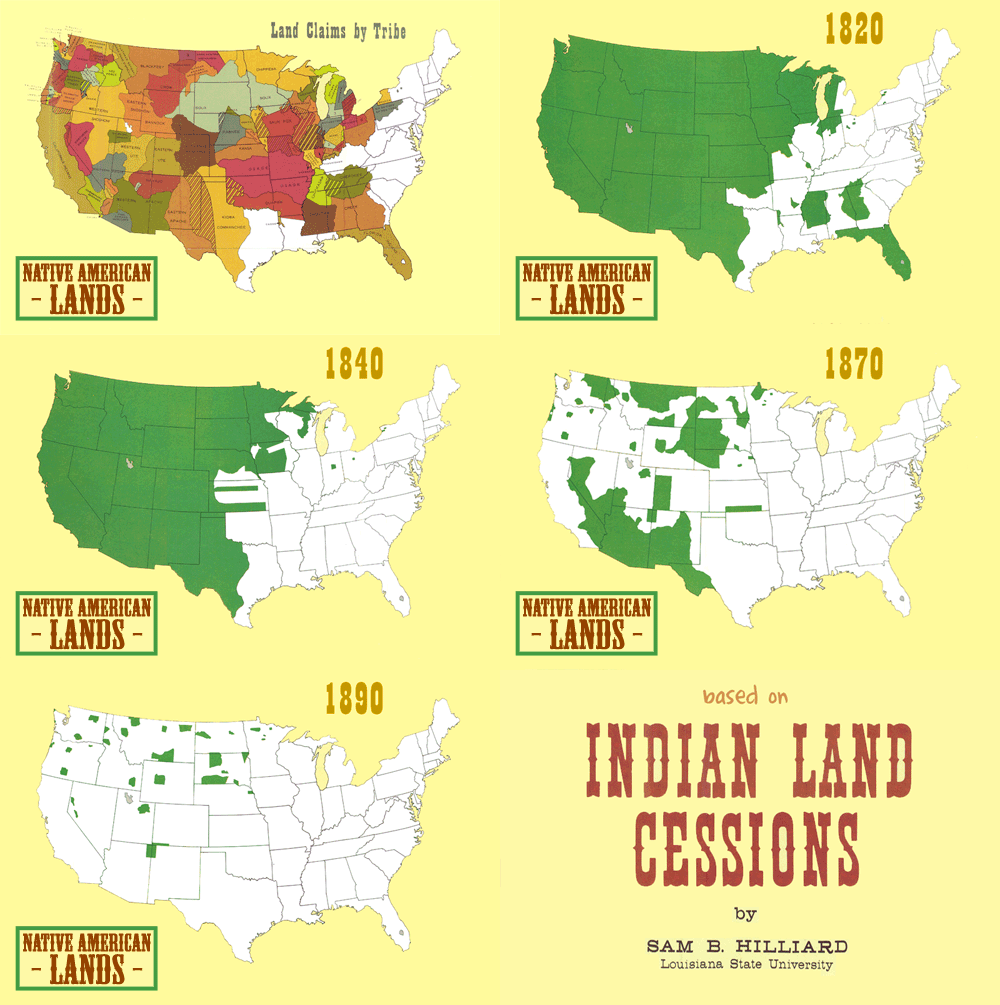
The Pacific Northwest, with its abundant salmon runs, fertile valleys, and strategic waterways, became a prime example of this cartographic conflict. The 1855 Walla Walla Council, for instance, saw Governor Isaac Stevens negotiate treaties with the Nez Perce, Cayuse, Walla Walla, Umatilla, and Yakama nations. The "maps" presented by Stevens depicted vast land cessions, consolidating disparate bands onto new, smaller reservations.
For the Nez Perce, their vast traditional territory spanned parts of what are now Oregon, Washington, Idaho, and Montana – a land of crucial camas prairies, fishing grounds, and buffalo hunting ranges. The 1855 treaty map carved out a much smaller reservation. But then, in 1863, gold was discovered within those "reserved" lands. The U.S. government demanded a new treaty, the "Thief Treaty," drastically shrinking the Nez Perce reservation again. Chief Joseph and others who refused to sign this new treaty were branded "non-treaty" Indians, leading to the tragic Nez Perce War of 1877, a direct consequence of these conflicting maps and interpretations of land ownership.
Similarly, the Coast Salish peoples around Puget Sound saw their traditional fishing and gathering territories drastically reduced by treaties like the Treaty of Medicine Creek (1854). Their maps were of waterways, tidal flats, and forest resources, all essential for their livelihood. The new U.S. maps drew lines that ignored these vital connections, leading to decades of struggle over fishing and land rights, a struggle that continues to this day and is famously encapsulated in the "Boldt Decision" of 1974, which affirmed tribal fishing rights in their "usual and accustomed places."
The Grand Coulee Dam, a monumental engineering feat, further illustrates this. While a symbol of progress for many, its construction submerged ancestral fishing grounds, sacred sites, and villages of the Colville and Spokane tribes, erasing their presence from a landscape they had mapped and known for millennia, replacing it with a vast, man-made lake.
Visiting the Landscape: Tracing the Invisible Lines Today
For the modern traveler, understanding these invisible lines transforms a visit to the Pacific Northwest. It shifts perception from merely admiring scenery to engaging with a deep, layered history. Here’s how you can trace these contested cartographies:

-
Visit Tribal Cultural Centers and Museums: These are indispensable.
- Tamástslikt Cultural Institute (Pendleton, Oregon): Located on the Umatilla Reservation, this museum offers an incredible immersion into the history and culture of the Cayuse, Umatilla, and Walla Walla tribes. Their exhibits often feature maps and narratives from an Indigenous perspective, directly addressing treaty negotiations and the impact of colonization.
- Nez Perce National Historical Park (multiple sites across Idaho, Oregon, Washington): This park is not a single location but a network of sites that tell the story of the Nimiipuu people. Visiting sites like the White Bird Battlefield, Spalding, or the Wallowa Valley allows you to literally walk on land central to their maps and the conflicts over them. Interpretive panels often provide both Nez Perce and U.S. historical perspectives.
- Burke Museum of Natural History and Culture (Seattle, Washington): While a broader museum, it has excellent exhibits on Coast Salish art, culture, and history, often touching upon land use and treaty impacts.
- Yakama Nation Museum (Toppenish, Washington): Explore the history, culture, and treaty relationship of the Confederated Tribes and Bands of the Yakama Nation.
-
Explore National Parks and Forests with a New Lens:
- Columbia River Gorge National Scenic Area: Drive the Historic Columbia River Highway. As you gaze at the powerful river, remember it was once the lifeblood and central thoroughfare for countless tribes. The dams along the river (Bonneville, The Dalles, John Day) are monuments to a power struggle that forever altered Indigenous ways of life and traditional fishing sites like Celilo Falls.
- Wallowa-Whitman National Forest (Oregon): This forest encompasses the ancestral lands of the Nez Perce. Hiking through these mountains, consider the journey of Chief Joseph and his people as they attempted to escape forced removal, following their own mental maps through a landscape being rapidly redefined by settler claims.
- Olympic National Park (Washington): While stunningly beautiful, remember that this land was once the exclusive territory of various Coast Salish and other tribes. The park’s establishment, while preserving nature, also dislocated Indigenous peoples from their traditional hunting, gathering, and spiritual sites. Look for interpretive signs that acknowledge tribal histories.
-
Engage Respectfully with the Land:
- Seek out Indigenous guides or tours: If available, these offer invaluable firsthand perspectives and connect you directly to the living culture and historical memory of the land.
- Observe Salmon Runs: Witnessing the salmon return to their spawning grounds (seasonal, check local advisories) is to witness a sacred cycle that has defined Indigenous life in the PNW for millennia. It’s a powerful reminder of what was fought over and continues to be protected.
- Read local histories from Indigenous perspectives: Books by Native authors or tribal histories offer crucial counter-narratives to colonial accounts.
Beyond the Lines: A Call to Deeper Understanding
To truly travel the Pacific Northwest is to move beyond the superficial beauty and engage with its profound, often painful, history. It means challenging the lines on the maps you carry and seeking out the invisible, ancestral lines that define Indigenous sovereignty and identity. The treaty boundary disputes of the past are not resolved; they continue to shape legal battles, land management decisions, and the cultural landscape.
By understanding how Native American maps and worldviews clashed with colonial cartography, we gain a richer, more nuanced appreciation for the land we traverse. It transforms a simple road trip into a pilgrimage of awareness, reminding us that every vista, every river, every mountain holds stories waiting to be heard, and invisible lines that still define who belongs, who stewards, and who remembers. This journey isn’t just about seeing the Pacific Northwest; it’s about seeing it differently, through the eyes of those who mapped it first.

