Navigating Unseen Pathways: Traveling Early European Contact Sites Through Indigenous Cartography in the American Southeast
Forget the neatly drawn lines and precise coordinates of modern GPS. When contemplating early European contact sites in North America, particularly in the teeming, complex landscapes of the American Southeast, the most accurate and vital maps were not etched on parchment but lived in the minds, stories, and sacred geographies of Indigenous peoples. These weren’t maps in the European sense of static, bird’s-eye views; they were dynamic, relational, and deeply embedded within cultural knowledge, crucial for survival, trade, and understanding the land. To truly review and experience these foundational contact sites for a travel blog, one must embark on a journey guided not by colonial perspectives, but by the echoes of these Indigenous "maps" – a journey into a landscape rich with untold stories, ancient pathways, and a profound understanding of place that predates any European arrival.
This isn’t about visiting a museum to see a preserved Indigenous map (though some rare examples exist, like painted hides or shell gorgets depicting cosmology or trade routes). Instead, it’s about visiting the land itself, seeking out the sites that were crossroads of early contact, and re-imagining them through the lens of Indigenous cartography. Our destination for this review is the American Southeast, specifically focusing on the Mississippian cultural heartland, where the clash of worlds began with figures like Hernando de Soto, and where the landscape itself served as the ultimate map for its original inhabitants.
The Indigenous Cartographic Tradition: More Than Just Lines
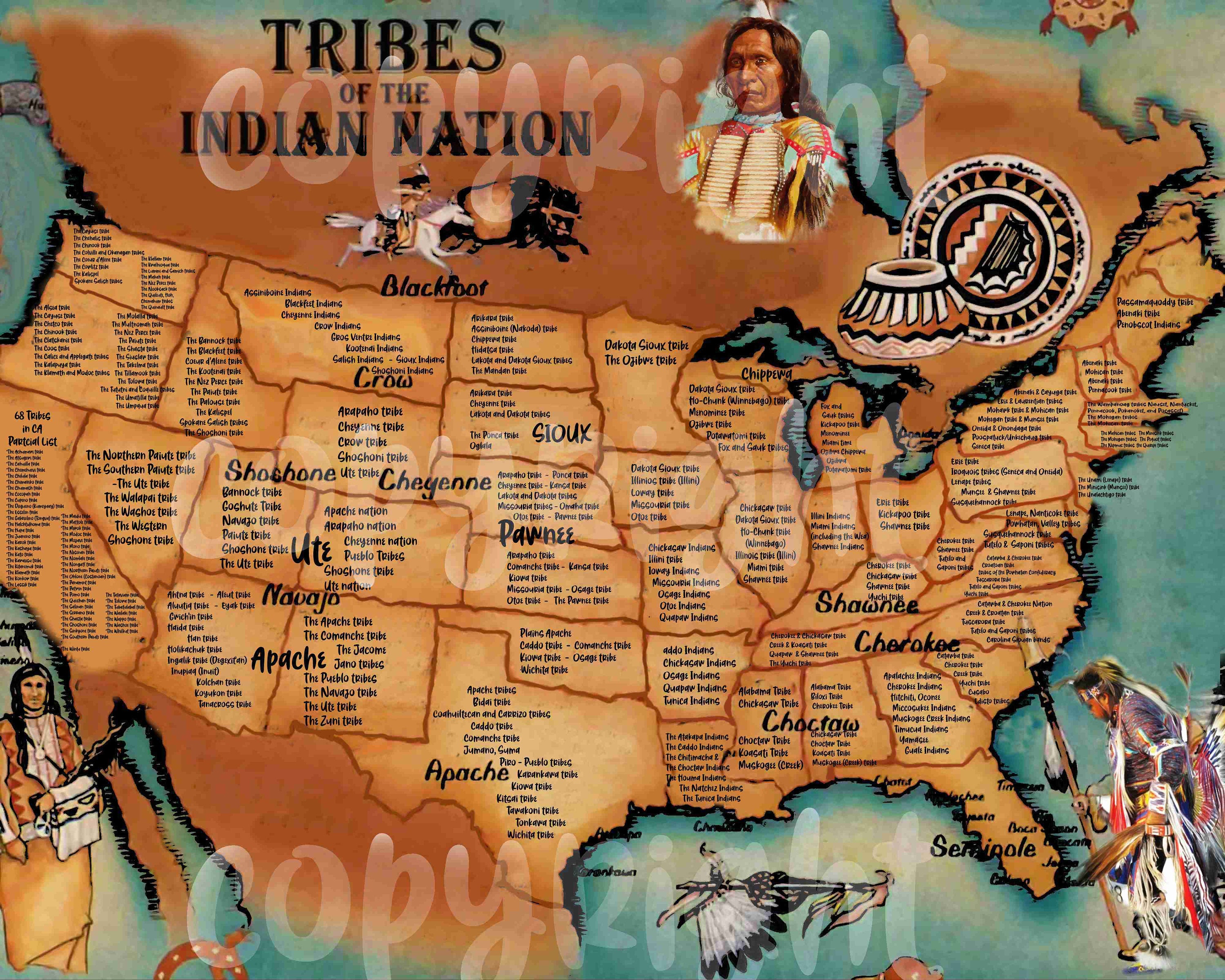
Before we "travel," it’s essential to understand what "Native American maps" of early contact sites truly signify. For millennia, Indigenous peoples across North America developed sophisticated systems for navigating, understanding, and communicating about their territories. These "maps" were often:
- Oral: Passed down through generations via creation stories, migration narratives, songs, and ceremonial knowledge. Rivers, mountains, unique geological features, and even specific trees were mnemonic devices, markers in a vast, living map.
- Performative/Experiential: Knowledge of trails, resource locations, and sacred sites was gained through direct experience, ceremony, and practical travel. The act of moving through the land was the mapping.
- Material: Sometimes inscribed on hides, bark, stone, or woven into textiles. These were not always to-scale representations but could depict key routes, resource areas, tribal territories, or cosmological understandings of the world. Wampum belts, for instance, could record treaties and historical events, effectively mapping relationships between peoples and places.
- Relational: Unlike European maps focused on boundaries and ownership, Indigenous maps often emphasized relationships: between communities, between humans and the natural world, between the living and the spiritual. Rivers weren’t just lines; they were living arteries, sources of life, and highways of communication.
- Ephemeral: Many Indigenous maps were drawn on the ground with sticks or fingers to explain routes to visitors, then erased, living on in memory. This immediate, practical utility highlights their dynamic nature.


When Europeans arrived, utterly lost in a foreign continent, they relied heavily on Indigenous guides. These guides weren’t just showing them paths; they were sharing their deeply embedded cartographic knowledge, leading them along ancient trade routes, to sources of food and water, and to the villages of allies or enemies – effectively, they were walking the maps for the newcomers.
The American Southeast: A Living Map of First Contact
The American Southeast, particularly the states of Georgia, Alabama, and parts of Florida and Tennessee, was home to the vibrant and complex Mississippian cultures. These were sophisticated agricultural societies that built monumental earthworks, established extensive trade networks, and developed stratified social structures long before European arrival. Their rivers – the Mississippi, Alabama, Savannah, Ocmulgee, Etowah – were their highways, and their mound centers were their cities, interconnected nodes in a vast Indigenous web. This is our primary "location" for review.
Experiencing the "Map" – Key Sites and Interpretations:
To truly review these sites through an Indigenous cartographic lens, one must move beyond simply observing ruins and instead immerse oneself in the landscape, recognizing it as a palimpsest of ancient pathways and knowledge.
1. Ocmulgee Mounds National Historical Park, Macon, Georgia:
- The Experience: This park is an absolute must-visit. Ocmulgee represents over 17,000 years of human habitation, from Paleo-Indians to the Muscogee (Creek) Nation. Its most prominent features are the impressive Mississippian earthworks, including the Great Temple Mound, Funeral Mound, and the unique Earthlodge with its original floor plan and raised platform.
- Indigenous Cartography Connection: Standing atop the Great Temple Mound, one gains a panoramic view of the Ocmulgee River and the surrounding floodplains. This vantage point immediately connects you to the strategic thinking of the Mississippian builders. They understood the river as a lifeblood and a conduit for trade, a watery highway connecting them to other mound centers downriver and up. The placement of the mounds themselves, their alignment, and the pathways between them were a conscious spatial organization – a map in three dimensions. The Earthlodge, with its central fire and radial seating, is a microcosm of Indigenous spatial organization, representing community, cosmology, and the interconnectedness of their world. The park’s interpretive center does an excellent job of presenting both archaeological findings and the perspectives of the Muscogee (Creek) Nation, whose ancestors built and navigated this landscape. Imagine De Soto’s men, guided by Indigenous people, approaching this very complex, understanding it as a central node in a larger network.
2. Etowah Mounds Historic Site, Cartersville, Georgia:
- The Experience: Another spectacular Mississippian site, Etowah boasts three major mounds, a plaza, and a defensive ditch, all nestled along the Etowah River. It was a major cultural and political center, thriving from 1000 to 1550 AD. The museum here showcases exquisite artifacts, including large marble effigies and copper plates, demonstrating the artistic and spiritual sophistication of the people.
- Indigenous Cartography Connection: Similar to Ocmulgee, the Etowah River was the lifeblood and principal artery for the Etowah community. The river itself was the map, providing transportation, food, and communication with other communities. The defensive ditch around the site speaks to an understanding of territory and boundaries, albeit Indigenous ones, which would have been communicated and understood by neighboring groups. The trade goods found here, originating from hundreds of miles away (seashells from the coast, copper from the Great Lakes region), vividly illustrate the extensive Indigenous trade networks. These networks, by definition, required sophisticated "maps" – knowledge of trails, rivers, portages, and resource locations – passed down orally and through direct experience. Visiting Etowah allows you to envision these ancient routes, following the river’s course in your mind, and understanding how Europeans, seeking gold and new territories, would have been utterly reliant on Indigenous guides who knew these pathways intimately.
3. Moundville Archaeological Park, Moundville, Alabama (A Broader Context):
- The Experience: While a bit further afield, Moundville is one of the largest and best-preserved Mississippian sites in North America, with 29 mounds arranged around a central plaza on a bluff overlooking the Black Warrior River. Its scale is breathtaking.
- Indigenous Cartography Connection: Moundville highlights the network aspect of Indigenous "maps." It wasn’t just isolated sites; it was a vast system of interconnected communities. The Black Warrior River was Moundville’s highway, linking it to the wider Mississippian world. To understand early European contact, one must grasp that Indigenous guides led explorers like De Soto from one such powerful center to another, navigating a complex political and geographic landscape where each community knew its place and its neighbors. The maps these guides carried were not on paper; they were the collective memory of generations, etched into the landscape itself.
The Travel Experience – What to Expect:
Traveling these sites with an Indigenous cartographic mindset transforms a historical visit into a profound journey.
- Sensory Immersion: You won’t just see mounds; you’ll feel the ancient earth beneath your feet, hear the rustle of leaves that Indigenous peoples heard, and smell the same river air. This helps ground you in the physical reality of their maps.
- Challenging Narratives: You’ll confront the Eurocentric bias often present in history. The "discovery" of America becomes a re-discovery for Europeans, guided by people who had known and mapped the land for millennia.
- Respect and Reflection: These sites are sacred to many Indigenous communities today. Approach them with reverence. The experience fosters a deep appreciation for the resilience, ingenuity, and profound connection to land held by Native American peoples.
- Practicalities: The American Southeast is beautiful in spring and fall, with milder temperatures. Wear comfortable walking shoes, bring water, and be prepared for both sun and potential rain. Many parks have excellent interpretive centers, but the real "map" is outside, in the landscape itself. Seek out opportunities to learn from contemporary Indigenous voices if available, as their perspectives are invaluable.
Why This Journey Matters:
Reviewing early European contact sites through the lens of Indigenous cartography is more than just a travel experience; it’s an act of historical re-evaluation. It reminds us that North America was not an empty wilderness awaiting "discovery" but a vibrant, well-mapped, and deeply understood homeland. The "maps" of Indigenous peoples were not just tools for navigation; they were expressions of culture, cosmology, and sovereignty.
By seeking out these unseen pathways, by tracing the rivers and walking the grounds where ancient cities once stood, we begin to decolonize our understanding of history. We honor the profound knowledge of the original inhabitants and acknowledge their essential role in shaping the very earliest chapters of American history. This travel experience offers a richer, more nuanced, and ultimately more truthful engagement with the past, revealing a continent that was always known, always mapped, long before any European ship touched its shores. It’s a journey that challenges you to see beyond the conventional, to listen to the land, and to find the maps that truly matter.
