
Journey Through Time: Unearthing the Cosmic ‘Maps’ of Ohio’s Hopewell Culture
Forget flat paper and GPS coordinates. Imagine maps etched into the very earth, monumental geometric designs spanning acres, meticulously aligned with celestial events, and built by a sophisticated culture over two millennia ago. These aren’t just ancient ruins; they are the profound, enigmatic "maps" of the Hopewell Culture, primarily found in the Ohio River Valley. For the discerning traveler seeking a profound connection to ancient ingenuity and a deeper understanding of human cosmology, exploring these sites is less a historical tour and more an immersive journey into the mind of a lost civilization. This article dives straight into the heart of these incredible locations, offering a traveler’s guide to experiencing the world through the eyes of the Hopewell.
The Hopewell’s Grand Design: What are These "Maps"?
When we speak of Hopewell "maps," we’re not referring to cartographic representations in the modern sense. Instead, we’re talking about vast, precisely engineered earthworks – immense geometric enclosures, circular and octagonal forms, squares, and effigy mounds – that served as complex spatial and temporal blueprints. These structures weren’t haphazard; they were deliberate, often requiring millions of hours of labor, and reflect a profound understanding of mathematics, astronomy, and sacred geography. They mapped not just physical territories, but also social structures, spiritual beliefs, and the movements of celestial bodies, particularly the moon. Visiting these sites is to walk within a landscape that was intentionally shaped to mirror the cosmos.

Newark Earthworks: The Lunar Observatory Masterpiece
The undisputed crown jewel of Hopewell mapping, and arguably the most sophisticated ancient observatory in the world, is the Newark Earthworks in Newark, Ohio. This UNESCO World Heritage site is a testament to the Hopewell’s unparalleled architectural and astronomical prowess. What you encounter here is breathtaking in its scale and precision.
The Great Circle Earthworks (Moundbuilders State Memorial): Stepping into the Great Circle is an experience in pure awe. Enclosing 20 acres, with walls ranging from 8 to 14 feet high, this perfectly circular enclosure immediately conveys a sense of sacred space. Its precise circularity, achieved without modern surveying tools, is astounding. At its center stands a large conical mound, suggesting a focal point for ceremonies or observations. The sheer effort to move that much earth, creating such a perfect form, speaks volumes about the Hopewell’s societal organization and shared vision.
The Octagon Earthworks (Octagon Mound Golf Course): This is where the Hopewell’s genius truly shines as a "map" of the heavens. Connected to the Great Circle by a 1,000-foot parallel walled pathway, the Octagon is an engineering marvel. It encloses 50 acres and consists of eight perfectly aligned walls, each over 550 feet long, forming a precise octagon. What makes this site extraordinary is its alignment: the Octagon is precisely oriented to track the complex 18.6-year lunar cycle. On specific days, like the lunar standstill, the moon rises and sets precisely along the axis of the Octagon’s walls, framed by gateways.

Imagine being a Hopewell priest or astronomer, standing within this immense structure, watching the moon perform its celestial dance, its movements precisely predicted and celebrated by the very landscape. This wasn’t just observation; it was a deeply integrated map of their cosmology, a place where the earthly realm met the celestial. As a traveler, you can walk these ancient pathways, stand within the Octagon, and ponder the profound knowledge that allowed its creators to map such intricate celestial mechanics into the very fabric of the earth. The golf course setting is unique – and while it might initially seem incongruous, it actually preserves the vastness of the site, allowing visitors to appreciate the immense scale of the earthworks as they were originally intended.
Visiting Newark: Allow ample time – at least half a day, if not more – to truly absorb the magnitude of these sites. The Newark Earthworks Center provides excellent interpretive materials, and walking the paths gives you a physical sense of the Hopewell’s world. Wear comfortable shoes and be prepared for walking across open fields. Respect the sacred nature of the site, even amidst the modern amenities.
Hopewell Culture National Historical Park: A Network of Ceremonial Centers
A short drive southwest of Newark, near Chillicothe, Ohio, lies the Hopewell Culture National Historical Park, encompassing several key Hopewell sites. These locations offer a broader perspective on the culture’s "mapping" practices, showcasing variations in purpose and design.
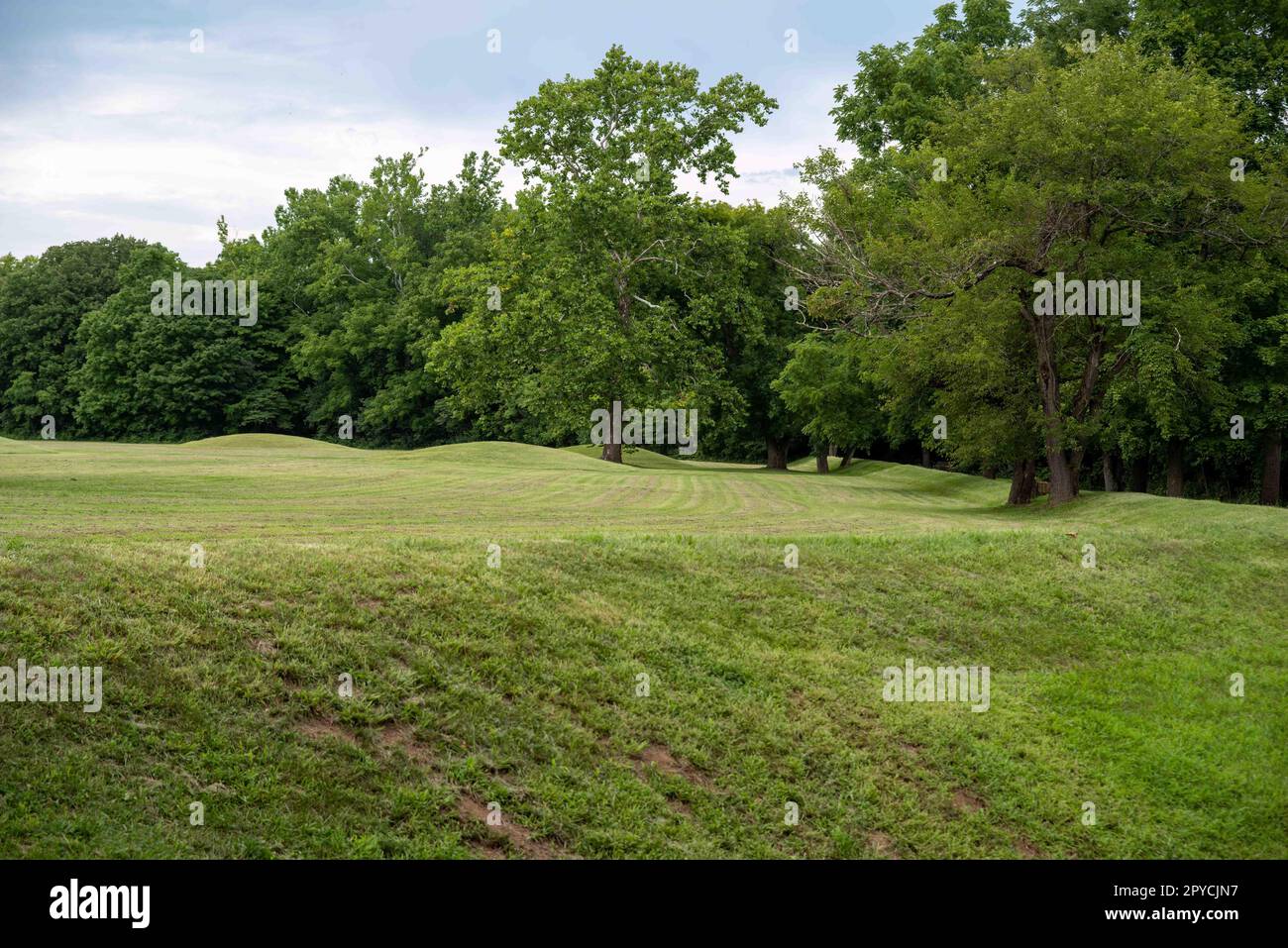
Mound City Group: This is often the most accessible and interpreted site within the park, serving as the visitor center’s focal point. Mound City Group consists of a square enclosure, approximately 13 acres, containing 24 burial mounds of varying sizes and shapes. While not a "map" in the astronomical sense of Newark, Mound City maps the Hopewell’s spiritual world and their reverence for the dead. The careful arrangement of mounds within the enclosure, often containing elaborate burials and exquisite grave goods, reflects a highly structured spiritual landscape. The objects found here – mica cutouts, effigy pipes, copper ornaments, obsidian blades – were often sourced from across North America, indicating extensive trade networks and a shared cultural understanding across vast distances, effectively mapping their influence and connections.
Seip Earthworks: Located along Paint Creek, Seip Earthworks is another impressive site featuring a large circular enclosure connected to a vast square. The most prominent feature is the Seip Mound, one of the largest Hopewell burial mounds, reaching over 30 feet in height. Like Mound City, Seip maps a ceremonial and burial landscape, but on an even grander scale, suggesting its importance as a regional gathering place or a focal point for a wider community. The sheer size of the earthworks here emphasizes the collective effort and shared purpose that defined Hopewell society.
Fort Ancient Earthworks & Nature Preserve: A bit further afield, south of Chillicothe, Fort Ancient is a monumental enclosure that defies easy categorization. While often called a "fort," archaeological evidence suggests it was primarily a ceremonial and social gathering place, a vast landscape "map" for community interaction. Its walls, up to 23 feet high and stretching for 3.5 miles, enclose 100 acres on a high plateau overlooking the Little Miami River. The scale is staggering. The intricate gateways, the internal mounds, and its strategic placement suggest a profound understanding of defensive principles, but its primary function was likely ritualistic, a grand stage for processions and ceremonies, effectively mapping the social and spiritual fabric of the Hopewell world. The vistas from Fort Ancient are spectacular, offering a sense of the immense scale and the strategic placement of this site within the landscape.
Visiting Hopewell Culture NHP: Start at the Mound City Group Visitor Center to gain essential context and view the incredible artifacts. Then, explore the mounds. Other sites like Seip and Fort Ancient require driving, but each offers a unique perspective. Plan for a full day or two to explore these diverse locations properly.
Serpent Mound: The Effigy That "Maps" Cosmic Power
While often associated with the Fort Ancient culture that followed the Hopewell, Serpent Mound in Peebles, Ohio, exhibits characteristics and a scale that place it firmly within the broader tradition of monumental earthwork construction, with some evidence suggesting Hopewell influence or earlier roots. This effigy mound is unlike any other: a quarter-mile-long serpent effigy undulating across a natural ridge.
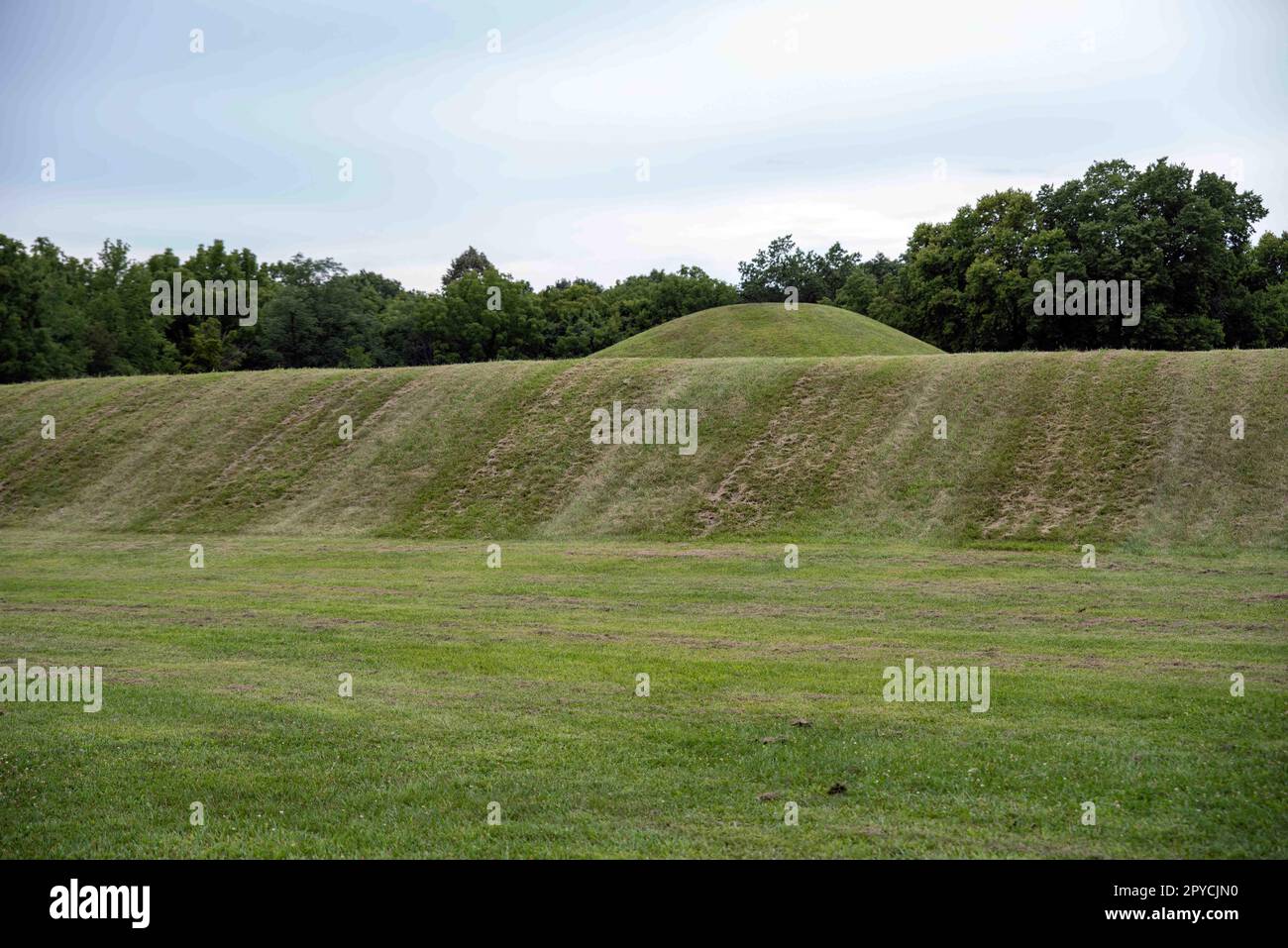
Serpent Mound is a unique kind of "map." It doesn’t map astronomical alignments with the precision of the Newark Octagon, but it maps a powerful, spiritual presence onto the landscape. Its head aligns with the summer solstice sunset, and its coils may point to other solar and lunar events. The serpent itself is a potent symbol across many indigenous cultures, often associated with rebirth, water, and the underworld. Standing at the head or tail of the serpent, you feel the profound connection between the earth and the cosmos that the Hopewell and subsequent cultures sought to embody. It’s a map of power, belief, and the vital forces of the natural world.
Visiting Serpent Mound: The site is easily walkable, with paths that take you along the length of the serpent and an observation tower offering panoramic views. It’s a visually striking experience that leaves a lasting impression. Allow 1-2 hours.
The Experience: Walking Through Time, Connecting to Consciousness
Visiting these Hopewell sites is more than just observing ancient architecture; it’s an immersive, almost meditative experience. As you walk the ancient pathways, stand within the vast enclosures, or gaze upon the perfectly aligned walls, you can’t help but feel a profound connection to the people who moved mountains of earth with simple tools, driven by an extraordinary vision.
These earthworks are not just dirt piles; they are expressions of a sophisticated worldview. They are "maps" of the cosmos, reflecting the Hopewell’s understanding of celestial mechanics and their place within the universe. They are "maps" of society, delineating ceremonial spaces, burial grounds, and community centers. They are "maps" of belief, imbued with spiritual significance and connecting the earthly realm with the sacred.
For the travel blogger, the story of the Hopewell is ripe with wonder. It’s a testament to human ingenuity, a challenge to preconceived notions about ancient indigenous cultures, and an invitation to look deeper at the landscapes around us. These sites are a reminder that complex knowledge and profound wisdom existed long before written language or European contact.
Planning Your Journey to Hopewell Country
- Best Time to Visit: Spring and fall offer pleasant temperatures and fewer crowds. Summer can be hot and humid, but the sites are still accessible. Winter visits can be starkly beautiful but expect cold weather.
- What to Bring: Comfortable walking shoes are essential. Water, snacks, sunscreen, and insect repellent are recommended, especially for longer visits. A good camera is a must. Binoculars can enhance observations, particularly at Newark.
- Respectful Tourism: These are sacred sites for many contemporary Native American groups. Tread lightly, stay on marked paths, do not disturb any features, and leave no trace.
- Combine Sites: While each site is impressive on its own, visiting several offers a more complete picture of Hopewell culture. Newark and the Hopewell Culture NHP sites can be combined into a multi-day itinerary. Serpent Mound is a bit more isolated but well worth the detour.
- Local Amenities: Chillicothe and Newark offer accommodations, dining, and other services.
Conclusion: A Map to Understanding Our Past
The Hopewell Culture’s earthworks are more than just archaeological curiosities; they are monumental "maps" that unlock insights into a remarkable ancient civilization. They challenge us to reconsider the capabilities of pre-Columbian societies and to marvel at their profound connection to the natural world and the cosmos. For the adventurous traveler, experiencing these sites is a rare opportunity to step outside the conventional, to walk in the footsteps of ancient astronomers and priests, and to truly understand that some of the most intricate and meaningful maps were never drawn on paper, but meticulously carved into the very face of the earth. These are not just places to visit; they are experiences that map a deeper understanding of human history and our enduring quest to comprehend our place in the universe.

