
Journeying Through Sovereignty: Tracing the Cherokee Nation’s Land Claims Through Lived Landscapes
Forget the glossy brochures of typical travel destinations. Our journey today takes us into the very heart of land, identity, and an enduring struggle for sovereignty, seen through the lens of Cherokee Nation maps for land claims. This isn’t just about lines on paper; it’s about the living, breathing landscapes that those lines represent, the stories they tell, and the profound experiences they offer to a traveler willing to look deeper. We’re not reviewing a single location, but rather an interconnected web of sites that allow us to physically engage with the historical and contemporary implications of Cherokee land claims, offering a travel experience unlike any other.
The concept of "Cherokee Nation maps for land claims" might sound academic, confined to archives and legal documents. Yet, for the traveler, these maps are powerful navigational tools – not just to geographical points, but to historical truths, cultural resilience, and the ongoing vibrancy of a sovereign nation. They chart a history of immense territory, forced removal, and the re-establishment of a dynamic, self-governing people. To understand these maps is to understand the very ground beneath your feet when you visit the Cherokee homelands, both original and re-established.
Our exploration will span three crucial geographical and historical phases: the ancestral lands of the Southeast, the harrowing path of the Trail of Tears, and the re-established nations in Oklahoma and North Carolina. Each segment offers distinct yet interconnected travel experiences that illuminate the power of these historical and contemporary land claims.

The Original Heartlands: Echoes of a Vast Domain
Before the forced removals, the Cherokee Nation encompassed a vast territory stretching across what is now North Carolina, South Carolina, Georgia, Tennessee, Alabama, and Kentucky. The maps from this era, often meticulously drawn by Cherokee cartographers or commissioned by early American officials, weren’t just geographical tools; they were declarations of sovereignty, delineating lands held for millennia before the encroachment of colonial powers. Visiting these ancestral lands today offers a poignant glimpse into what was lost, and what persists in memory and spirit.
New Echota, Georgia: This is arguably the most crucial starting point for understanding the land claims of the Cherokee Nation. New Echota was the last capital of the unified Cherokee Nation before the forced removal. Here, a thriving constitutional government operated, publishing a bilingual newspaper, the Cherokee Phoenix, and establishing a sophisticated legal system. The maps of New Echota illustrate a meticulously planned town, a testament to Cherokee modernity and self-governance. Today, the New Echota Historic Site is a powerful place of reflection. You can walk the grounds of the council house, the print shop, and residential cabins, seeing the physical manifestation of a nation that was systematically dismantled. It’s here you grasp the profound tragedy of the Treaty of New Echota, signed by a minority faction without the consent of the majority, which effectively ceded all Cherokee lands east of the Mississippi and laid the groundwork for the Trail of Tears. The site vividly demonstrates that the Cherokee were not a nomadic tribe, but a settled, organized nation with clearly defined territories – territories explicitly documented in the very maps that would later be used against them.
Etowah Mounds, Georgia: While not exclusively Cherokee, the Etowah Mounds Historic Site provides a deep archaeological connection to the Mississippian culture that predates and influenced the Cherokee people. The massive earthen mounds, built by ancestors over a thousand years ago, are physical monuments to a sophisticated civilization and a long-standing connection to the land. When you stand atop the largest mound, gazing over the Etowah River valley, you gain a sense of the deep historical roots and the immense scope of indigenous presence in the Southeast, a presence that those early Cherokee maps merely codified in a later era. It’s a reminder that the land claims were not just recent declarations, but extensions of an ancient occupancy.

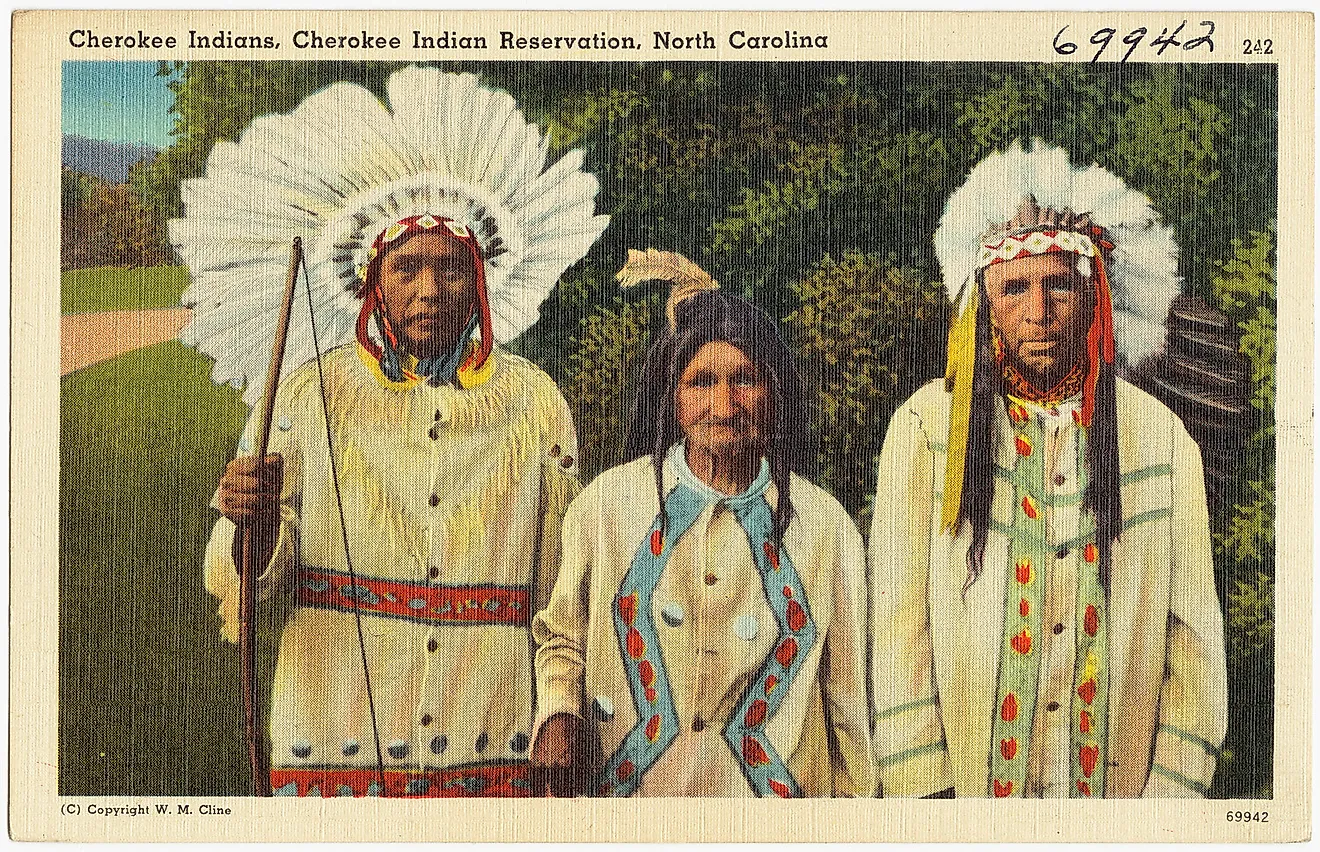
Oconaluftee Indian Village, Cherokee, North Carolina (Eastern Band of Cherokee Indians): This living history village on the Qualla Boundary, the land base of the Eastern Band of Cherokee Indians (EBCI), offers a vivid recreation of 18th-century Cherokee life. While the EBCI’s land claims are distinct – they retained a portion of their ancestral lands by resisting removal – the village provides a tangible connection to the culture that thrived across the entire ancestral domain. Watching traditional crafts, seeing the architecture, and hearing stories from Cherokee interpreters brings the historical maps to life. It’s a powerful experience to see the continuity of culture on land that was never fully relinquished, a testament to the tenacity of those who defied the maps of removal.
The Trail of Tears: A Map of Forced Migration
The maps of the Trail of Tears are perhaps the most harrowing. They chart not claims of ownership, but routes of forced displacement, lines of immense suffering etched across the American landscape. For the traveler, experiencing the Trail of Tears National Historic Trail is a somber but essential pilgrimage, a way to bear witness to one of the darkest chapters in American history.
Red Clay State Historic Park, Tennessee: Located near Cleveland, Tennessee, Red Clay was the last seat of the Cherokee National Council before the removal. It was here that the Cherokee leaders, including Principal Chief John Ross, held their final council meetings, desperately strategizing to retain their lands. The site offers a spring, believed to be sacred, and a replica of the council arbor. Standing on these grounds, you can almost hear the echoes of debate and anguish. The maps of the time would have shown this as a critical point on the shrinking Cherokee domain, a final bastion before the inevitable. Red Clay is a place to contemplate the political and moral failures that led to the removal.
Mantell Historical Site, Water Route, Tennessee/Alabama: While many focus on the overland routes, a significant portion of the Trail of Tears involved travel by water, particularly on the Tennessee River. Various markers and parks along the river, like those near Waterloo, Alabama, or the riverbanks around Chattanooga, Tennessee, commemorate the brutal river journeys. Experiencing these points, perhaps even taking a boat ride on the Tennessee River, offers a different perspective on the logistics and suffering. The maps showing these river routes highlight the scale of the forced movement and the logistical nightmare imposed upon the Cherokee people.
Portions of the National Historic Trail (various states): The Trail of Tears National Historic Trail is not a single path, but a network of routes across nine states. Travelers can find interpretive sites, markers, and even preserved sections of the original roads. Visiting these smaller, often less-trafficked sites allows for a more personal, reflective experience. Imagine the countless maps drawn by military escorts and Cherokee leaders alike, detailing every river crossing, every camp, every mile of this agonizing journey. These maps are no longer about claiming land but about documenting the loss of it. Seek out these markers, walk a small portion of the trail, and allow the weight of history to settle upon you.
Re-establishing Sovereignty: The Modern Cherokee Nations
The maps of the modern Cherokee Nations – the Cherokee Nation, the United Keetoowah Band of Cherokee Indians in Oklahoma, and the Eastern Band of Cherokee Indians in North Carolina – are maps of triumph, resilience, and renewed sovereignty. They delineate the lands where the Cherokee people rebuilt their nations, preserving their culture, language, and governance. Visiting these areas is to witness a vibrant, forward-looking people deeply rooted in their past.
Tahlequah, Oklahoma (Cherokee Nation Capital): Tahlequah is the capital of the Cherokee Nation, the largest federally recognized Cherokee tribe. This is where the Cherokee people re-established their government after the removal. Here, you can visit the Cherokee Nation Tribal Complex, the Supreme Court Building (dating back to 1869), and the Cherokee National Prison Museum. The maps of Tahlequah represent a new beginning, a testament to the Cherokee people’s ability to rebuild their society and maintain their distinct identity despite immense hardship. The current tribal lands, while vastly smaller than the ancestral domain, are sovereign territories, a direct result of historical treaties and ongoing legal battles that assert these land claims. Experiencing Tahlequah is seeing a modern, functioning indigenous government in action.
Cherokee Heritage Center, Park Hill, Oklahoma: Just south of Tahlequah, the Cherokee Heritage Center is an indispensable stop. It houses the Diligwa 1710 Cherokee Village, a living history exhibit that transports you back to an early 18th-century Cherokee town. It offers a powerful counterpoint to New Echota, showing the enduring cultural practices that predate and survived the removal. The Cherokee National Museum within the center details the history of the Cherokee people, including extensive exhibits on the Trail of Tears and the efforts to reclaim and maintain sovereignty. Crucially, the museum often features historical maps, demonstrating how these documents were both tools of oppression and instruments of self-definition and resistance. These maps illustrate the shifting boundaries, the contested claims, and ultimately, the established lands of the modern nation.

Museum of the Cherokee Indian, Cherokee, North Carolina (Eastern Band of Cherokee Indians): Located on the Qualla Boundary, this world-class museum offers a comprehensive journey through Cherokee history, from ancient times to the present. Its exhibits powerfully convey the deep connection between the Cherokee people and their ancestral lands, illustrating how the EBCI’s unique land claim – their ability to remain – shaped their distinct narrative. The museum’s focus on cultural continuity, language revitalization, and modern achievements underscores that the land is not just territory, but the foundation of identity and sovereignty. The maps displayed here often highlight the contrast between the vast ancestral lands and the comparatively smaller, but fiercely protected, Qualla Boundary.
The Enduring Power of the Map
To travel these landscapes, guided by the implicit and explicit knowledge of Cherokee Nation maps for land claims, is to undertake a journey far richer than any typical vacation. It’s an act of deep engagement with history, a recognition of injustice, and a celebration of enduring resilience. These maps are not static historical artifacts; they are living documents that inform present-day sovereignty, cultural revitalization, and the ongoing struggle for justice.
As a traveler, your role is not just to observe, but to understand. When you stand on the grounds of New Echota, you understand the magnitude of what was lost. When you trace a segment of the Trail of Tears, you feel the profound sorrow and resilience of those who walked it. When you visit Tahlequah or the Qualla Boundary, you witness the vibrant, self-determined nations that rebuilt and thrive today.
These sites, interconnected by the invisible threads of historical maps and the visible reality of contemporary land claims, offer an unparalleled opportunity for learning and reflection. They remind us that land is more than real estate; it is identity, history, and the very foundation of a people’s future. So pack your bags, but also pack your sense of inquiry and respect. This journey through the Cherokee Nation’s lands, guided by the profound stories embedded in its maps, will change how you see the world, and perhaps, your place within it.

