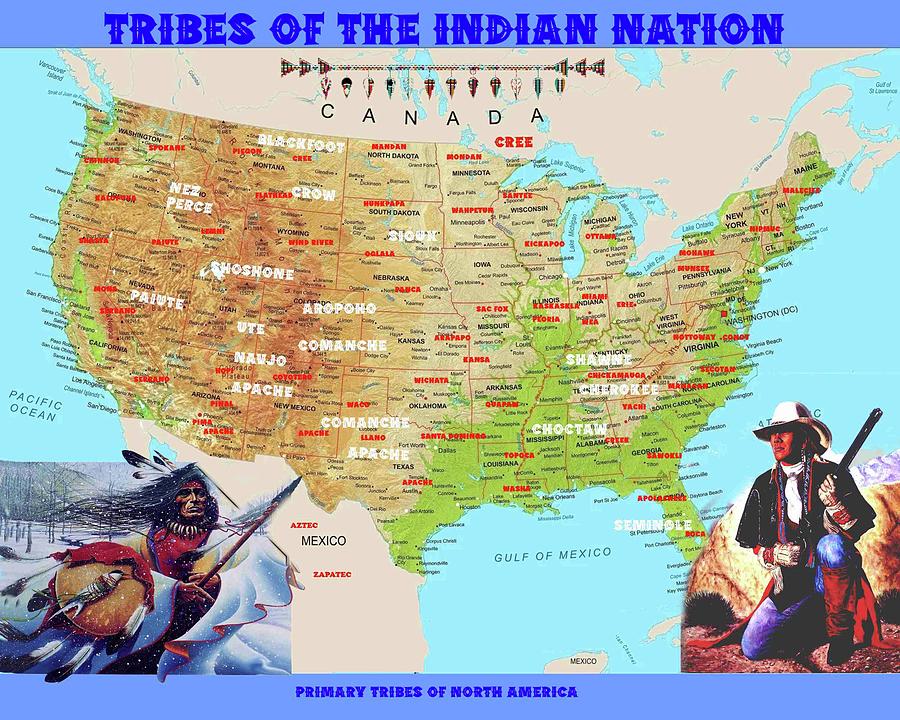
The concept of a "Map of Native American Warriors" transcends a simple geographical depiction of battle sites. It is an intricate tapestry, woven from ancestral lands, migration routes, spiritual territories, and the very essence of tribal identity. Such a map, if it were to truly encapsulate the spirit and history, would be less about static points and more about dynamic movements, strategic strongholds, diplomatic pathways, and the enduring resilience of peoples who defined themselves through courage, community, and an unbreakable bond with their land. It would be a living document, illustrating not just where battles were fought, but where honor was earned, where societies were protected, and where a profound sense of self was forged against overwhelming odds.
The Warrior Ethos: More Than Just Combat
To understand a map of Native American warriors, one must first grasp the depth of the warrior ethos. For indigenous peoples across the continent, a warrior was rarely just a fighter. They were protectors of the community, providers through hunting, diplomats who negotiated peace, and spiritual leaders who sought guidance. Their role was holistic, integrated into the social and spiritual fabric of the tribe. Courage was paramount, but it was tempered with wisdom, generosity, and a deep sense of responsibility. Honor was not merely about individual glory but about bringing prestige to one’s family and tribe. Warfare, when it occurred, was often driven by defense of territory, resources, or honor, rather than conquest for its own sake. Raiding might occur for horses, captives, or revenge, but outright annexation of vast foreign territories was less common than in European models.
This map would show territories fiercely defended, not just as land, but as sacred spaces, hunting grounds, and the burial places of ancestors. It would highlight the strategic use of terrain – the vast plains for cavalry, dense forests for ambush, mountainous redoubts for defense, and the intricate waterways for mobility.

Mapping the Great Plains: Horsemen and Prophets
Perhaps no region is more synonymous with the image of the Native American warrior than the Great Plains. Here, the introduction of the horse in the 17th and 18th centuries revolutionized warfare, hunting, and lifestyle, creating a powerful mounted culture. A map of this region would be crisscrossed with the trails of the Lakota (Sioux), Cheyenne, Comanche, Crow, and Pawnee.
- Lakota: Dominating the northern plains, their warriors like Crazy Horse and Sitting Bull became legendary. The map would show the Black Hills, sacred heartland, and the battlegrounds of the Bozeman Trail and the Little Bighorn (Greasy Grass), where a coalition of Lakota, Cheyenne, and Arapaho warriors achieved a decisive victory against Custer’s 7th Cavalry. Lakota warrior societies, such as the Akicita, enforced tribal law and led hunts and war parties. Their spiritual strength, often guided by figures like Sitting Bull, was inseparable from their martial prowess.
- Comanche: Known as the "Lords of the Plains," the Comanche were unparalleled horsemen, their territory stretching across Texas, Oklahoma, and parts of New Mexico and Colorado. Their lightning raids and fierce independence made them formidable adversaries for both other tribes and later, European settlers and American forces. The map would trace their vast hunting grounds and the strategic areas where their powerful bands operated, often leading to protracted conflicts with the nascent Texan and American states. Quanah Parker, a half-Comanche chief, exemplifies their adaptability and leadership in the face of immense pressure.
- Cheyenne: With their renowned Dog Soldiers, a highly disciplined warrior society, the Cheyenne were central to many Plains conflicts. The map would tragically mark places like Sand Creek, where an unprovoked massacre of peaceful Cheyenne and Arapaho villagers spurred intensified warfare. It would also show their alliances, particularly with the Lakota, in defense of their way of life.
- Crow: Often at odds with the Lakota, the Crow were also skilled warriors and horsemen, their territory in Montana and Wyoming. Their participation as scouts for the U.S. Army against their traditional enemies reflects the complex inter-tribal dynamics that such a map must acknowledge.

The Northeast and Great Lakes: Architects of Confederacy
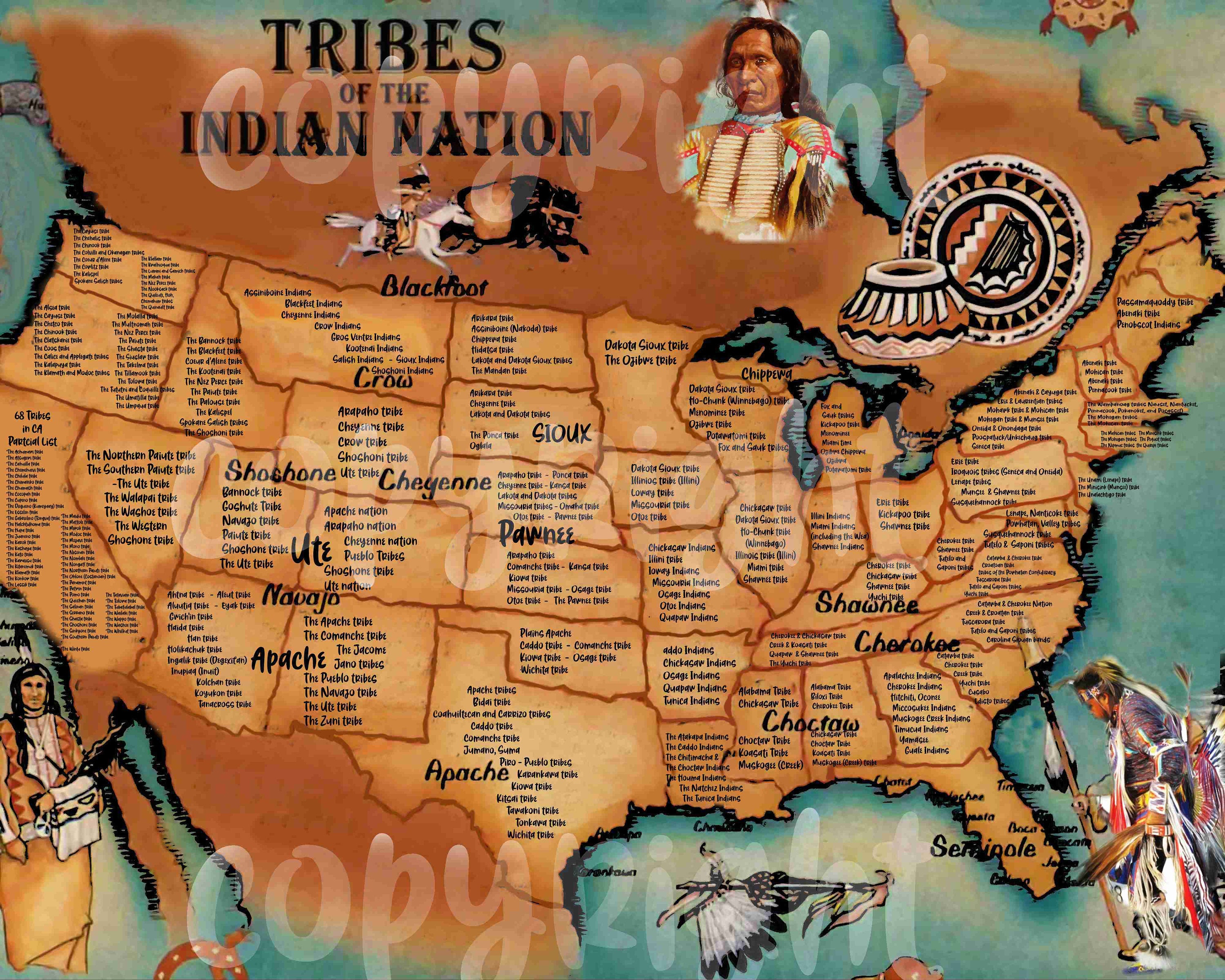
Moving eastward, a map of Native American warriors would reveal a different style of warfare and social organization. The dense forests and intricate waterways of the Northeast fostered highly organized confederacies and sophisticated military tactics.
- Iroquois (Haudenosaunee) Confederacy: Comprising the Mohawk, Oneida, Onondaga, Cayuga, and Seneca (later joined by the Tuscarora), the Haudenosaunee were one of the most powerful indigenous forces in North America. Their "Longhouse" stretched across what is now New York, and their influence reached far beyond. The map would highlight their ancestral lands and the vast territories they controlled or influenced through diplomacy and warfare, particularly during the "Beaver Wars" of the 17th century, where they fought fiercely for control of the fur trade. Their sophisticated political structure, which influenced the American Founding Fathers, was mirrored by their organized military.
- Algonquin-speaking tribes: Groups like the Wampanoag, Narragansett, and Lenape in New England and the Mid-Atlantic, and the Anishinaabe (Ojibwe, Odawa, Potawatomi) around the Great Lakes, engaged in complex alliances and conflicts with each other and, later, with French and British colonial powers. The map would show the intricate network of trails and waterways used for raiding and trading, and sites of resistance like King Philip’s War (Metacom’s War) in New England, a desperate attempt to drive out English colonists.

The Southeast: Resilience in Swamps and Forests
In the humid, forested landscapes of the Southeast, tribes like the Cherokee, Choctaw, Chickasaw, Creek (Muscogee), and Seminole developed distinct warrior traditions.
- Cherokee: Known for their advanced societal structure, the Cherokee also had a strong warrior tradition, protecting their vast mountain and valley lands in the southern Appalachians. While often remembered for their forced removal on the Trail of Tears, their history includes fierce resistance and complex diplomatic engagements. The map would show their traditional lands spanning parts of Georgia, Tennessee, North Carolina, and Alabama, and later, their journey westward.
- Creek Confederacy: A powerful alliance of Muscogee-speaking peoples in Georgia and Alabama, the Creeks were formidable. Their Red Stick warriors famously resisted American expansion in the early 19th century, culminating in the Creek War and the Battle of Horseshoe Bend. The map would illustrate their extensive territory and the strategic rivers and forts that played roles in these conflicts.
- Seminole: Perhaps the ultimate example of defiant resilience, the Seminole of Florida, a composite group including Muscogee, Hitchiti, and escaped African slaves (Black Seminoles), fought three protracted wars against the United States. Their mastery of the Everglades, using the swamp as a natural fortress, allowed them to evade and defeat larger American forces for decades. The map would be dominated by the vast, watery wilderness of Florida, crisscrossed by the hidden trails and encampments of legendary leaders like Osceola.
The Southwest: Guerilla Warfare in Arid Lands
The rugged, arid landscapes of the American Southwest gave rise to warrior cultures uniquely adapted to their environment.
- Apache: Comprising various groups like the Chiricahua, Mescalero, and Lipan, the Apache were masters of guerilla warfare. Their ability to survive and fight in harsh desert and mountain terrains, using hit-and-run tactics, made them incredibly difficult to subdue. Figures like Cochise and Geronimo led decades-long campaigns of resistance against Mexican and American forces. The map would be a mosaic of mountain ranges, hidden canyons, and water sources, illustrating their strategic use of the land for raiding and evasion across Arizona, New Mexico, and northern Mexico.
- Navajo (Diné): The largest Native American nation, the Navajo also possess a deep warrior tradition, though their conflicts were often in defense of their expansive territory. Their resistance led to the infamous "Long Walk" – a forced removal akin to the Trail of Tears. The map would show their vast reservation lands and the surrounding areas where they fought to protect their sacred homelands.
The Northwest Coast and California: Diverse Forms of Valor
Even in regions less known for large-scale mounted warfare, the warrior’s role was crucial.
- Northwest Coast: Tribes like the Haida, Tlingit, and Kwakiutl were master canoe builders and navigators. Their warriors engaged in highly ritualized warfare, often for prestige, slaves, or resources, using their canoes for swift raids along the coast. The map would show their intricate waterways and island strongholds.
- California: With hundreds of distinct tribes, California presented a diverse array of warrior traditions. While often smaller in scale, conflicts over resources like acorns, fishing grounds, and territory were common. The map would show the patchwork of tribal lands, highlighting how even in seemingly peaceful regions, the warrior’s role was essential for community survival.
Identity, History, and Legacy
A "Map of Native American Warriors" is ultimately a map of identity. For many tribes, their history is inextricably linked to the valor of their ancestors. The warrior traditions, while sometimes involving violence, were fundamentally about the protection of family, culture, and way of life. They instilled values of courage, sacrifice, and loyalty that continue to resonate today.
This map would also serve as a stark reminder of the immense pressures faced by indigenous peoples during centuries of colonial expansion. It would show the relentless encroachment of settlers, the broken treaties, and the devastating impact of disease and forced removal. It would trace the paths of desperate resistance, strategic retreats, and sometimes, the ultimate sacrifice.
Today, the legacy of these warriors lives on, not just in historical accounts, but in the pride of contemporary Native American communities. Veterans of modern wars often draw parallels between their service and the ancestral warrior ethos. Cultural revitalization efforts frequently honor the strength and resilience demonstrated by these historical figures. This map, therefore, is not merely a record of past conflicts; it is a testament to the enduring spirit of nations who, through their warriors, fought to preserve their heritage, their lands, and their very existence against overwhelming odds. It is a vital tool for understanding the profound historical injustices faced by Native Americans, while simultaneously celebrating their incredible strength, adaptability, and unwavering commitment to their identity. Such a map encourages us to look beyond simplistic narratives and delve into the rich, complex, and often painful history that shaped a continent and its peoples.

