
The Unseen Threads: Mapping Native American Intercontinental Connections
For too long, the narrative of North and South America began with European "discovery." This Eurocentric lens has obscured a far richer, more ancient, and deeply interconnected history of the Indigenous peoples of the Americas. A true map of Native American intercontinental connections is not a static image, but a dynamic tapestry woven with threads of migration, trade, cultural exchange, and adaptation that span millennia and continents, profoundly shaping identity and civilization long before Columbus. Understanding this map is not just about historical accuracy; it’s about recognizing the profound sophistication, resilience, and global legacy of Native American cultures.
The Beringian Bridge: The Primordial Connection
The most undeniable and foundational intercontinental connection for Native Americans lies across the Bering Strait. Roughly 20,000 to 15,000 years ago, during the Last Glacial Maximum, vast sheets of ice locked up much of the world’s water, causing sea levels to drop by hundreds of feet. This exposed a vast land bridge, known as Beringia, connecting Siberia to Alaska. This was not merely a narrow strait, but a continent-sized landmass, a diverse ecosystem of tundra, grasslands, and hardy vegetation, teeming with megafauna like woolly mammoths, bison, and horses.
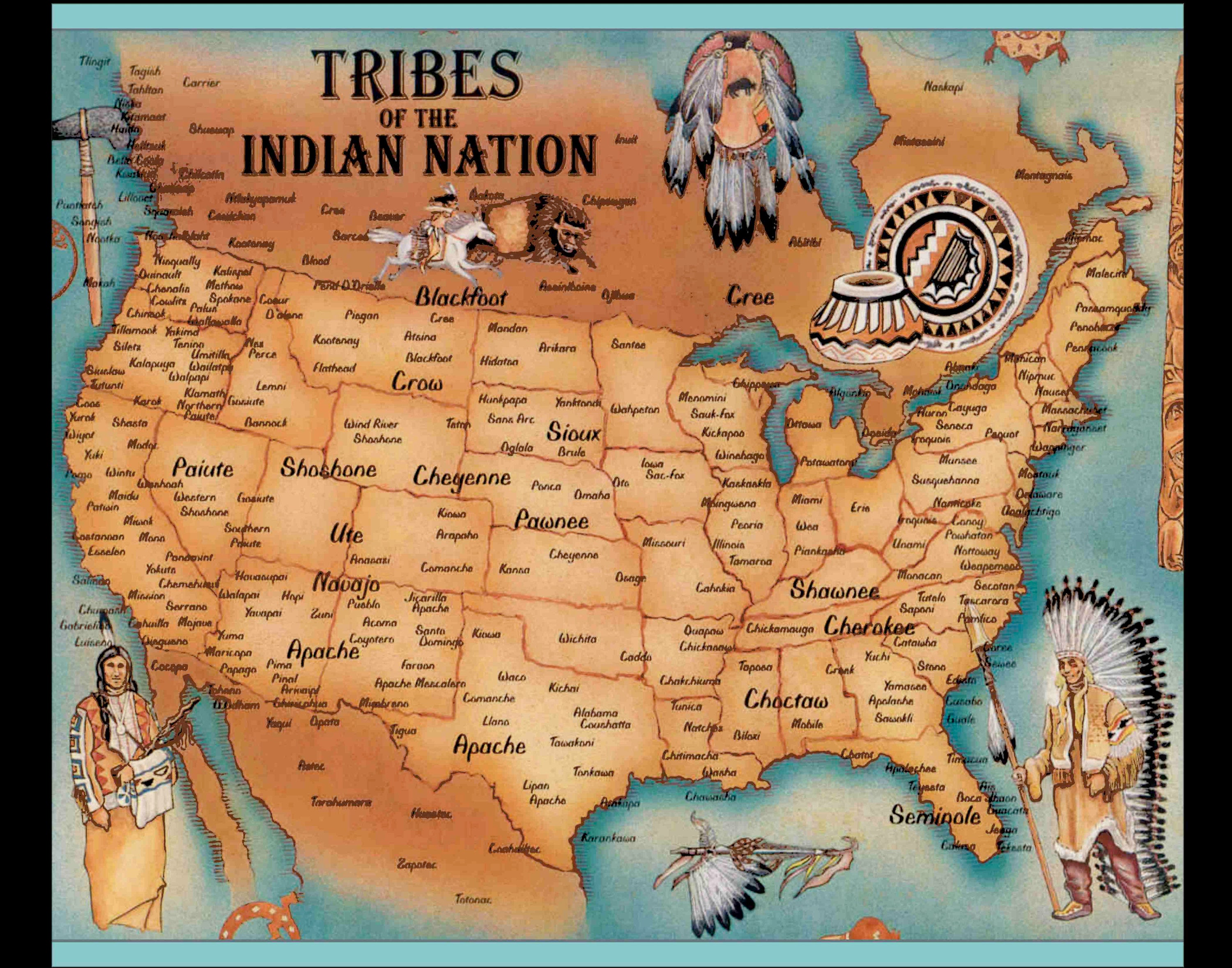
The migration across Beringia was not a single, dramatic event, but a protracted process spanning thousands of years. Early inhabitants, often referred to as "Paleo-Indians," traversed this land bridge in successive waves, following game, exploring new territories, and adapting to changing environments. Genetic evidence, particularly mitochondrial DNA and Y-chromosome analyses, overwhelmingly points to East Asian ancestry for the vast majority of Indigenous American populations. Linguistic studies also reveal deep connections between Siberian languages and several Native American language families, further cementing this ancient link.
The map of this primordial connection illustrates not just a geographical route, but a crucible of cultural development. As groups moved from Beringia into the interior of North America, they diversified. Some followed an "ice-free corridor" that eventually opened up between the Laurentide and Cordilleran ice sheets, while others likely moved along the Pacific coast, using boats to navigate past glaciers. This initial dispersal laid the groundwork for the astonishing linguistic, cultural, and technological diversity that would eventually characterize the Indigenous peoples from the Arctic to Tierra del Fuego. From this single, ancient intercontinental connection, a myriad of unique identities blossomed, each shaped by its new environment but carrying echoes of a shared Siberian past.
Pre-Columbian Crossings: Beyond Beringia
While Beringia remains the cornerstone of Native American intercontinental connections, growing archaeological, genetic, and linguistic evidence suggests other, more localized, and often debated, pre-Columbian contacts. These instances, though often small-scale compared to the Beringian migrations, challenge the long-held myth of the Americas as an isolated continent before 1492.

The Norse in Vinland: The most definitively proven pre-Columbian European contact comes from the Norse. Around 1000 CE, Vikings, having settled Iceland and Greenland, established a short-lived outpost at L’Anse aux Meadows in Newfoundland, Canada. Archaeological excavations have confirmed the sagas’ accounts of "Vinland," revealing Norse longhouses, tools, and ironworking facilities. The sagas also describe encounters with Indigenous peoples, whom they called "Skraelings" – interactions that were often hostile, leading to the eventual abandonment of the settlement. This connection, though brief, represents a direct European-Native American interaction five centuries before Columbus, demonstrating that transoceanic voyages were indeed possible, if not yet sustained.
Polynesian Echoes in South America: Perhaps more intriguing are the proposed connections between Polynesia and South America. The most compelling evidence centers on the sweet potato (Ipomoea batatas). This staple crop, native to the Americas, was widely cultivated throughout Polynesia before European contact. Genetic studies have confirmed its American origin, suggesting a trans-Pacific voyage carried the plant from South America to the Pacific islands. While the mechanism is debated – did Polynesians sail to South America and return, or did South Americans sail to Polynesia? – the presence of a New World crop across the vast Pacific points strongly to an intercontinental exchange. Further, the discovery of chicken bones in Chile dating to pre-Columbian times, genetically linked to Polynesian chickens, adds another layer to this trans-Pacific puzzle. Linguistic similarities, such as the Rapanui word for sweet potato, kumara, resembling Quechua k’umar, further support these theories. These connections, if fully confirmed, would highlight the incredible seafaring capabilities of both Polynesian and potentially South American Indigenous cultures, weaving a map of human ingenuity across the world’s largest ocean.
Debated African and Asian Influences: Other proposed pre-Columbian connections remain more speculative and controversial. Theories of African influence on Mesoamerican Olmec civilization, often based on perceived Negroid features in colossal Olmec heads, are largely dismissed by mainstream archaeology, which attributes these features to artistic stylization within a purely Indigenous American context. Similarly, claims of ancient Chinese or Japanese contact, though occasionally resurfacing with new finds, generally lack robust, multidisciplinary evidence. It’s crucial for educational and travel blogs to present these debates responsibly, distinguishing between established facts and ongoing academic discussions, while still acknowledging the human desire to connect and understand ancient movements.
The Columbian Exchange: A Cataclysmic Intercontinental Collision

The arrival of Christopher Columbus in 1492 inaugurated an intercontinental connection of unprecedented scale and consequence: the Columbian Exchange. This was not a gradual migration or a fleeting encounter, but a rapid, forced, and often violent collision of worlds that irrevocably reshaped the globe. The map of this exchange is one of dramatic biological, cultural, and demographic shifts.
From the Old World came devastating diseases like smallpox, measles, and influenza, to which Native Americans had no immunity. These pathogens swept through Indigenous populations with genocidal efficacy, wiping out an estimated 90% of the population in many regions within a century of contact. This demographic catastrophe profoundly impacted Native American identity, leading to the loss of entire languages, spiritual traditions, and social structures.
But the exchange was not one-way. The Americas contributed an astonishing array of staple crops to the Old World, revolutionizing global agriculture and diet. Potatoes, corn (maize), tomatoes, chili peppers, chocolate, vanilla, and tobacco are just a few examples of American plants that became integral to cuisines and economies worldwide. The nutritional boost from these crops contributed significantly to population growth in Europe, Africa, and Asia.
From Europe also came animals like horses, cattle, pigs, and sheep. Horses, in particular, transformed the lives of many Plains tribes, enabling greater mobility for hunting bison, warfare, and trade, fundamentally altering their cultural identity and social organization. Iron tools, firearms, and new technologies also flowed across the Atlantic, often integrated into Native societies but also becoming instruments of their subjugation.
The map of the Columbian Exchange is thus a complex diagram of destruction and innovation, of loss and adaptation. It represents a period where Native American identity was severely tested, forced to adapt to foreign diseases, technologies, and political systems, yet often retaining core cultural elements through resilience and resistance.
Identity and Legacy: Reading the Map Today

Understanding the full scope of Native American intercontinental connections is vital for a comprehensive grasp of their identity and history. It dismantles the myth of a "primitive" or isolated people, revealing instead dynamic, adaptable societies that were part of a larger global story.
The ancient Beringian migrations underscore the deep roots and shared ancestry of Indigenous peoples across the Americas. It connects them not just to each other, but to a vast, ancient human journey out of Asia. This shared origin, despite the immense diversification over millennia, provides a foundational layer of identity that resonates with many Indigenous communities today.
The pre-Columbian transoceanic debates, while still debated, illustrate the intellectual curiosity and maritime prowess that existed independently of European innovation. If confirmed, these connections paint a picture of Indigenous peoples as active agents in global interactions, rather than passive recipients. They highlight a history of exploration and ingenuity that adds another dimension to their cultural pride.
The Columbian Exchange, though devastating, also shaped modern Native American identity through survival and adaptation. It’s a testament to the enduring strength of Indigenous cultures that, despite immense pressures, many have maintained their languages, spiritual practices, and connection to their ancestral lands. The map of this exchange reveals the ongoing legacy of colonialism but also the powerful narrative of resilience, resistance, and revitalization.
For a traveler or history enthusiast, recognizing these intercontinental connections offers a profound shift in perspective. It encourages a deeper appreciation for the complexity and richness of Indigenous cultures, not as static relics of the past, but as living traditions shaped by a vast, interconnected history. It prompts questions: How did those early migrations influence the diverse languages spoken today? How did the introduction of the horse redefine the identity of the Lakota or Comanche? How do modern Indigenous movements reclaim and reinterpret these historical threads?
Ultimately, a map of Native American intercontinental connections is more than just lines on a page. It’s a powerful educational tool that challenges conventional wisdom, celebrates human ingenuity, acknowledges profound suffering, and underscores the vibrant, continuous identity of Indigenous peoples. It reminds us that history is a dynamic, multi-faceted narrative, constantly being rewritten and re-understood, urging us to look beyond simplistic stories and embrace the full, complex tapestry of our shared human past.

