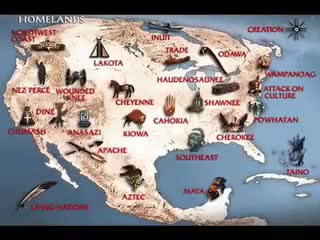
Charting the Sacred: A Journey Through the Map of Native American Creation Stories
To understand the soul of North America, one must look beyond its modern political borders and delve into its ancient spiritual cartography. This is where the concept of a "Map of Native American Creation Stories" becomes not just an academic exercise, but a profound journey into the very essence of land, history, and identity. Far from being mere myths, these foundational narratives are living histories, spiritual compasses, and cultural blueprints that have shaped Indigenous peoples for millennia. This map, while often conceptual rather than a singular physical artifact, reveals a tapestry of beliefs as diverse and rich as the continent itself, offering unparalleled insights for the discerning traveler and history enthusiast.
The Map: A Mosaic of Origin and Belonging
Imagine a map where geographical features are not merely contours, but sacred sites of origin; where rivers trace the journeys of ancestral beings, and mountains stand as witnesses to the world’s genesis. This "Map of Native American Creation Stories" is not a unified narrative, for there is no single "Native American" creation story. Instead, it is a magnificent mosaic, a collection of thousands of distinct tribal accounts, each unique yet universally resonant in its quest to explain existence.
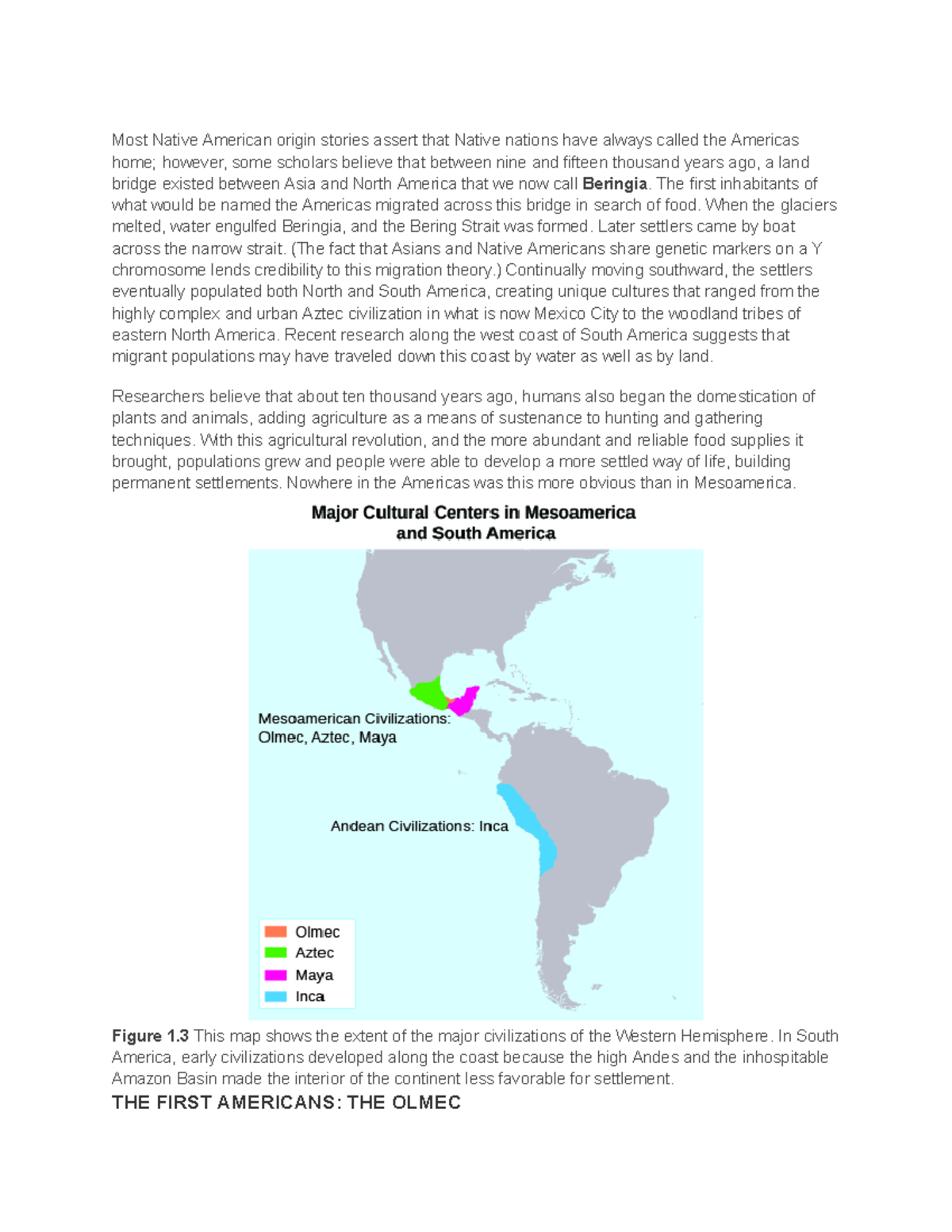
Visually, such a map would highlight different regions, each associated with prevalent types of creation narratives. In the Southwest, we might find "Emergence" stories, where people ascend from underworlds, learning and evolving through multiple stages of existence before reaching the present world. The Pacific Northwest might feature "Transformer" or "Trickster" narratives, often involving figures like Raven or Coyote, who shape the landscape and bring light, knowledge, or specific resources to humanity through cunning and sometimes mischievous acts. The Great Lakes and Northeast regions frequently tell "Earth Diver" stories, where a specific animal (like a muskrat or turtle) dives into primordial waters to bring up earth, from which the land is formed, often upon the back of a giant turtle – hence "Turtle Island." The Plains often feature stories of world parents or cosmic eggs, emphasizing a deep connection to the sky and earth, and the sacred buffalo.
What unites these diverse narratives is their deeply place-based nature. Unlike many Abrahamic creation stories that place events in a distant, often unspecified "Eden," Native American creation stories are inextricably linked to specific geographical locations. A mountain range is not just a geological formation; it is the site where the first people emerged. A particular river bend holds the memory of a culture hero’s journey. This imbues the landscape with profound spiritual significance, transforming every hill, valley, and body of water into a sacred text, a living testament to ancestral origins and enduring presence.
Historical Resonance: Stories as Living Archives
For Indigenous peoples, creation stories are far more than religious texts; they are comprehensive repositories of history, philosophy, law, science, and ethics. Before written languages were widely adopted, these narratives served as sophisticated mnemonic devices, passed down orally through generations, ensuring the continuity of cultural knowledge. They explained astronomical phenomena, geological formations, plant and animal behavior, and the proper way for humans to interact with the natural world. They codified social structures, moral responsibilities, and the relationship between individuals, community, and the cosmos.

The historical trajectory of these stories is one of immense resilience. The arrival of European colonizers brought devastating attempts to suppress and eradicate Indigenous belief systems. Missionaries actively sought to convert Native peoples, often demonizing traditional stories as "pagan myths." The establishment of boarding schools forcibly removed children from their families and cultures, punishing them for speaking their native languages or practicing their spiritual traditions. During this period, many stories went underground, preserved in secret, whispered in the safety of homes, or subtly woven into Christian narratives to ensure their survival.
Despite centuries of cultural genocide, these creation stories endured. They became powerful symbols of resistance, identity, and sovereignty. The "Map of Native American Creation Stories" therefore also charts a history of perseverance, a testament to the unwavering spirit of peoples who refused to let their foundational truths be erased. Today, there is a vibrant resurgence in the revitalization of these narratives, with tribes actively reclaiming their languages, ceremonies, and origin stories, teaching them to new generations, and sharing them with the wider world as a means of cultural affirmation and education.
Identity Forged in Myth: The Heart of Belonging
At the core of every creation story lies the answer to "Who are we, and how did we come to be?" For Native Americans, these narratives are the bedrock of individual and collective identity. Knowing one’s creation story connects an individual not just to their immediate family, but to an unbroken chain of ancestors stretching back to the dawn of time, and to the very land they inhabit.
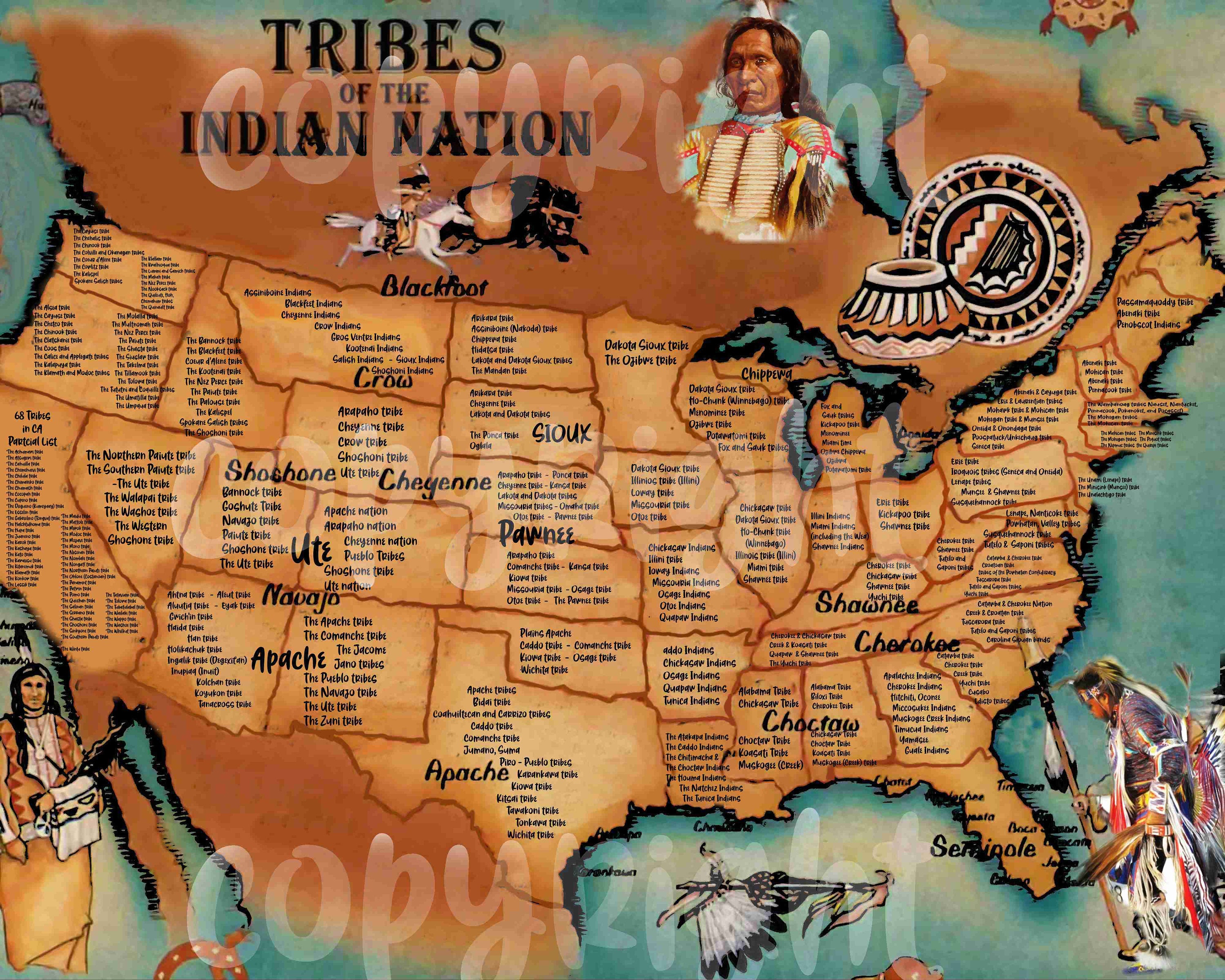
This connection to the land is paramount. Unlike settler cultures that often view land as property to be owned and exploited, Indigenous cultures frequently perceive land as a relative, a sacred mother, or a living entity with whom they have a reciprocal relationship. Creation stories illustrate this by showing how the people were formed from the earth, or how they emerged into a specific landscape that then became their ancestral homeland. This deep, spiritual bond to place underpins Indigenous stewardship practices, land rights claims, and the fight for sovereignty. When a sacred mountain is threatened by development, it’s not just a physical location at stake; it’s a vital part of a people’s origin, history, and identity.
Furthermore, creation stories provide a comprehensive ethical framework. They teach responsibility – to the land, to the animals, to future generations, and to each other. They often feature figures who make mistakes, demonstrating the consequences of greed, hubris, or disrespect for natural laws. Concepts like balance, reciprocity, community welfare, and living in harmony with all creation are woven into the very fabric of these narratives. For example, the Haudenosaunee (Iroquois) creation story of Sky Woman falling to Turtle Island emphasizes the interconnectedness of all life and the importance of gratitude for the gifts of the natural world. The Diné (Navajo) emergence story teaches the value of continuous learning, adaptation, and maintaining hózhó – a state of balance and beauty.
A Journey Through Diverse Narratives: Illuminating Examples
To truly appreciate the richness of this conceptual map, let’s briefly touch upon a few illustrative examples:
- The Diné (Navajo) Emergence: The Diné creation story describes a journey through multiple lower worlds, each fraught with challenges and lessons, before the people emerge into the "Glittering World" – our current world. This arduous ascent, often guided by Holy People, symbolizes a process of learning, purification, and transformation. The four sacred mountains that define the Diné homeland are not merely geographical markers but tangible links to this emergence, embodying the boundaries of their sacred space and identity.
- The Haudenosaunee (Iroquois) Sky Woman: This narrative tells of Sky Woman, who falls from the Sky World onto the back of a giant turtle, which becomes Turtle Island. With the help of animals, she begins to build the earth. Her twin grandsons, the Good Mind and the Evil Mind, then shape the world, creating balance between all things. This story highlights the importance of cooperation, the dualistic nature of existence, and the profound gratitude owed to the animals and the earth.
- The Lakota (Sioux) White Buffalo Calf Woman: While not strictly a creation story of the world’s origin, the arrival of White Buffalo Calf Woman is a foundational narrative that brought the sacred pipe, the seven sacred rites, and a way of life to the Lakota people. She taught them how to pray, how to live in harmony, and how to maintain a sacred relationship with the buffalo and the land. Her story is central to Lakota identity, spiritual practice, and their understanding of their place in the universe.
- The Kwakwakaʼwakw (Kwakiutl) Raven: In many Pacific Northwest cultures, Raven is a powerful, complex figure—a trickster, a transformer, and a culture hero. He often brings light into a dark world, or releases the salmon, or provides fresh water. These stories reflect the resourcefulness, adaptability, and deep connection to marine environments characteristic of these coastal peoples, and they celebrate the cleverness and sometimes unpredictable nature of creation itself.

Each of these narratives, rooted in specific landscapes, offers unique perspectives on the human condition, our relationship to the environment, and the values that sustain a community.
The Map as a Bridge: Education and Reconciliation
For travelers, educators, and anyone interested in a deeper understanding of North America, engaging with the "Map of Native American Creation Stories" is an essential and transformative experience. It challenges monolithic views of "Native American culture" by revealing the incredible diversity of Indigenous peoples, each with their own distinct language, traditions, and foundational narratives.
This conceptual map invites us to see the land through Indigenous eyes, to recognize the sacredness embedded in every feature, and to appreciate the profound spiritual legacy that continues to shape contemporary Native American identities. It fosters a respect that goes beyond superficial acknowledgment, urging a deeper engagement with Indigenous voices, histories, and ongoing struggles for sovereignty and cultural revitalization.
By seeking out these stories – through tribal cultural centers, reputable Indigenous-led organizations, and scholarly works vetted by Native communities – we participate in an act of reconciliation. We acknowledge the resilience of these cultures, honor their wisdom, and open ourselves to alternative ways of understanding our shared world. It moves us beyond a tourist’s gaze to a participant’s respect, recognizing that these stories are not just relics of the past but living, breathing testaments to enduring presence and profound wisdom.
Conclusion: The Unfolding Map
The "Map of Native American Creation Stories" is an ever-unfolding document, a testament to the enduring power of narrative, the unbreakable bond between people and place, and the infinite resilience of culture. It reminds us that America’s history did not begin with European arrival, but stretches back into an immemorial past, shaped by diverse peoples whose profound connections to the land were articulated through their origin stories.
This map is an invitation to explore a spiritual landscape as vast and varied as the physical continent itself. It asks us to listen, to learn, and to respectfully engage with the foundational truths of the continent’s first peoples. In doing so, we not only gain a richer understanding of Native American history and identity, but we also discover timeless wisdom that can guide us all toward a more harmonious and respectful relationship with each other and with the living world around us. To trace these stories is to trace the very heartbeat of North America.

